EU auditors call for faster PFAS restrictions and stronger checks
The auditors say food and drinking-water limits may need revision and national controls should improve. Their recommendations do not themselves change EU law.
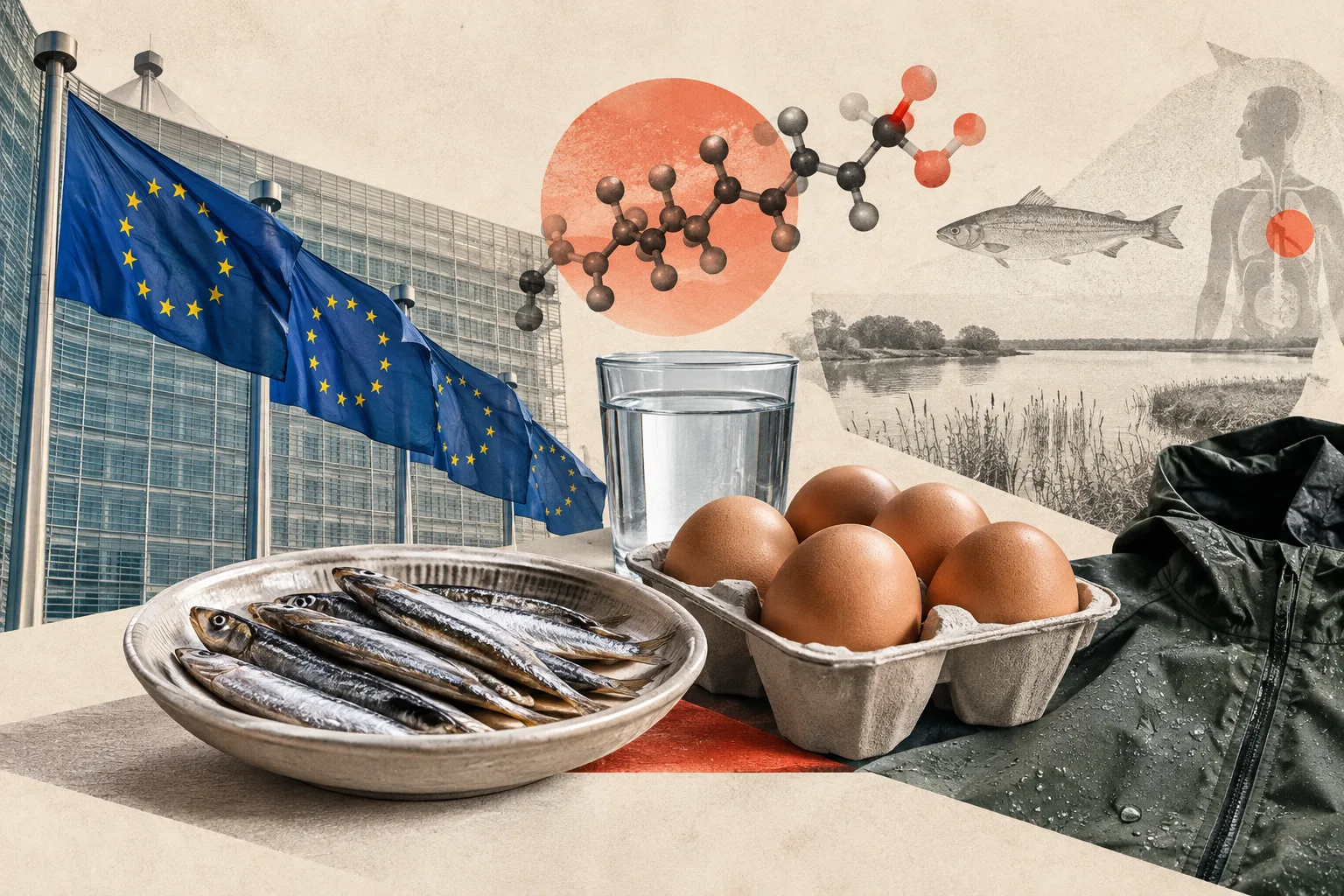
The European Court of Auditors has called on the EU and its member states to speed up restrictions on PFAS and strengthen checks on the chemicals, Dutch news agency ANP reports.
The auditors say existing limits for PFAS in food and drinking water are insufficient to protect human health and should be reviewed where necessary. PFAS are a large group of chemicals used in products ranging from food packaging to water-resistant clothing. Many persist in the environment and can enter the food chain.
The auditors said restriction procedures took about five years on average. About a third of the EU’s 27 member states told them they carried out no specific checks on PFAS standards, while countries also relied too heavily on companies to police themselves, according to the report.
EU countries have been required since January 2026 to monitor PFAS in drinking water in a harmonised way and ensure compliance with EU limits, according to the European Commission.
Food exposure
The auditors calculated that 7 grams of anchovies or 181 grams of eggs could exceed the weekly guidance value if the food contained PFAS at the maximum permitted level, ANP reported. Those are hypothetical examples, not measurements of contamination in those products.
The European Food Safety Authority set that guidance in 2020 at 4.4 nanograms per kilogram of body weight per week for four PFAS combined. It is a long-term health reference, not a legal limit for an individual food: it describes an amount that can be consumed weekly over a lifetime without appreciable health risk. A single exceedance is not the same as demonstrated harm.
In its 2020 assessment, the authority found that dietary exposure among parts of the European population exceeded the four-PFAS guidance value and said this was a health concern.
In September, the Dutch public health institute reported that PFAS levels among 967 blood donors had fallen compared with 2016–17, although 71% remained above a separate health-based blood guidance value.
A broader proposal to restrict PFAS was already under consideration before the audit. In June, the European Chemicals Agency said its risk assessment committee had adopted a final opinion and its socio-economic committee was examining consultation responses.
Sign in to give this article a thumbs up or down.
From the discussion
Private test discussion. Comments are readers’ views and are not yet automatically fact-checked. Editing is available for 60 seconds after posting.
Sign in with a confirmed reader account and choose a username to read comments and participate.
Sorting applies to top-level comments; replies remain oldest first. New comments and likes can change the order. Refresh for the current ranking.
Loading comments…