News Made Clear · Loading…
Category
Regions
Continents
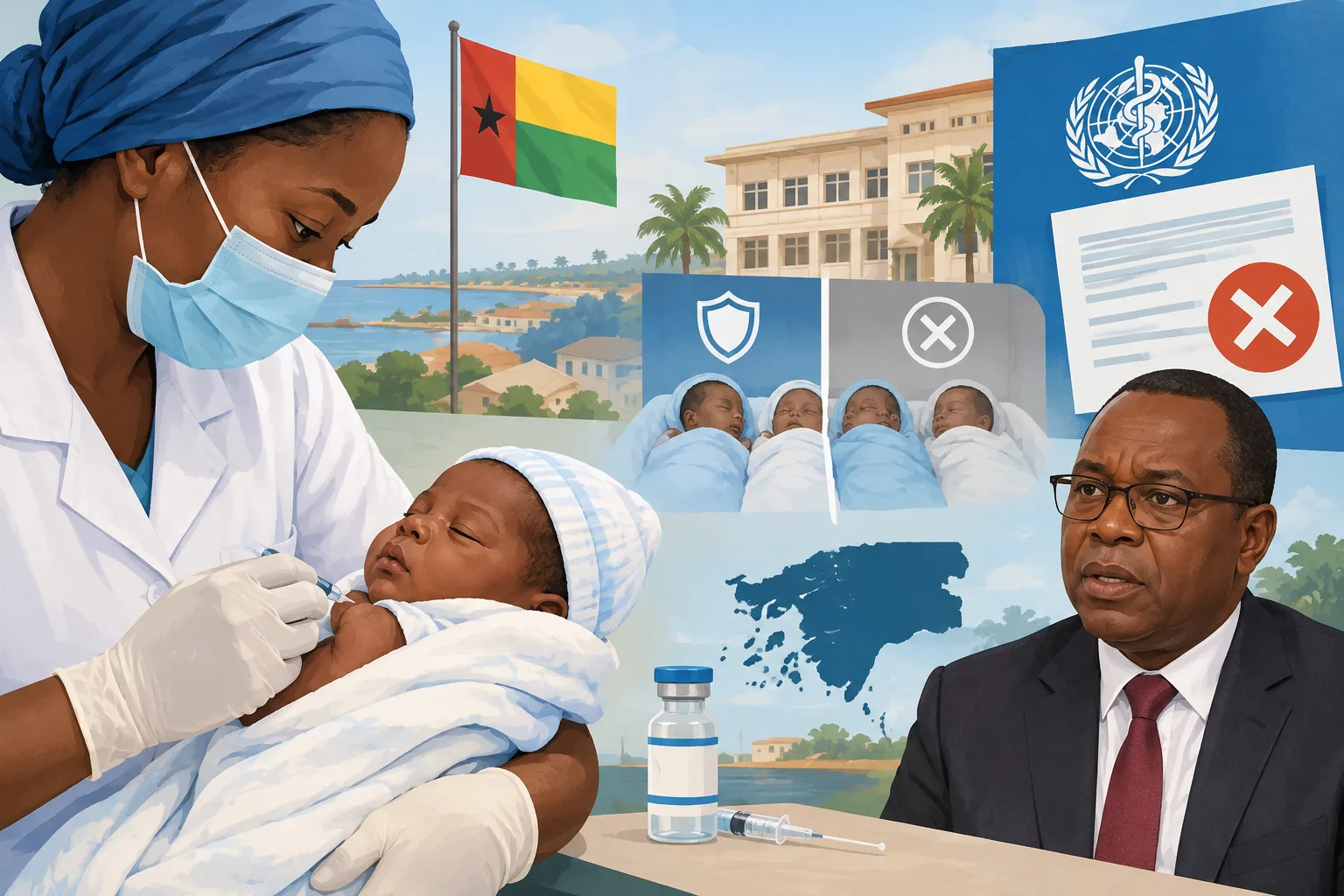
Guinea-Bissau rejects US-funded hepatitis B vaccine trial
Loading statistics…
The proposed study drew ethical objections because some babies would not have received a birth dose recommended by the World Health Organization. The university involved says no participants were enrolled.
Review information is loading.
The study was intended to involve 14,000 newborns. Half would have received a hepatitis B vaccine shortly after birth; the other half would not have received it during their first six weeks, according to The Guardian. Guinea-Bissau normally vaccinates babies against hepatitis B at six weeks.
The researchers said they wanted to investigate possible health effects of the birth dose beyond its role in preventing infection. They argued that no child in the study would receive fewer vaccinations than under Guinea-Bissau’s existing policy.
The World Health Organization recommends that all babies receive a first hepatitis B dose within 24 hours of birth. The virus can pass from mother to child during delivery, and infection in infancy can become chronic, potentially leading to cirrhosis or liver cancer.
In February, the WHO criticised the original study as publicly described, saying that withholding a proven intervention could expose newborns to serious harm. It also said there was insufficient credible evidence of a safety concern to justify the risks. The researchers later revised the protocol; the University of Southern Denmark says the WHO did not conduct an ethical assessment of that version.
The university says a research ethics committee in Guinea-Bissau approved the revised protocol in July, and its own committee gave a positive assessment in September. Its dean agreed on 7 October that the project could proceed from the university’s perspective, but separate authorisation from Guinea-Bissau’s authorities was still required.
Health Minister Quinhin Nantote said on 13 October that his ministry had not authorised the trial as described in reports. Researcher Christine Stabell Benn later told Ars Technica that the country’s Council of Ministers had reaffirmed its rejection on 16 October. Another researcher, Frederik Schaltz-Buchholzer, said on 21 October that the study would not go ahead because it had not received the necessary government approval.
The US Centers for Disease Control and Prevention awarded the Danish university $1.6 million for the proposed study in December 2025, according to the BBC.
Guinea-Bissau had planned to introduce a routine birth dose in 2028. The WHO’s representative in the country, Walter Kazadi Mulombo, told the BBC that officials were considering bringing its introduction forward to the first quarter of 2027.
How do we know?
8 listed sources · explore evidence, limitations and provenance.
Sign in to give this article a thumbs up or down.
About this discussion and AI questions
Private test discussion. Comments are readers’ views and are not yet automatically fact-checked. Editing is available for 60 seconds after posting.
Sign in with a confirmed reader account and choose a username to read comments and participate.
Sorting applies to top-level comments; replies remain oldest first. New comments and likes can change the order. Refresh for the current ranking.
Loading comments…