News Made Clear · Loading…
Category
Regions
Continents
Topics
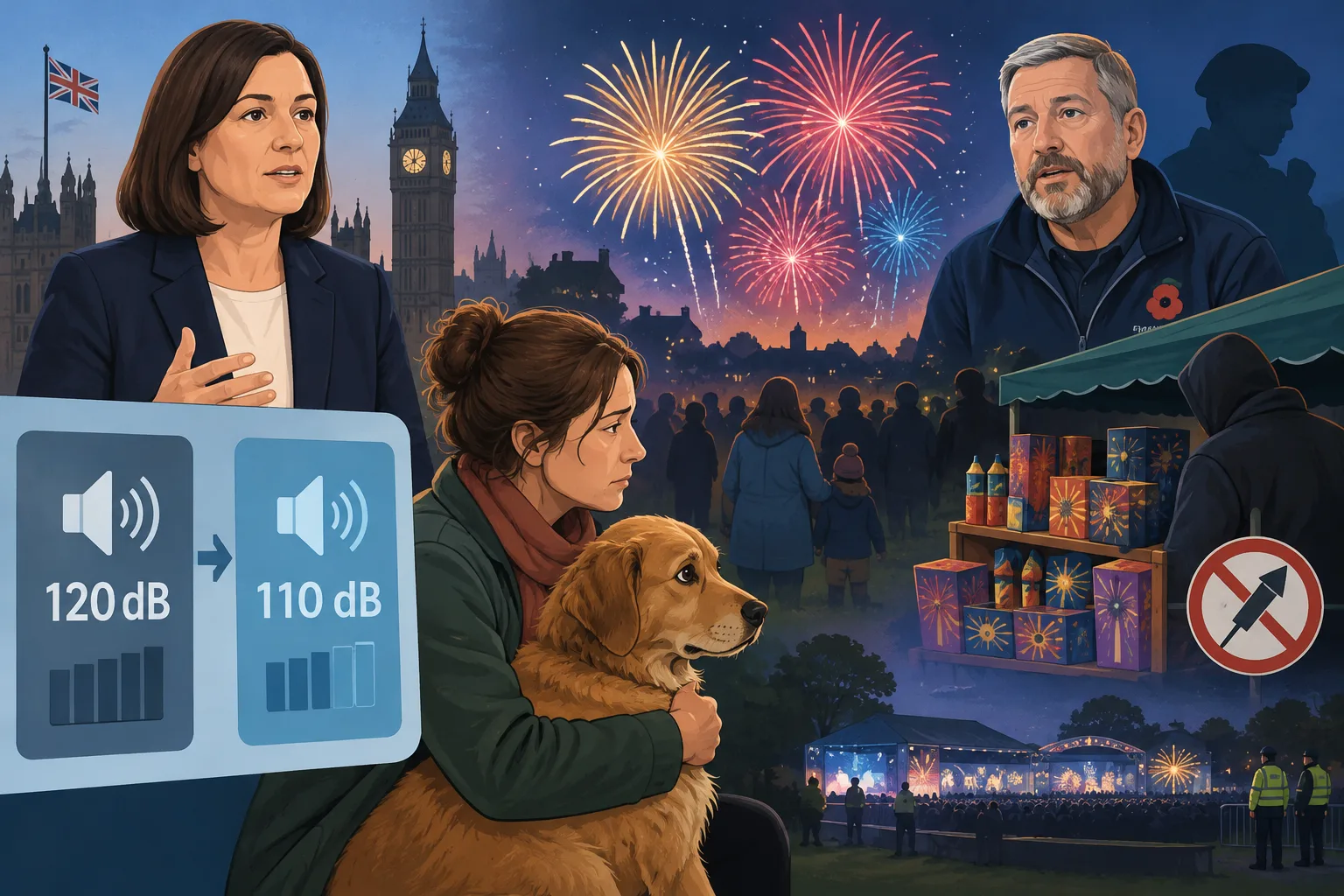
UK weighs halving noise limit for fireworks bought by the public
Loading statistics…
The government is considering halving the noise limit for fireworks bought by the public, amid concerns about distress to pets and people with PTSD and warnings that tighter rules could fuel illegal sales.
Review information is loading.
The UK government is considering cutting the maximum noise limit for fireworks bought by the public by half, a change that could make many consumer fireworks quieter from next year. It is weighing a limit of 110 decibels, down from 120, while professionally organised displays would remain exempt from a maximum so long as the noise is not harmful to human health.
Business Minister Kate Dearden said the government was considering reforms focused on the harms associated with fireworks, including noise and antisocial behaviour, while allowing people to enjoy them safely at community and cultural celebrations.
The debate pits concerns about distress caused by loud bangs against fears that tighter rules could push sales underground. Campaigners say fireworks can affect nervous pets and trigger symptoms for people with post-traumatic stress disorder. Alan Friggieri of veterans’ charity Combat Stress told MPs that calls to its helpline rise at this time of year. He is not calling for a ban, saying the organisation recognises the cultural importance of displays.
Andy Hubble, vice-chairman of the British Fireworks Association, warned that a lower limit could encourage illegal sales. He said the association estimates a 110-decibel limit would affect up to 60% of fireworks sold to the public; a 90-decibel limit, sought by some campaigners, would affect about 95%, he said. Hubble argued that illegal imports could be harder to regulate and potentially noisier.
The government has ruled out an outright ban on public sales as disproportionate. Fireworks are already illegal to sell to under-18s, and setting them off after 23:00 is prohibited except on specified occasions, including Bonfire Night, Diwali, New Year’s Eve and Chinese New Year.
About 20 million people enjoy fireworks at home each year, according to industry figures cited by the BBC. A separate option is attending an organised display: Scotland has seen many large council-run events stop, with insurance, security and stewarding among the pressures, while the fire service reported about 20 organised displays in the five days before Bonfire Night and another 79 planned. Police are also preparing for Bonfire Night disorder in parts of Glasgow.
How do we know?
1 listed sources · explore evidence, limitations and provenance.
Sign in to give this article a thumbs up or down.
About this discussion and AI questions
Private test discussion. Comments are readers’ views and are not yet automatically fact-checked. Editing is available for 60 seconds after posting.
Sign in with a confirmed reader account and choose a username to read comments and participate.
Sorting applies to top-level comments; replies remain oldest first. New comments and likes can change the order. Refresh for the current ranking.
Loading comments…