News Made Clear · Loading…
Category
Regions
Topics
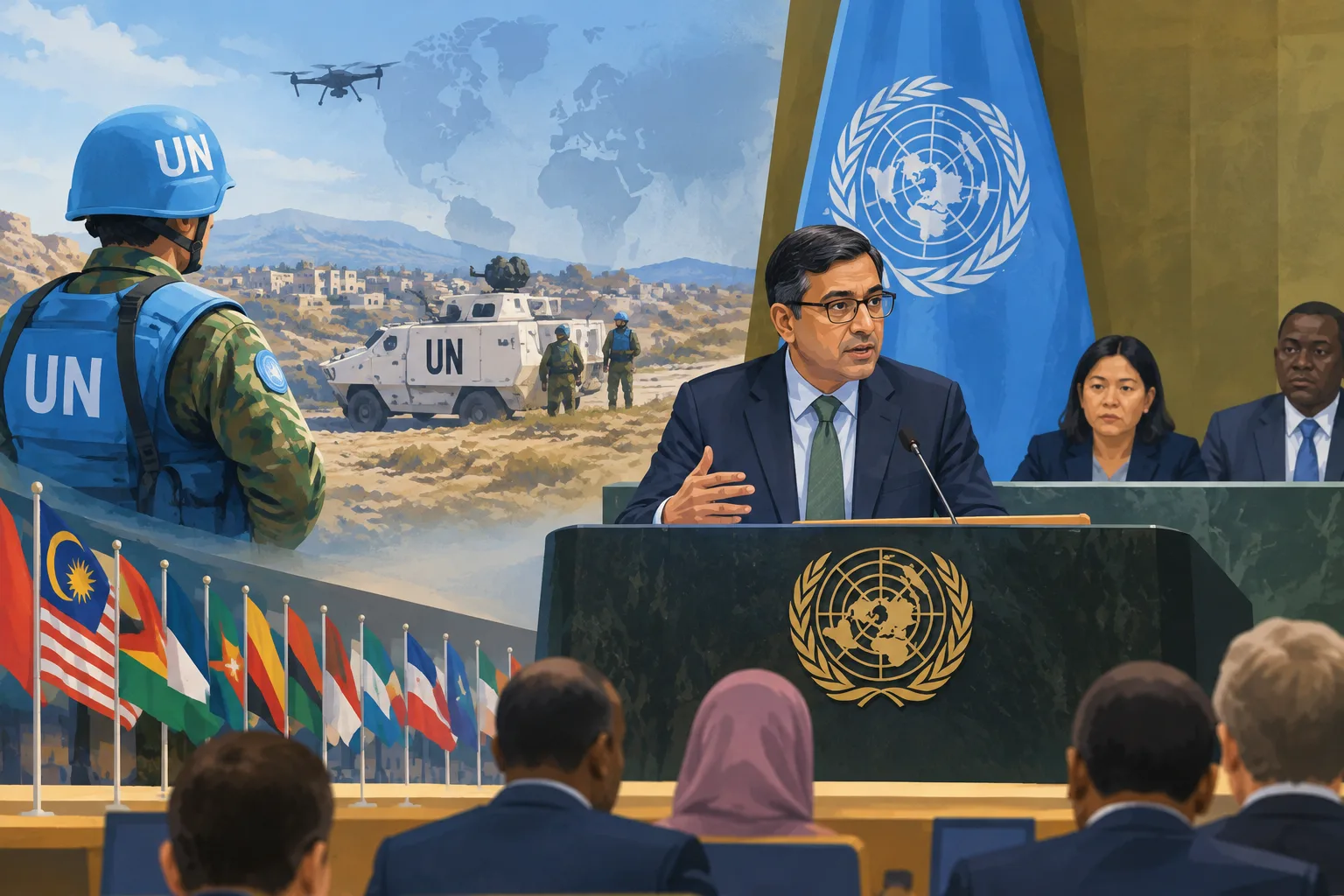
UN delegates warn peacekeeping cuts must not erode core capabilities
Loading statistics…
Delegates at the UN General Assembly’s Fourth Committee warned that peacekeeping reform and cost reductions should not erode capabilities needed for future crises, as missions close or draw down.
Review information is loading.
UN member states have warned that cost-cutting and troop reductions must not leave UN peacekeeping unable to respond to future crises, as the Security Council faces financial pressure and several missions close or wind down.
Speaking at the General Assembly’s Fourth Committee on 6 November, Pakistan’s delegate said no new peacekeeping mission had been established since 2014, while major operations had ended or were due to draw down. Pakistan has contributed more than 170,000 peacekeepers over six decades, he said, and hosts a UN observer mission.
Reform should preserve peacekeeping’s universal legitimacy, predictable financing, logistics and accountability systems, he argued. If missions continue to contract, troop-contributing countries may not be able to keep personnel and specialist equipment ready for uncertain future deployments. “Efficiency and cost reduction must not hollow out the capabilities that give UN peacekeeping its unique value,” he said.
Malaysia said 542 of its peacekeepers were serving in UN missions, including 509 with the UN Interim Force in Lebanon (UNIFIL). As Malaysia prepares to repatriate personnel and equipment after UNIFIL’s mandate ends on 31 December, its delegate said their safety must remain central during the withdrawal.
Delegates also highlighted operational risks and disagreements over what peacekeeping should do. Uruguay’s representative said missions generally lacked the means to detect and counter drones used by non-state groups for surveillance and attacks. Nepal’s delegate cautioned that abrupt troop reductions could harm mandate delivery and civilian safety, while South Africa’s representative said the termination of the Western Sahara mission had been abrupt and urged measures to prevent security gaps.
Russia, speaking for the Group of Friends in Defense of the UN Charter, called for peacekeeping mandates to focus on core political and security tasks. It said functions including human-rights monitoring, climate-risk assessment and promoting women’s and youth agendas should be transferred to relevant UN programmes and funds, at the request of host states.
Other delegates stressed the role of African troop-contributing countries, accountability for sexual exploitation and abuse, and the need for carefully planned mission transitions. The discussion reflected competing priorities: adapting operations to new threats and financial constraints while avoiding reductions that could undermine their ability to protect civilians and support peace.
How do we know?
1 listed sources · explore evidence, limitations and provenance.
Sign in to give this article a thumbs up or down.
About this discussion and AI questions
Private test discussion. Comments are readers’ views and are not yet automatically fact-checked. Editing is available for 60 seconds after posting.
Sign in with a confirmed reader account and choose a username to read comments and participate.
Sorting applies to top-level comments; replies remain oldest first. New comments and likes can change the order. Refresh for the current ranking.
Loading comments…