News Made Clear · Loading…
Category
Regions
Continents
Dossiers
Ukraine steel chief seeks EU exemption as duty-free quota shrinks
Loading statistics…
Metinvest wants an exemption from tighter EU steel import rules. Ukraine’s duty-free allocation is well below its previous exports, but the difference is not a measured loss of trade.
Yuriy Ryzhenkov, chief executive of Ukrainian steelmaker Metinvest, has called for “at least a carve out” for Ukraine from the EU’s tighter steel import rules. He told the BBC that Ukraine had been “bundled together” with other exporters under measures intended to protect EU producers from global oversupply, while its mills contend with Russia’s attacks. [1]
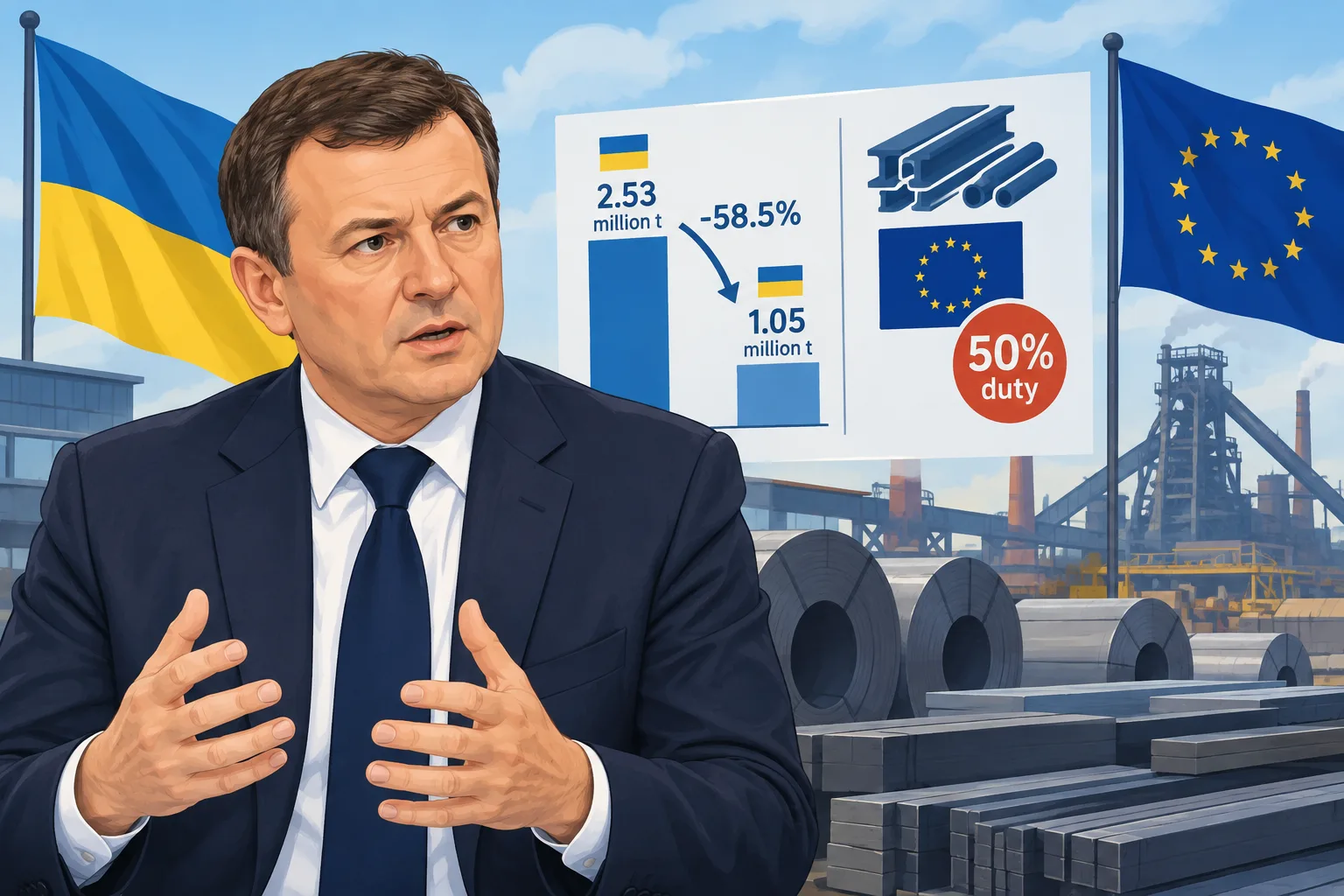
The change to duty-free access is substantial. S&P Global Energy calculated Ukraine’s country-specific steel quotas at about 1.05 million tonnes for the July 2026–June 2027 quota year. That is 58.5% below the 2.53 million tonnes Ukraine shipped to the EU in calendar year 2025, according to S&P Global’s trade data. The comparison is between an allocation and earlier sales, not a measured fall in exports since the rules took effect in July. [4]
The EU rules cover 26 steel product categories and set a duty-free quota of about 18.3 million tonnes a year across eligible imports. Covered steel entering outside an applicable quota faces a 50% duty. The rules neither ban Ukrainian steel nor impose that duty on every shipment. [2] [3]
Ryzhenkov said the restrictions had been imposed “without any consideration for the situation Ukraine is in”. But the EU legislation names the exceptional security situation of a candidate country such as Ukraine as a factor in dividing the quotas. The implementing measure also says Ukraine should receive more favourable treatment than other free-trade partners. Those provisions do not settle whether the resulting access is enough for its steelmakers. [1] [2] [3]
A European Commission spokesperson told the BBC that the EU had taken Ukraine’s difficulties into account and had offered “compensations” to major suppliers, including Ukraine. The spokesperson acknowledged that Ukraine’s country-specific quota provided access at a lower level than in previous years. Under the rules, eligible Ukrainian exporters may also compete for additional duty-free quotas in certain product categories once their own quotas are exhausted; access depends on availability. The implementing allocation examined applies only until 31 December 2026, although the broader system uses July-to-June quota years.
How do we know?
4 listed sources · explore evidence, limitations and provenance.
Sign in to give this article a thumbs up or down.
About this discussion and AI questions
Private test discussion. Comments are readers’ views and are not yet automatically fact-checked. Editing is available for 60 seconds after posting.
Sign in with a confirmed reader account and choose a username to read comments and participate.
Sorting applies to top-level comments; replies remain oldest first. New comments and likes can change the order. Refresh for the current ranking.
Loading comments…