News Made Clear · Loading…
Category
Regions
Continents
ECB sets out next priorities on climate and nature-related risks
Loading statistics…
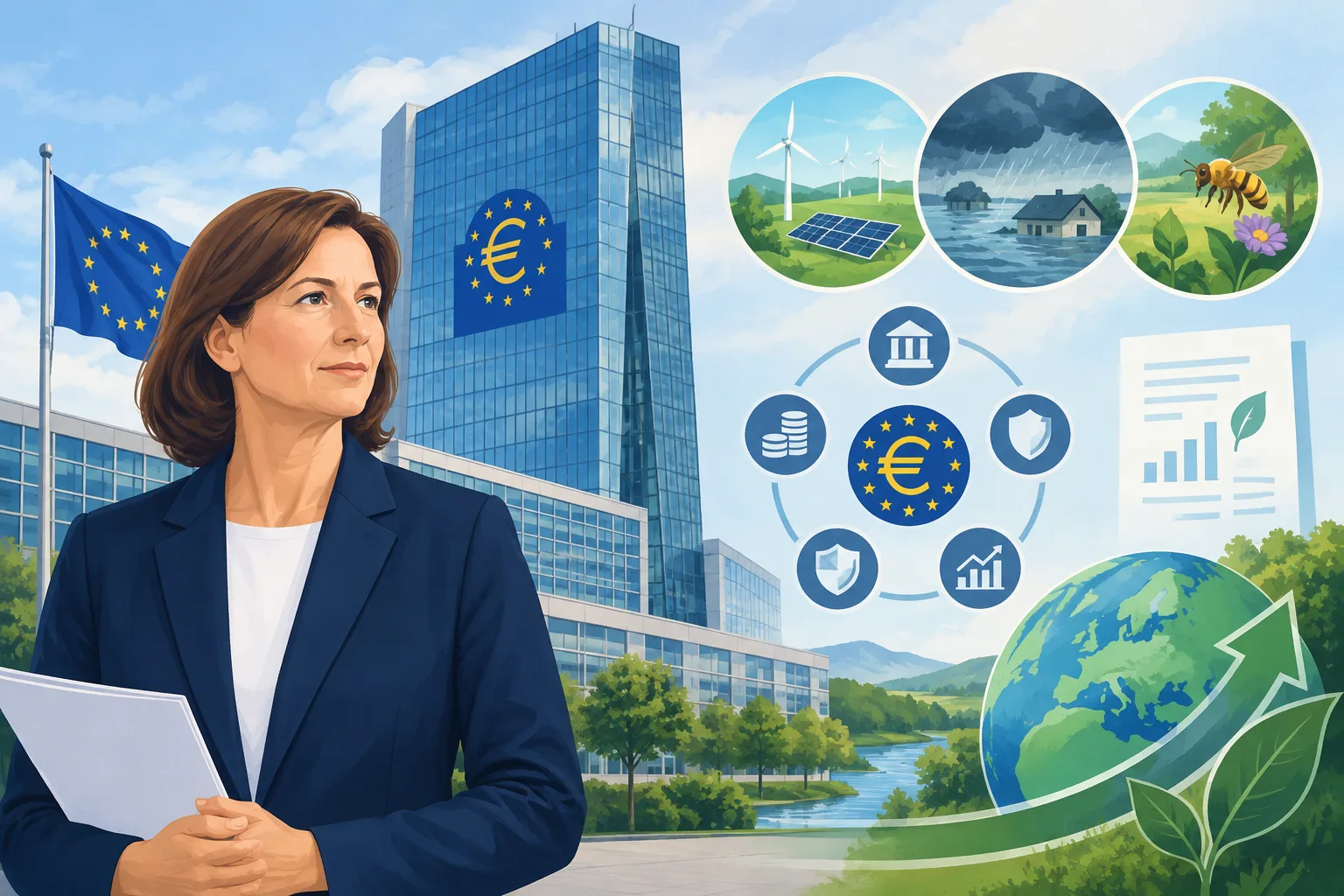
The ECB says its Climate Change Centre has helped embed climate and nature-related risks across the bank’s work since 2021. Its next priorities include the energy transition, extreme weather and nature loss.
Review information is loading.
The European Central Bank says it has moved from recognising climate risks to incorporating climate and nature-related risks across its work, while identifying the energy transition, extreme weather and nature loss as priorities for further analysis.
In a review of the first five years of its Climate Change Centre, the ECB describes the centre as a coordinating hub that supports work across monetary policy, banking supervision, financial stability and market operations. The centre was set up in 2021 and reports directly to the ECB president.
The bank says climate risks can affect inflation, economic activity and financial markets. It also argues that damage to nature can disrupt production and supply chains: water scarcity, soil erosion and the loss of pollinators, for example, can reduce agricultural output and push up food prices.
The ECB’s review sets out steps taken across the institution. These include adding climate-related factors to the Eurosystem collateral framework for corporate bonds, developing climate stress tests and statistical indicators, and incorporating climate risks into economic analysis. The bank says its 2025 operations produced 46% less carbon dioxide than in 2019.
The review also highlights vulnerabilities it says need more attention. Less than a quarter of losses from natural disasters in the EU are insured, according to joint analysis by the ECB and the European Insurance and Occupational Pensions Authority; in some countries, the share is below 5%. The ECB says the insurance gap may widen and could increase the burden on households, businesses and governments.
On nature-related risks, ECB research cited in the review estimates that 72% of euro-area companies are highly dependent on ecosystem services, as is nearly 75% of banks’ corporate lending. The bank says it is working on better data and scenarios to assess how nature loss could affect the economy and financial system.
The ECB identifies three priorities for its next phase of work: understanding the transition to a climate-neutral economy, assessing physical climate risks and developing its analysis of nature-related risks. It says it will continue integrating these issues into its work while focusing research on areas where uncertainty remains greatest.
How do we know?
2 listed sources · explore evidence, limitations and provenance.
Sign in to give this article a thumbs up or down.
About this discussion and AI questions
Private test discussion. Comments are readers’ views and are not yet automatically fact-checked. Editing is available for 60 seconds after posting.
Sign in with a confirmed reader account and choose a username to read comments and participate.
Sorting applies to top-level comments; replies remain oldest first. New comments and likes can change the order. Refresh for the current ranking.
Loading comments…