News Made Clear · Loading…
Category
Regions
Continents
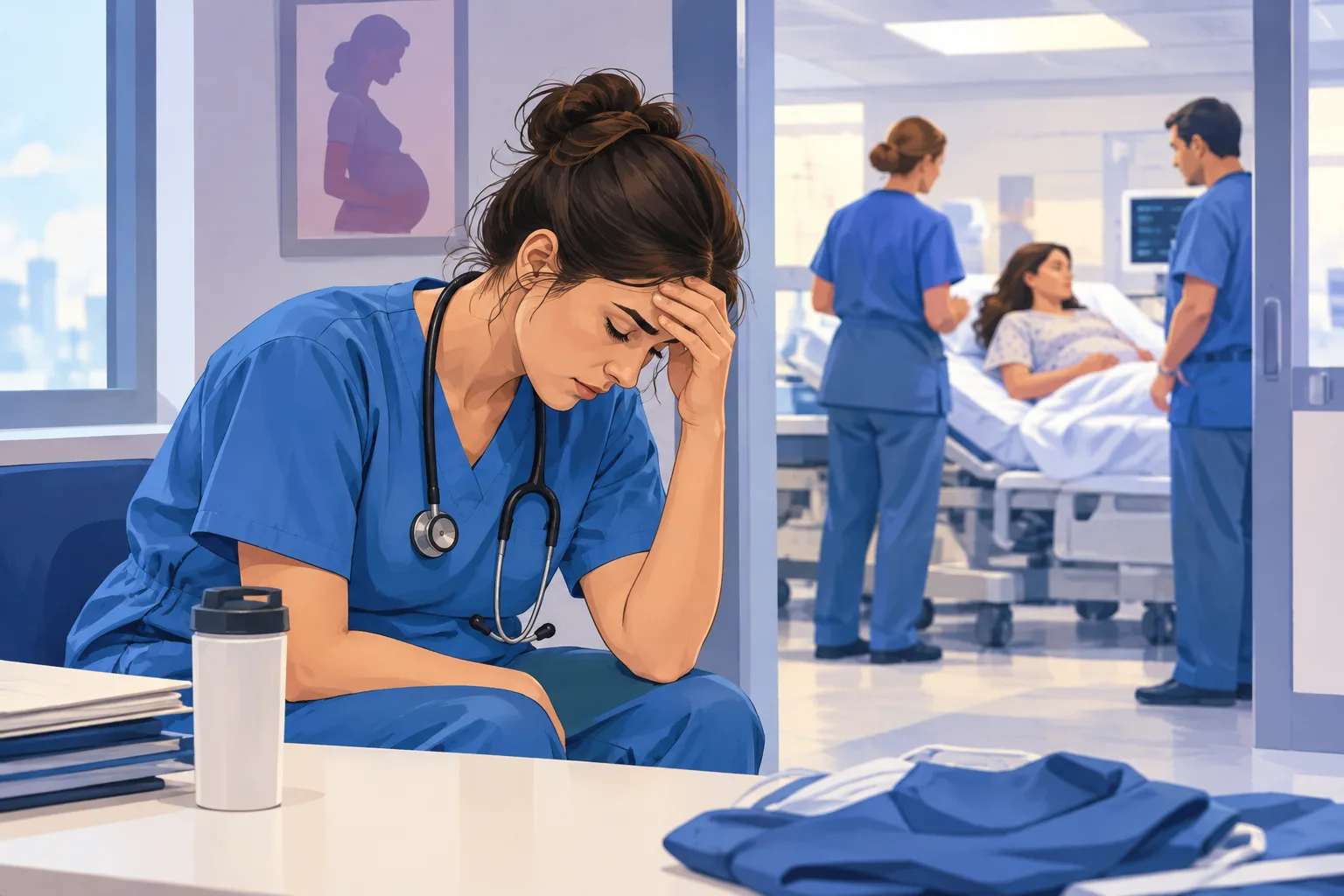
Maternity trainees report higher burnout and reluctance to speak up, GMC warns
Loading statistics…
The GMC says obstetrics and gynaecology trainees report more burnout, sleep deprivation and reluctance to raise concerns than trainees in other fields, warning that this could affect maternity patient safety.
Review information is loading.
Doctors training in obstetrics and gynaecology report higher levels of burnout, sleep deprivation and reluctance to raise concerns than trainees in other specialties, according to the General Medical Council (GMC), which warns that this could have a “critical impact” on maternity patients.
The GMC analysed its 2026 national training survey, completed by 68% of trainee doctors, representing almost 52,000 people. It found that 70% of obstetrics and gynaecology trainees were at moderate to high risk of burnout, compared with 61% across all specialties. One in three said they regularly suffered from sleep deprivation, against one in five overall.
Almost one in three said they felt hesitant or apprehensive about approaching a senior colleague about a patient, compared with one in five across all specialties.
GMC chief executive Charlie Massey said staff who felt unable to speak up could have a critical impact on patients. “Creating environments where staff are supported, listened to and feel able to raise concerns is essential,” he said.
Author Adam Kay, who left medicine in 2010 after a traumatic birth incident, said the findings echoed his own experience. He described the report as “pretty miserable reading” and argued that workplace culture had not improved since he left.
Kay said he had received little support after the incident, with no offer of a debrief, time off or counselling. He also pointed to staffing pressures, saying doctors he spoke to were considering reducing their hours or leaving the specialty.
Dr Miriam Broughton, a second-year trainee in obstetrics and gynaecology, said the volume of competing demands could leave one doctor managing several urgent cases. She said she had largely positive experiences but had heard of staff at other hospitals feeling nervous about calling a consultant.
Dr Kat Barton, chair of the Royal College of Obstetricians and Gynaecologists’ National Trainee Committee, said many trainees felt overstretched and close to burnout. She called for investment in safe staffing, protected training time and support for staff wellbeing.
The survey also found trainees were more positive than average about some aspects of patient safety reporting, including knowing how to report incidents and near misses.
The Department of Health and Social Care said all NHS trusts were required to have a Freedom to Speak Up Guardian and routes for staff to raise concerns. It said the government was working to strengthen the workforce and that more than 600 midwives had joined the NHS in the past year. It also said a Maternity and Neonatal Taskforce was working to address concerns raised by staff and families.
Sign in to give this article a thumbs up or down.
About this discussion and AI questions
Private test discussion. Comments are readers’ views and are not yet automatically fact-checked. Editing is available for 60 seconds after posting.
Sign in with a confirmed reader account and choose a username to read comments and participate.
Sorting applies to top-level comments; replies remain oldest first. New comments and likes can change the order. Refresh for the current ranking.
Loading comments…