News Made Clear · Loading…
Category
Regions
Continents
Dossiers
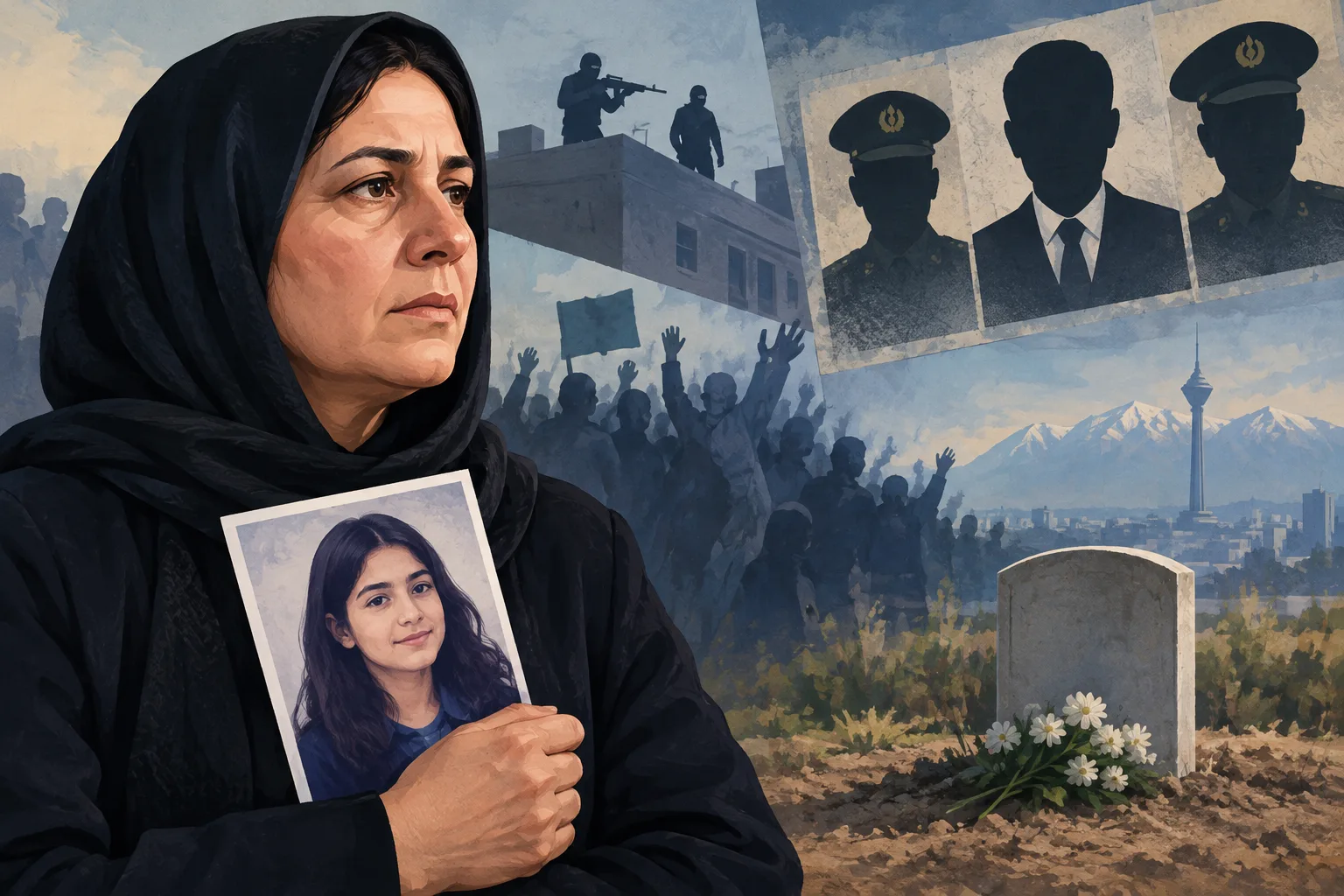
Iranian mother names officials she blames for protest killings after daughter is shot
Loading statistics…
Samira Eyni says she fled Iran after facing pressure to give a false account of her 16-year-old daughter’s death during protests. From abroad, she is seeking accountability for the killings.
Review information is loading.
Samira Eyni is publishing the names of Iranian security personnel and officials she believes were responsible for fatal shootings during January’s protests. She told BBC Panorama that she wants them identified and put on trial.
Her daughter Sevda was 16 when she was shot during a demonstration on 9 January on the outskirts of Tehran. Eyni, who was with her, says security forces opened fire on the crowd. In testimony published by the Iran Human Rights Documentation Center, she described seeing masked security personnel on nearby rooftops and said she believed the shot that killed Sevda came from above.
Eyni told the BBC that, after days searching for her daughter’s body, she was allowed to take it for burial only after saying that terrorists had killed her. She said she was initially prevented from visiting Sevda’s grave or placing a gravestone.
In her account to the documentation centre, Eyni said the people questioning her later agreed to a simple gravestone after she promised to return for an interview. She said they wanted her to claim Sevda had been a member of the Basij, a paramilitary force, and had been killed by protesters. Eyni said she refused to give that account and fled Iran after the 40-day memorial for her daughter.
She told the BBC that she was later charged in absentia after continuing to speak to foreign media. Among the charges she described was moharebeh, or waging war against God, which can carry the death penalty. She also said relatives and friends were arrested at a gathering to mark what would have been Sevda’s 17th birthday.
Iranian state television reported an official toll of 3,117 deaths on 21 January. In September, the group Iran Human Rights published a list of more than 4,200 people it said it had documented as killed in the January protests. It said 3,356 died on 8 and 9 January, representing 91% of the cases for which it had established an exact date of death. The group also reported pressure on families and attempts to impose official accounts of deaths.
Iran’s embassy in London told Panorama that foreign powers, including the United States, had hijacked peaceful protests and promoted violence and weapons supplies. Its response addressed the protests generally, rather than Sevda’s case.
How do we know?
4 listed sources · explore evidence, limitations and provenance.
Sign in to give this article a thumbs up or down.
About this discussion and AI questions
Private test discussion. Comments are readers’ views and are not yet automatically fact-checked. Editing is available for 60 seconds after posting.
Sign in with a confirmed reader account and choose a username to read comments and participate.
Sorting applies to top-level comments; replies remain oldest first. New comments and likes can change the order. Refresh for the current ranking.
Loading comments…