Five of seven Dutch reptile species declined over 12 years
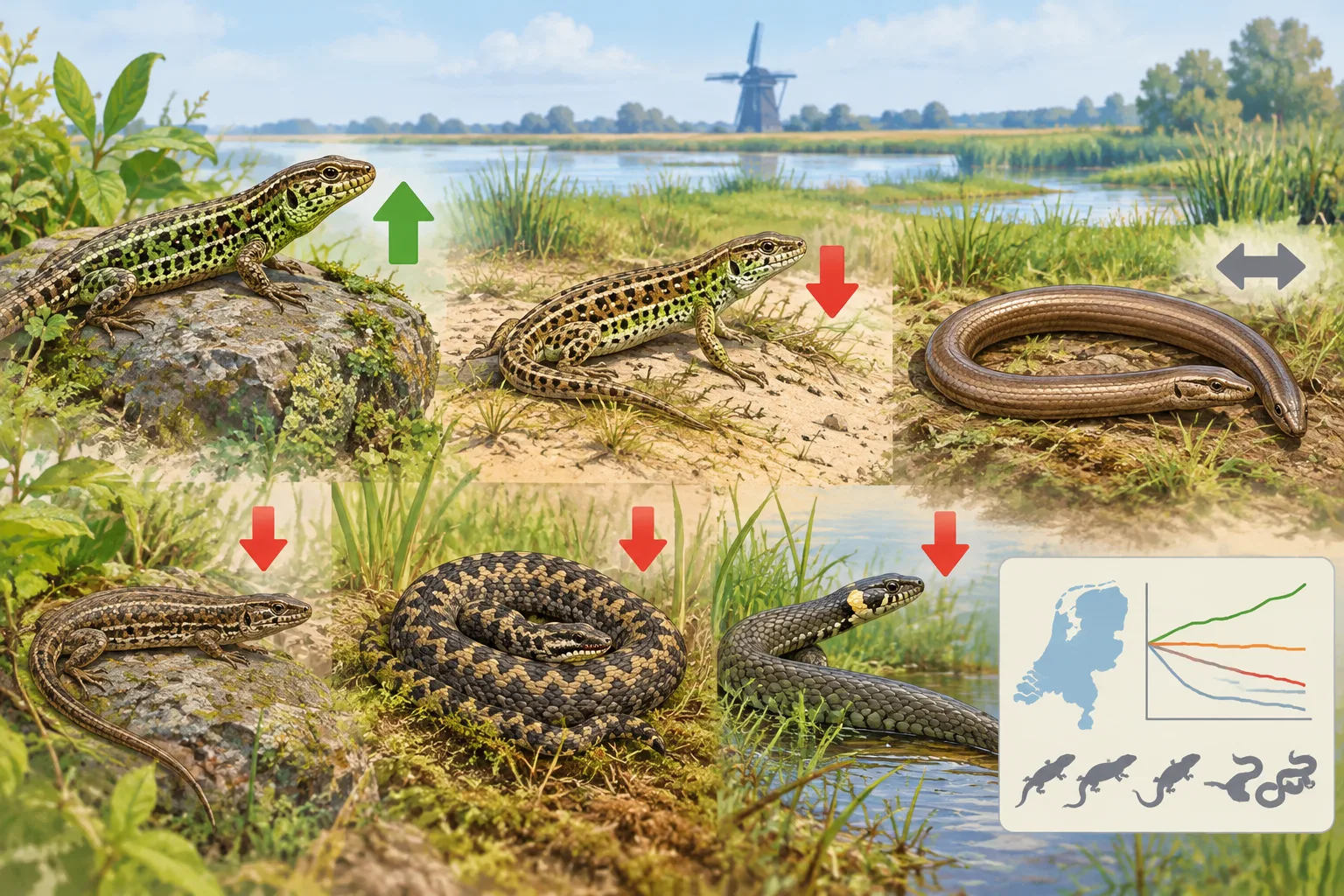
Five of the Netherlands’ seven reptile species declined between 2014 and 2025, while the common wall lizard increased and the slow worm remained stable. Overall, reptile numbers were about level with 1994.
Review information is loading.
Five of the Netherlands’ seven reptile species have declined over the past 12 years, according to new figures from Statistics Netherlands (CBS) and reptile conservation group RAVON. Only the common wall lizard increased; the slow worm was stable.
The figures track population trends from 2014 to 2025. Across all seven species, numbers in 2025 were about the same as in 1994, after an overall decline since 2014.
The wall lizard’s population has grown more than fivefold since 1995, although its rise has slowed in recent years. CBS says habitat management, including linking areas where the lizards live, and a warming climate may have contributed to the turnaround.
The sand lizard and slow worm have also increased since 1994, but their more recent trends differ: sand lizard numbers have fallen sharply since 2014, while the slow worm has been stable. CBS says the sand lizard may be affected by its habitat becoming overgrown and by a decline in food, particularly insects.
The viviparous lizard has seen the steepest long-term fall: its population was nearly 75% lower in 2025 than in 1994. The smooth snake has declined by more than 60% since 1997. CBS says reduced food availability may be one factor for the smooth snake, while a changing climate may be affecting species that fare better in cooler, wetter conditions, including the viviparous lizard and adder.
The adder has declined since 2006, and the grass snake has fallen over the past 12 years after increasing between 1994 and 2013. CBS and RAVON monitor reptile populations through the Dutch Ecological Monitoring Network; the figures are indices of population trends rather than counts of every animal.
Sign in to give this article a thumbs up or down.
About this discussion and AI questions
Private test discussion. Comments are readers’ views and are not yet automatically fact-checked. Editing is available for 60 seconds after posting.
Sign in with a confirmed reader account and choose a username to read comments and participate.
Sorting applies to top-level comments; replies remain oldest first. New comments and likes can change the order. Refresh for the current ranking.
Loading comments…