French archivists digitise forgotten family films to preserve memories
The French group Ofnibus is digitising family films and videotapes brought in by the public, preserving footage and helping people reconnect with memories and histories that could otherwise be lost.
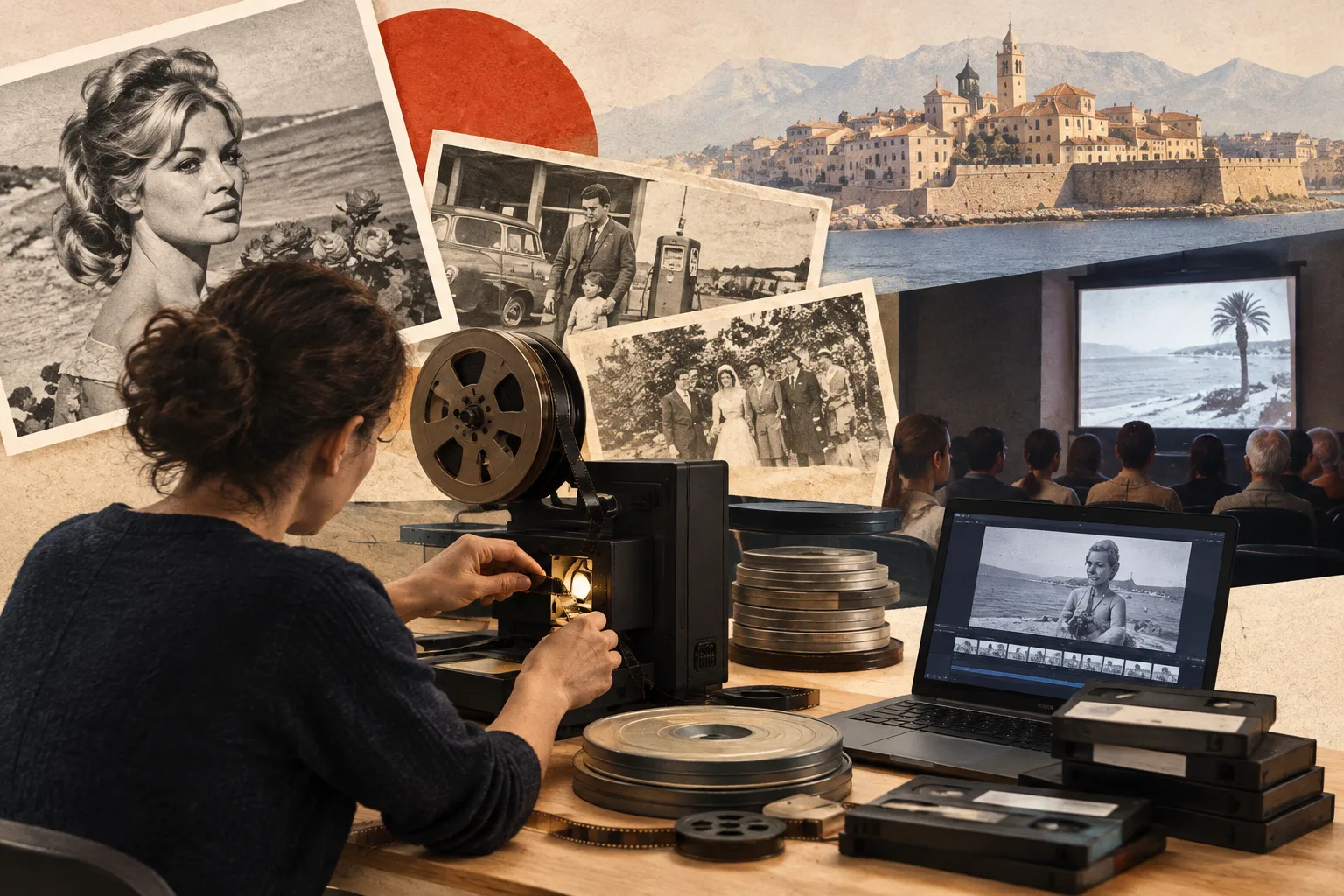
A French group is travelling from town to town to digitise old family films and videotapes, helping preserve personal memories that might otherwise be thrown away and giving relatives a chance to identify what the footage shows.
Ofnibus has held 23 residencies over five years. During a recent stay in Antibes on the French Riviera, the group digitised 22 hours of amateur footage and arranged a public screening of a 30-minute film drawn from selected images. About 50 local people attended.
The archive work can bring family histories back into view. Romain Gimenes, a 30-year-old teacher, watched Super 8 footage of his grandfather, whom he had never met, and recognised the man who gave him his middle name. The reels also showed family members and a service station once owned by his family, since replaced by a bakery.
Retired travel agent Sophie Roux-Nantas brought 16 reels dating from the 1930s to the 1960s that had been left in her garage. Yohan Chabert, a physiotherapist, brought 28 video cassettes from the 1990s.
Ofnibus members Stephanie Ange, Pierre Bouchut and Margot Lestien take equipment to communities to view, scan and preserve material brought in by the public. They say much of it arrives without clear labels or anyone certain of its contents. The Antibes screening included footage of Brigitte Bardot, who lived on the Riviera, filmed with a basket of roses.
The group’s work also captures everyday life beyond one family’s memories. In five years, Bouchut says, he has encountered footage ranging from weddings and birthdays to farming and scenes connected with the Second World War. Lestien says it is urgent to identify and understand the images while people who remember their subjects and circumstances are still alive.
Home-movie formats such as Kodak’s Super 8, introduced in 1965, made amateur filmmaking more accessible. But older projectors and video players are less common, and inherited films can become difficult to watch or identify. The digitised copies allow families to view and share the footage, while the Antibes project also preserved selected material for an archive.
Sign in to give this article a thumbs up or down.
From the discussion
Private test discussion. Comments are readers’ views and are not yet automatically fact-checked. Editing is available for 60 seconds after posting.
Sign in with a confirmed reader account and choose a username to read comments and participate.
Sorting applies to top-level comments; replies remain oldest first. New comments and likes can change the order. Refresh for the current ranking.
Loading comments…