Gaza journalists faced unsubstantiated Hamas allegations before Israeli strikes, FPU says
Free Press Unlimited says allegations against two Palestinian reporters reached mainstream audiences without adequate scrutiny. Israel’s military rejects the organisation’s claims.
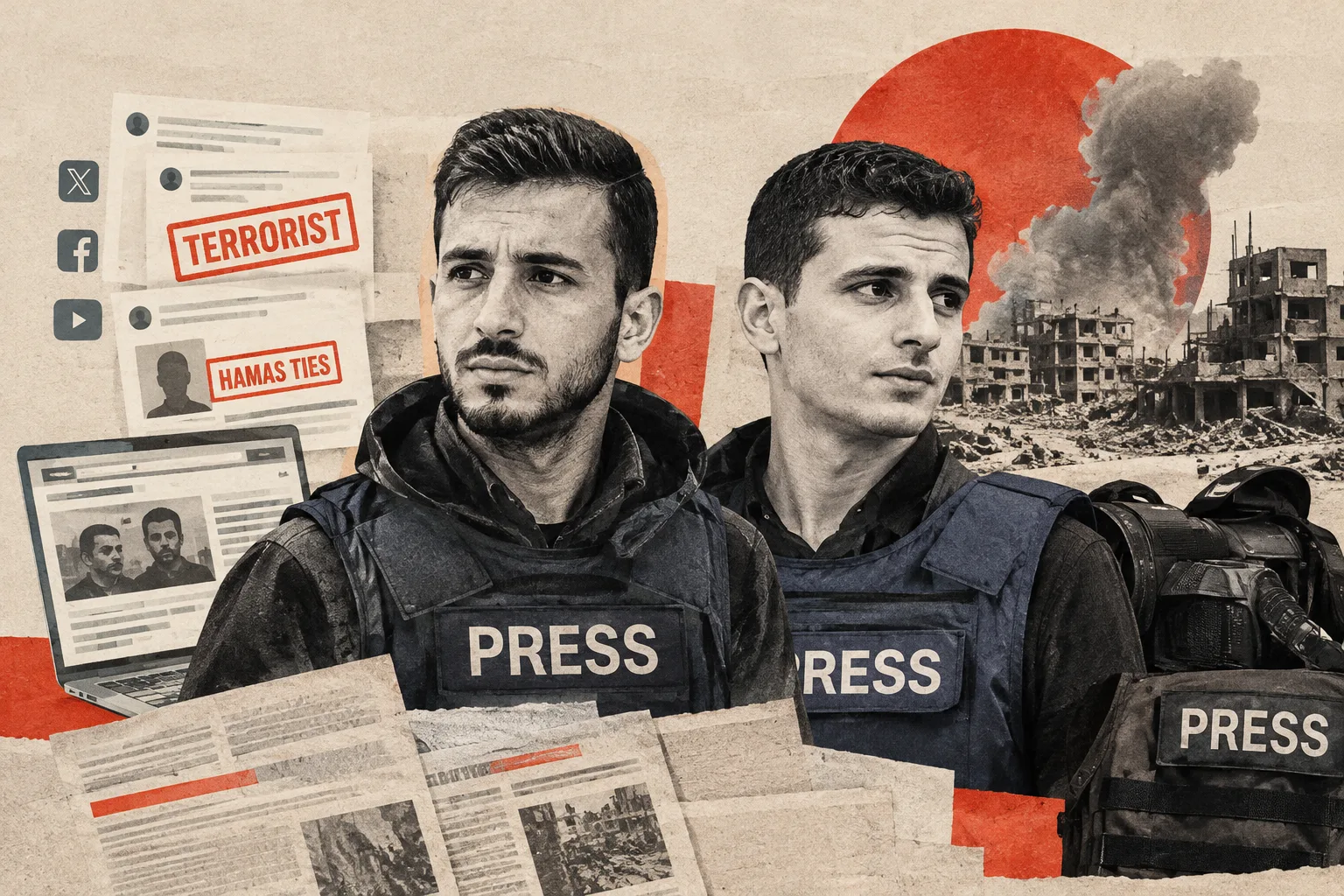
Israeli officials and outside commentators spread unsubstantiated terrorism allegations about Palestinian journalists Anas Al-Sharif and Hossam Shabat before and after Israel killed them in Gaza, press freedom organisation Free Press Unlimited (FPU) says in a new report.
The Amsterdam-based organisation traced how claims about the two reporters circulated online and appeared in mainstream news. It found that many of the articles it examined did not show attempts to verify the allegations independently.
Al-Sharif was killed on 10 August 2025 in an air strike on a tent housing journalists outside Al-Shifa Hospital. Shabat was killed on 24 March 2025 when a drone struck his vehicle near the Indonesian Hospital. Israel acknowledged both attacks and accused the journalists of ties to Hamas, according to the Committee to Protect Journalists (CPJ).
Israel released images it said came from Hamas records. FPU says the original documents were not made available, leaving their authenticity unverifiable; it concluded that the materials presented did not establish that either journalist was directly participating in hostilities when killed. Both journalists and Al Jazeera denied the allegations.
In its response to FPU, Israel’s military rejected the report’s claims and said it did not intentionally harm journalists. It said any action against people posing as journalists had been taken because of their involvement in terrorism, not their work.
How the allegations spread
FPU identified 269 social media posts from 32 individuals and organisations concerning the two journalists. It says accusations that their reporting was propaganda developed into allegations that they were active members of a terrorist organisation.
The organisation describes officials and independent actors reposting each other’s claims, exchanging information and, in some cases, working with Israeli ministries on a paid basis. But it says its use of the word ‘network’ does not mean the actors were centrally directed, and that it could not establish direct coordination of specific messages about the two journalists.
FPU also examined 98 publications from 14 news outlets in seven Western countries. It found that more than 72% did not show attempts to independently verify the allegations, while nearly a quarter did not provide a meaningful response from the journalists or their employers. The findings describe the selected publications, not all Western coverage.
The report also identified examples of scrutiny: Canadian broadcaster CBC News approached Shabat for comment, and German broadcaster Tagesschau examined documents presented by Israel. De Telegraaf editor-in-chief Kamran Ullah told FPU that limited resources and the urgency of breaking news could make seeking a response difficult.
In an assessment dated April 2026, CPJ identified 32 Palestinian journalists or media workers it said Israel had deliberately targeted in reprisal for their work. It said the military had labelled 18 of them terrorists or linked to terrorism. FPU draws on a later, revised CPJ tally, so the April breakdown is not necessarily the same as the later list.
Sign in to give this article a thumbs up or down.
From the discussion
Private test discussion. Comments are readers’ views and are not yet automatically fact-checked. Editing is available for 60 seconds after posting.
Sign in with a confirmed reader account and choose a username to read comments and participate.
Sorting applies to top-level comments; replies remain oldest first. New comments and likes can change the order. Refresh for the current ranking.
Loading comments…