Government plans to ban most new leasehold flats in England and Wales
The government plans to ban most new leasehold flats in England and Wales, replacing them with commonhold, while proposing ground-rent caps and other protections. How existing leaseholders would switch systems—and how freeholders would be compensated—remains unresolved.
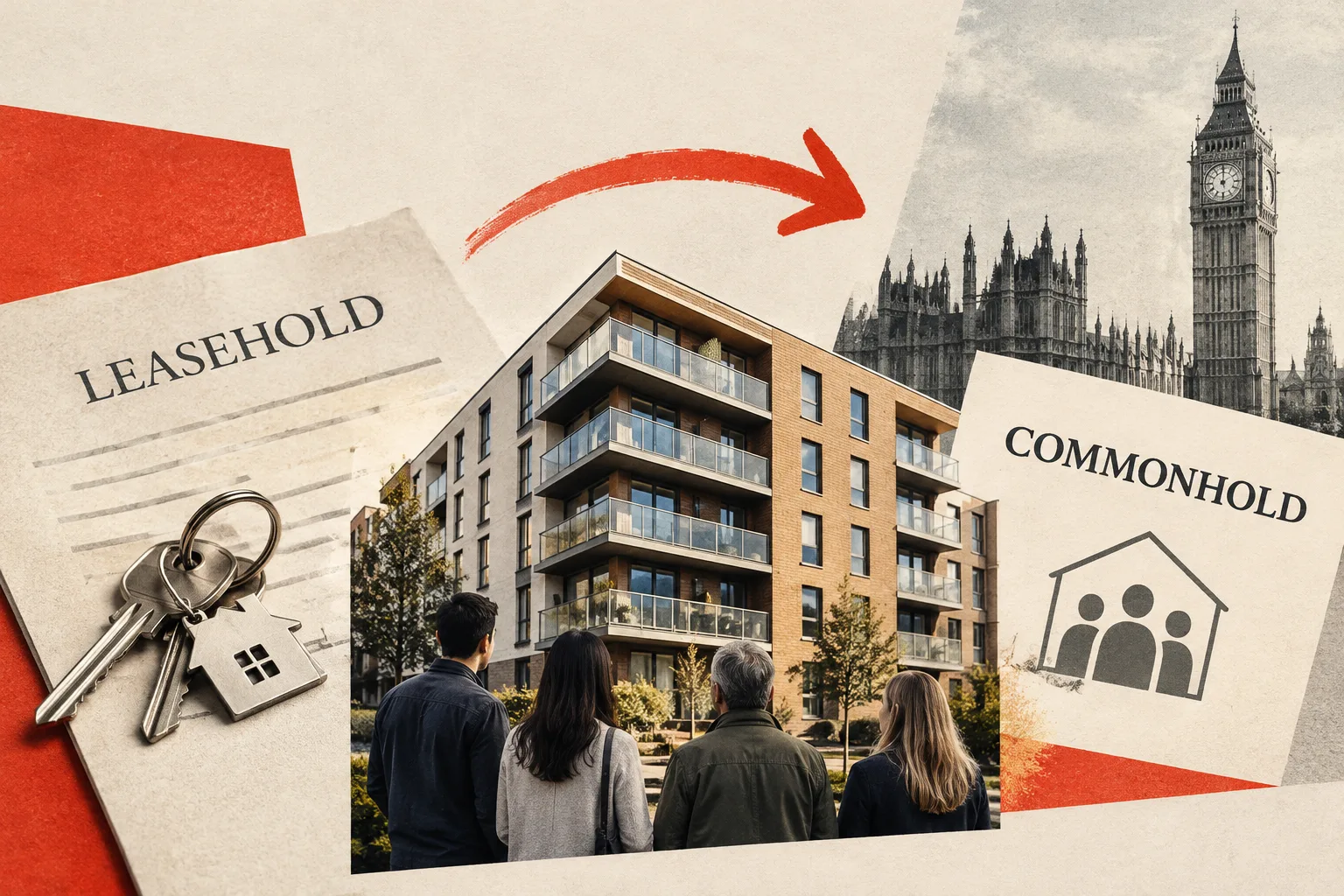
The UK government plans to ban most new leasehold flats in England and Wales and replace them with commonhold, under proposed legislation that would also cap ground rents and strengthen protections for existing leaseholders.
The Commonhold and Leasehold Reform Bill is expected to set out how residents in new developments would collectively own and manage their buildings. Housing minister Matthew Pennycook said the current system was “blighting lives” and an “anachronism in the twenty-first century”.
The proposal follows Labour’s 2024 election manifesto pledge to end what it called the “feudal leasehold system”. Further details are expected later.
The bill would cap ground rent for existing leaseholders at £250 a year, then reduce it to a nominal “peppercorn” rate after 40 years. It would also make it easier for existing leasehold buildings to convert to commonhold, abolish forfeiture over relatively small debts, improve transparency around service charges and crack down on estate charges.
But converting existing buildings is more complicated than changing the system for new developments, leaving questions over how current leaseholders could move to commonhold and how freeholders would be compensated. Campaigner Giles Grover, of End Our Cladding Scandal, warned the proposals could create a two-tier system between buyers of new homes and existing leaseholders.
A spokesperson for the Residential Freehold Association, which represents some of the UK’s largest freeholders, said £18.7bn “could be wiped out from investments overnight” and called the policy unjust.
The BBC reported that Fozia Malik, who owns a one-bedroom flat in Oldham, expects her ground rent to rise from £150 to £300 in January. She also pays more than £4,000 a year in service charges. Her building’s managing agent said those charges reflected costs outside its control and high insurance costs linked to fire safety issues.
Malik said she would “never” buy a leasehold flat again. The BBC said it had received complaints about the system from more than 1,000 leaseholders over the past two years.
Sign in to give this article a thumbs up or down.
From the discussion
Private test discussion. Comments are readers’ views and are not yet automatically fact-checked. Editing is available for 60 seconds after posting.
Sign in with a confirmed reader account and choose a username to read comments and participate.
Sorting applies to top-level comments; replies remain oldest first. New comments and likes can change the order. Refresh for the current ranking.
Loading comments…