Homophobia reports in English football rise 46% as clubs face questions on inclusion
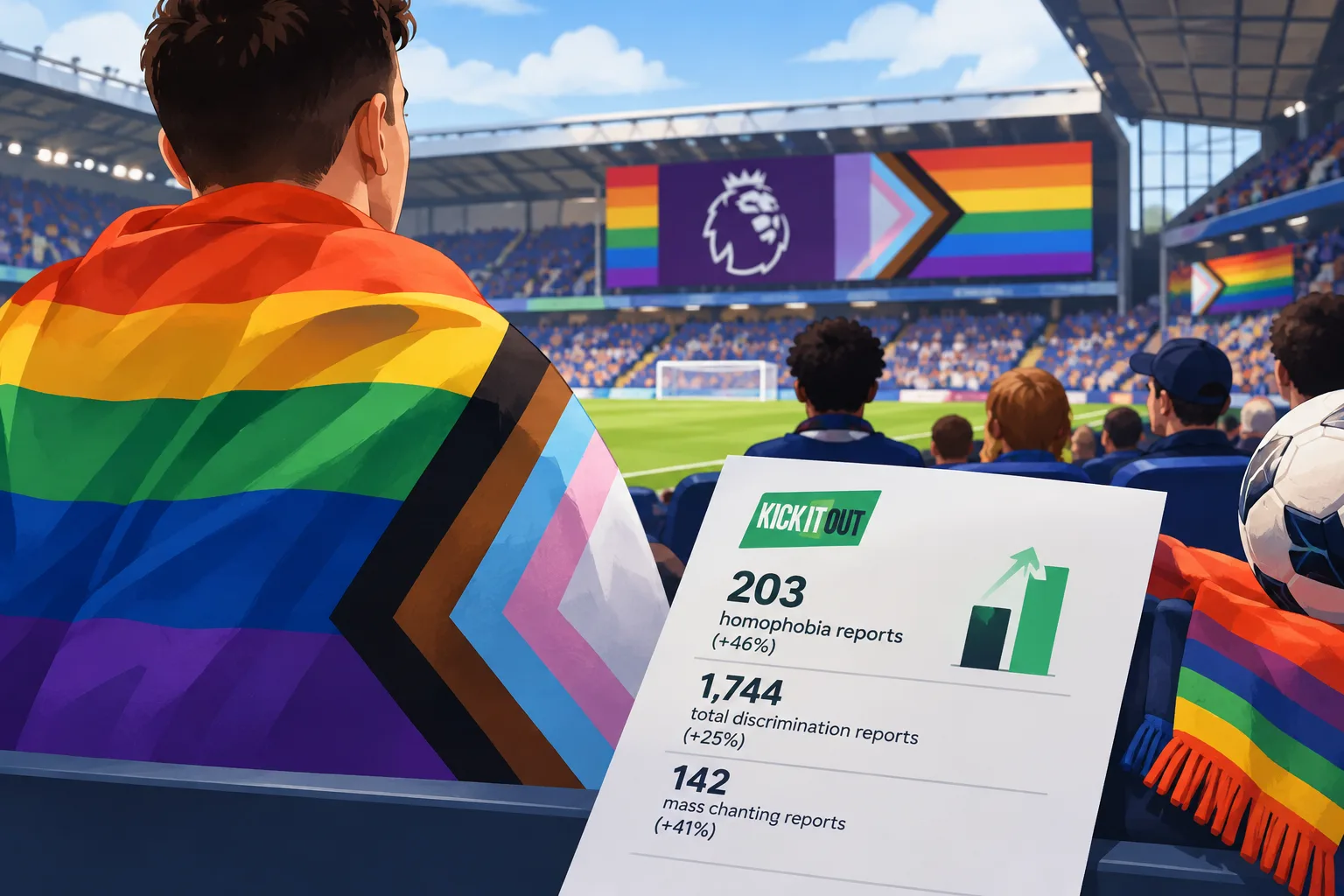
Kick It Out recorded 203 reports of homophobia in English football in 2025-26, a 46% rise on the previous season. The figures come as Premier League clubs face questions about LGBTQ+ inclusion, funding and representation.
Review information is loading.
Reports of homophobic abuse in English football rose sharply last season, with Kick It Out recording 203 reports of homophobia — a 46% increase on the previous campaign — as clubs and the Premier League face questions about their efforts to make the game inclusive.
The anti-discrimination charity received 1,744 reports of discrimination across football in 2025-26, up 25% year on year and its highest total. It also recorded 142 reports of discriminatory mass chanting, a 41% rise and a record. That figure included increases in homophobic and transphobic chants.
The reports are not a count of every incident in football: they reflect cases brought to the charity. Kick It Out says the largest rise in abuse was in grassroots football, where its reports increased by 140% compared with 2024-25. Three-quarters of those reports came from senior grassroots games involving players over 18.
What clubs are doing
The BBC asked all 20 Premier League clubs about their LGBTQ+ policies and the budgets devoted to them. Nine replied; none disclosed how much they spent on this work.
Some clubs described public-facing initiatives. Leeds United has sponsored the city’s Pride celebrations since 2018, while Manchester City holds an annual Progress flag-raising ceremony. Manchester United said staff marched in the city’s parade and that a flag designed with LGBTQ+ supporters’ group Rainbow Devils was displayed at Old Trafford. Tottenham’s community arm helped launch a weekly football session for LGBTQ+ people in 2024. This season, all 20 Premier League clubs have dedicated LGBTQ+ supporters’ groups.
The league introduced Premier League With Pride last season, with stadium branding but no player involvement. It says the initiative will return in 2026-27, with two match rounds in February. A spokesperson said there would be no centrally co-ordinated activation in November.
Jon Holmes, founder of Sports Media LGBT, said player engagement had declined from the late 2010s. He also said club media teams had become more cautious amid growing toxicity on social media. Simon Blake, chief executive of Stonewall, said the Premier League’s Rainbow Laces campaign had run its course in its previous form, but that visibility still mattered.
The league’s Rainbow Laces partnership with Stonewall ended before the 2025-26 season, after a final campaign in November and December 2024 that saw several players decline to wear rainbow armbands or take part in related plans. The Premier League said the new February initiative would give all 20 clubs a home match during the period.
Representation and the rise in reports
Kick It Out gathered data on senior management at 17 Premier League clubs and senior coaching at 11. It said 0.3% of people in the management roles surveyed openly identified as LGBTQ+, while no LGBTQ+ people were identified in the senior coaching groups surveyed. The charity estimated that more than 100 additional LGBTQ+ employees would be needed across Premier League clubs to achieve workforce diversity comparable with census data. The figures cover only the clubs and roles included in its data.
Kick It Out has linked some increases in abuse over recent seasons to domestic and international events. It said a Supreme Court ruling on gender and the Football Association’s subsequent ban on transgender women in women’s football were followed by a spike in transphobic abuse.
A separate Stonewall study published in October found that 11% of LGBTQ+ people in the UK avoided gyms, exercise classes or sports groups because they feared discrimination; the figure was 29% among trans people. Among LGBTQ+ people who had attended a live sporting event or watched sport in a bar in the previous year, 15% said they had experienced discrimination, rising to 26% among trans people.
Blake said views that had once been seen as unacceptable were now being expressed more freely, affecting people’s relationship with sport. Holmes described the current period as a “trough” for LGBTQ+ campaigns, while saying he saw some reason for optimism in the growth of fan groups and greater attention from football authorities.
Sign in to give this article a thumbs up or down.
About this discussion and AI questions
Private test discussion. Comments are readers’ views and are not yet automatically fact-checked. Editing is available for 60 seconds after posting.
Sign in with a confirmed reader account and choose a username to read comments and participate.
Sorting applies to top-level comments; replies remain oldest first. New comments and likes can change the order. Refresh for the current ranking.
Loading comments…