How to clean and sanitise wooden and plastic cutting boards
Food-safety experts say the material matters less than proper cleaning: wash boards after use, then sanitise them after contact with raw meat or poultry.
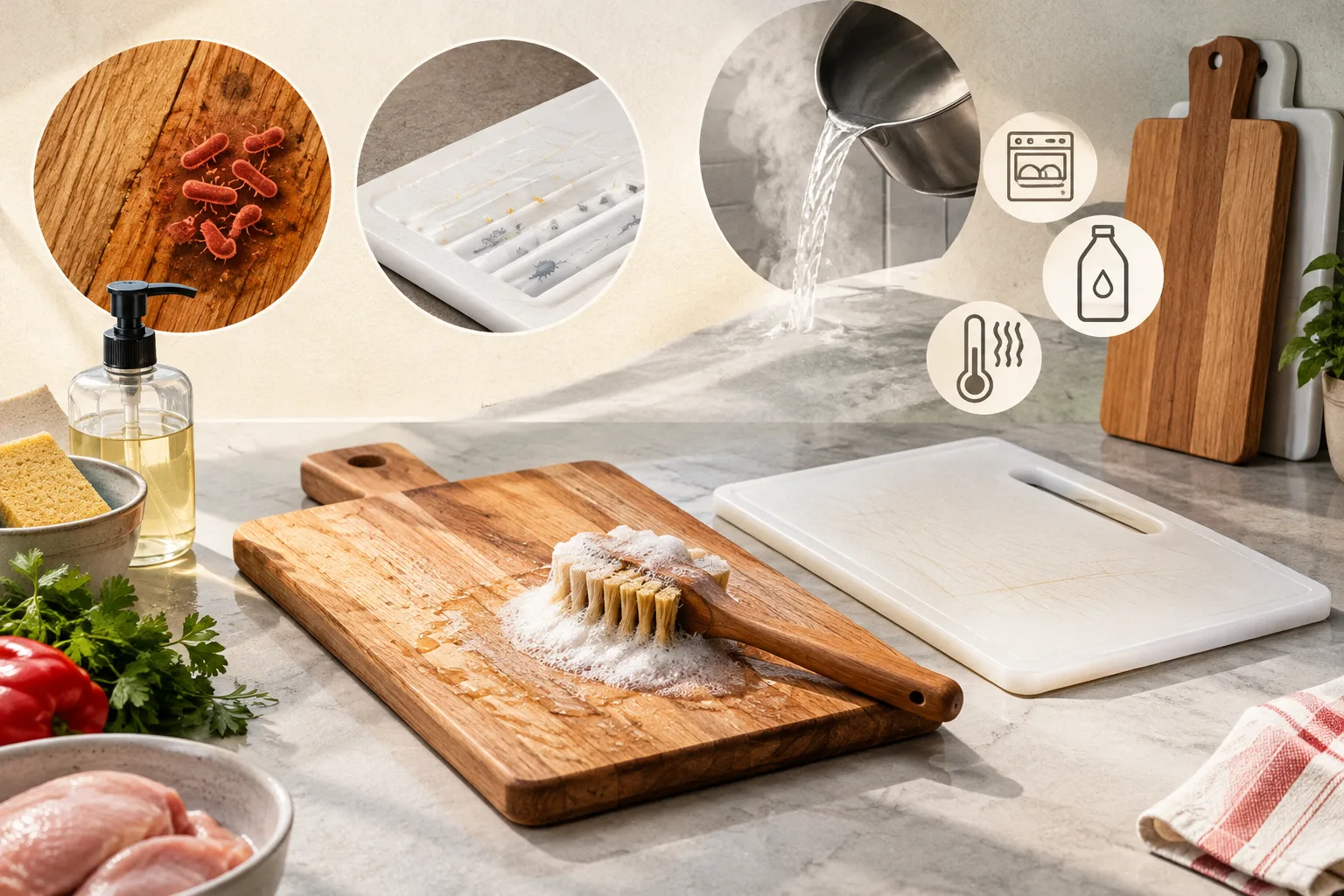
A clean cutting board is more important than whether it is made of wood or plastic, according to food-safety experts cited by The Associated Press. Washing with warm, soapy water is enough for everyday use, but boards used for raw meat or poultry need an extra sanitising step after washing.
Plastic was long seen as the safer option because it seemed easier to clean. But research by University of Wisconsin-Madison food-safety researcher Dean Cliver found that salmonella and E. coli sank into wood, where they did not multiply and eventually died. Scratched plastic boards can also trap food residue in knife grooves, making them difficult to scrub clean.
The evidence comparing the two materials is not conclusive, Rutgers University food-science professor Donald Schaffner told AP. His practical advice is to clean and care for whichever board you use.
For routine chopping, warm, soapy water and air-drying are sufficient, said Nicole Papantoniou of the Good Housekeeping Institute. To sanitise a board after it has been cleaned, Schaffner recommends carefully pouring boiling water over it, using a dishwasher’s sanitise cycle or applying bleach diluted according to the bottle’s directions. He said vinegar and hydrogen peroxide are less effective for sanitising.
Wooden boards should be washed by hand: a dishwasher or prolonged soaking can warp or crack them. Plastic and composite boards can go in the dishwasher. Schaffner keeps plastic boards for raw meat and poultry, while separate boards for meat and produce are a reasonable precaution, though not essential.
Wood boards also need regular conditioning to stay in good shape. John Boos & Co. recommends applying a light layer of food-safe mineral oil about once a month, more often with daily use. Boards should dry standing on their edges so air can reach both sides.
There is no fixed replacement schedule. Schaffner discards boards when they become increasingly difficult to clean; Papantoniou also advises replacing warped boards, plastic boards with deep grooves or loose curls, and wooden boards that crack or develop dark spots that could be mould.
Sign in to give this article a thumbs up or down.
From the discussion
Private test discussion. Comments are readers’ views and are not yet automatically fact-checked. Editing is available for 60 seconds after posting.
Sign in with a confirmed reader account and choose a username to read comments and participate.
Sorting applies to top-level comments; replies remain oldest first. New comments and likes can change the order. Refresh for the current ranking.
Loading comments…