ICJ president urges states to stay engaged beyond cases before the court
ICJ President Yuji Iwasawa told the UN General Assembly’s legal committee that states should remain engaged with the court beyond cases in which they are directly involved, including by monitoring its docket and helping shape requests for advisory opinions.
Review information is loading.
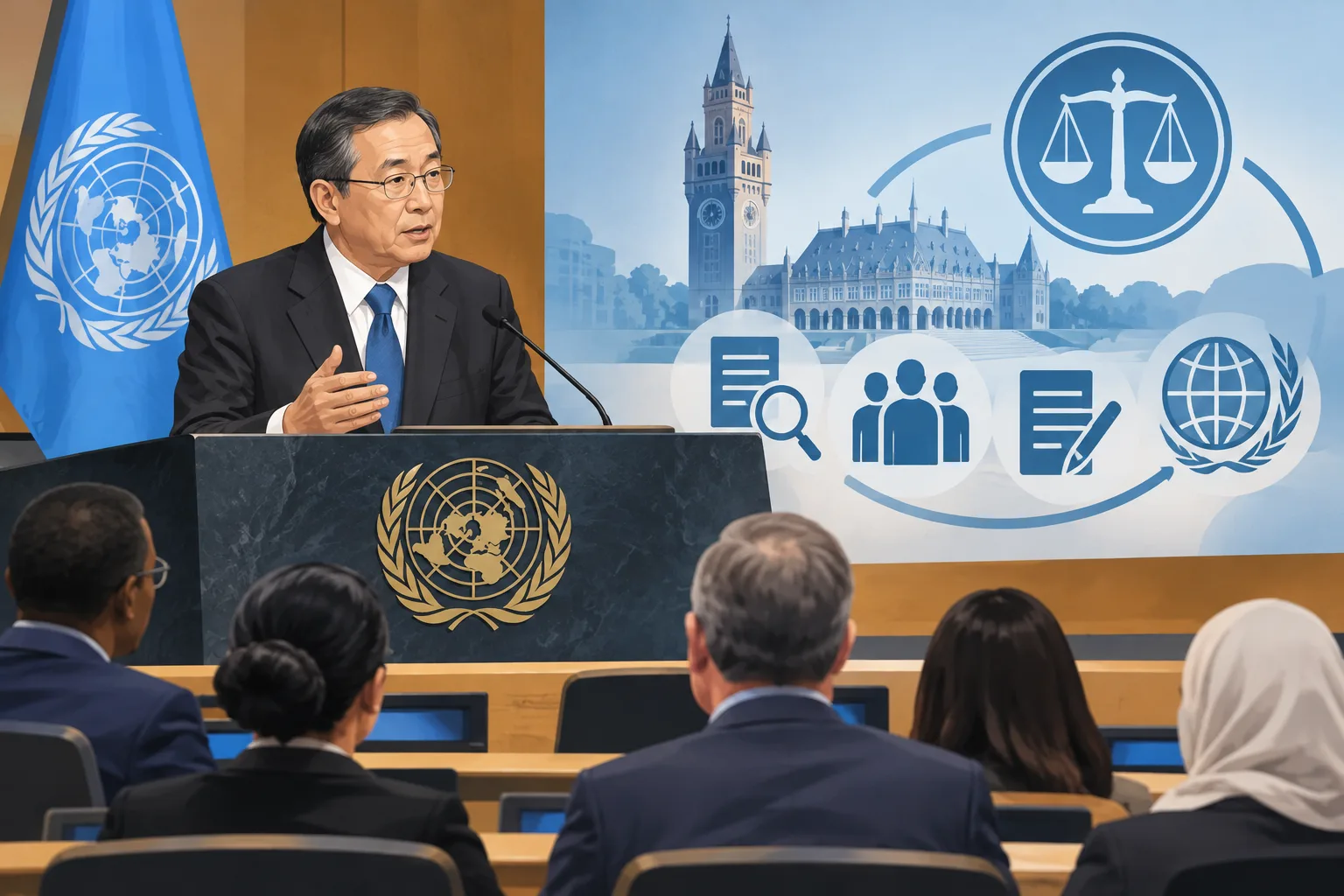
International Court of Justice President Yuji Iwasawa has urged states to stay engaged with the court beyond cases in which they are directly involved, saying their role can shape proceedings and support the peaceful settlement of disputes.
Speaking to the UN General Assembly’s Sixth Committee on 30 October, Iwasawa said states should monitor the court’s docket even when they are not parties to a case, because they may have opportunities to intervene. He also highlighted the role of government legal advisers in tracking deadlines and maintaining continuity across different forms of engagement.
The relationship between states and the court should be “a continuing engagement”, Iwasawa said, rather than something limited to occasions when a state appears as a claimant or defendant. He said states’ involvement was also important before the court is asked to give an advisory opinion: they help assess whether to seek one, identify the legal issue and frame the question.
The address came as the committee completed its review of the first group of topics in the International Law Commission’s annual report and moved on to its second cluster. Delegates discussed the Commission’s work on disputes involving international organisations and private parties, state succession and responsibility, and the use of subsidiary means to determine rules of international law.
On disputes involving international organisations, Chile and Romania welcomed the Commission’s effort to balance organisational immunity with private parties’ access to justice. Malaysia and Thailand cautioned that the limited and inconsistent state practice on succession and state responsibility made it difficult to identify clear customary rules. Poland, Portugal and Nigeria offered differing suggestions on the Commission’s draft guidance on subsidiary means, including judicial decisions and scholarly writings.
The Sixth Committee’s meeting account is published by the UN for information media and is not an official record.
Sign in to give this article a thumbs up or down.
From the discussion
Private test discussion. Comments are readers’ views and are not yet automatically fact-checked. Editing is available for 60 seconds after posting.
Sign in with a confirmed reader account and choose a username to read comments and participate.
Sorting applies to top-level comments; replies remain oldest first. New comments and likes can change the order. Refresh for the current ranking.
Loading comments…