India food inflation reaches 8.94% as poorer households face sharper squeeze
Food inflation in India hit 8.94% in October, outpacing the overall inflation rate and weighing most heavily on poorer households. Rising costs for staples and meals reflect weather disruption, supply pressures and gaps in storing and processing produce.
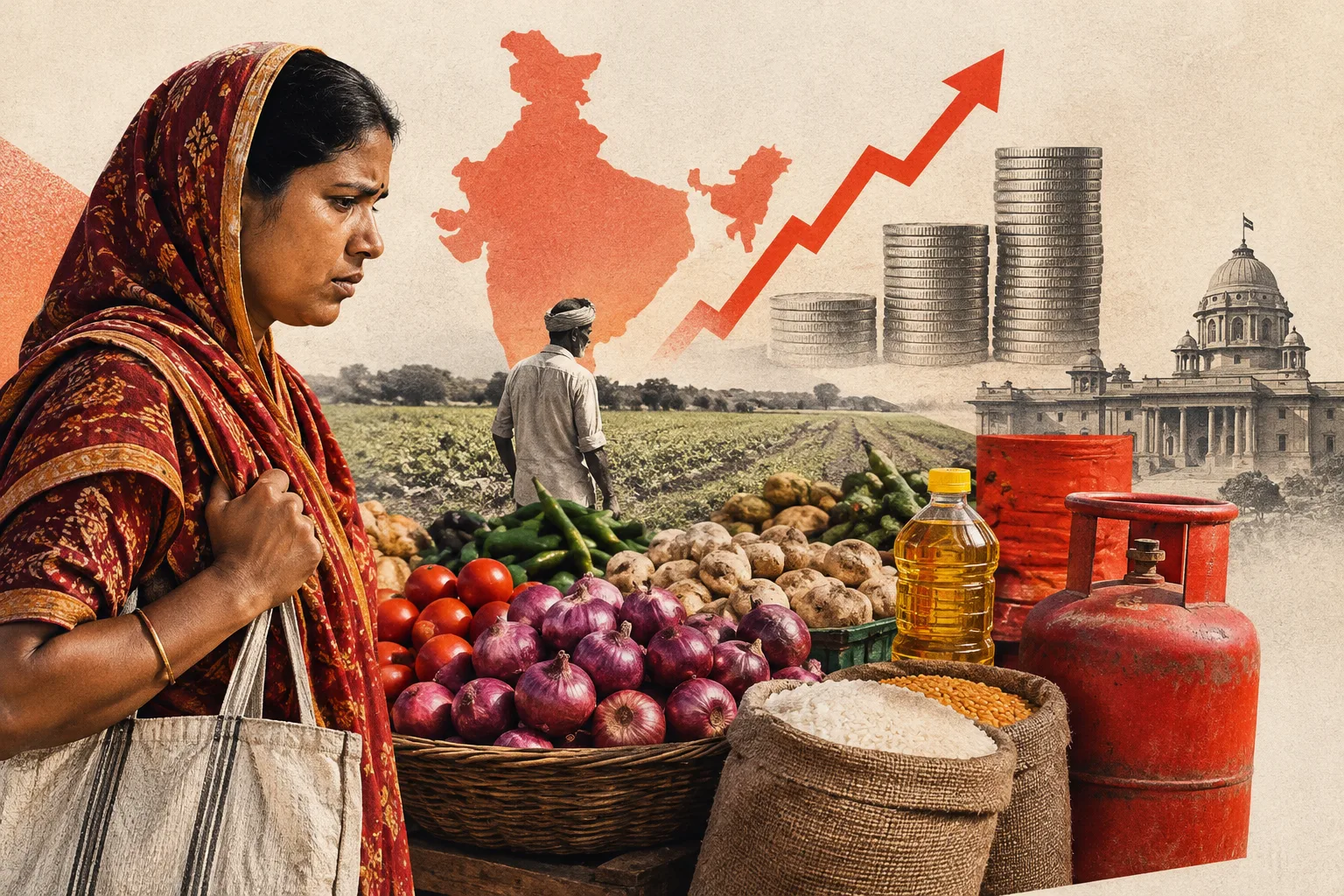
Food prices in India are rising faster than inflation overall, with food inflation reaching 8.94% in October as the cost of a home-cooked vegetarian meal rose 12% over the year. The squeeze is hitting poorer households hardest, while putting pressure on a government balancing consumer costs against farmers’ incomes.
Retail inflation rose to 6.09% in October, from 5.54% in September, according to government figures cited by the BBC. Food inflation was higher in rural areas, at 9.09%, than in cities, where it was 8.68%.
The impact is uneven. Crisil chief economist Dharmakirti Joshi calculated that inflation for the poorest fifth of rural households was 6.9% in October, compared with 6.5% for the richest fifth. In urban areas, the rates were 6.1% and 5.3% respectively.
Crisil’s analysis found that a home-cooked vegetarian thali became 12% more expensive year on year in October, while a non-vegetarian meal rose 9%. Higher prices for onions, tomatoes, other vegetables, edible oil, rice and cooking gas contributed. Rice prices were up about 10%, pulses 8%, edible oil 13% and liquefied petroleum gas 10%, according to Pushan Sharma, Crisil’s director of intelligence. “It’s no longer a few commodities that are driving this increase, it’s becoming a little more broad-based,” he said.
Economists point to weather disruption, supply shortages and rising costs for farm inputs. India’s southwest monsoon was 13% below normal this year and unevenly distributed, while nearly 60% of the country’s farmland depends on rainfall. Energy costs can also feed into transport, irrigation and agricultural inputs; India’s reliance on imported edible oil leaves prices exposed to global markets.
Perishable foods can drive sudden spikes: onion stocks fall between harvests, while tomatoes can become scarce during hot months. But shortages are only part of the problem. Limited capacity to sort, store and process produce can leave farmers struggling to sell a glut, only for consumers to face higher prices later. Better storage and processing could help preserve surplus, Sharma said.
The burden matters beyond the shopping bill. Food and beverages make up 36.75% of the goods and services in India’s latest inflation basket, down from 45.86% in the previous series as spending patterns have changed. But food remains a substantial part of many household budgets, leaving poorer families less room to absorb price rises. “Adjustability for a poor country like India is significantly lower,” said Rajeswari Sengupta, an economics associate professor at the Indira Gandhi Institute of Development Research.
Government cereal stocks are above prescribed minimum levels, and a free-food programme covers nearly 800 million people, offering some protection against rising prices. But the government also faces competing demands: minimum support prices are intended to protect farmers from a collapse in crop prices, while sharp increases in staples such as onions and tomatoes can prompt officials to restrict exports or limit stockpiling to ease pressure on consumers.
Sengupta warned that a food-price shock could spread more widely if workers seek higher wages to cover living costs and businesses pass on higher labour expenses. The immediate pressure is already being felt at the household table; whether it spreads into broader inflation will depend in part on how prices and wages respond.
Sign in to give this article a thumbs up or down.
From the discussion
Private test discussion. Comments are readers’ views and are not yet automatically fact-checked. Editing is available for 60 seconds after posting.
Sign in with a confirmed reader account and choose a username to read comments and participate.
Sorting applies to top-level comments; replies remain oldest first. New comments and likes can change the order. Refresh for the current ranking.
Loading comments…