Inquiry expands work on white working-class pupils’ education
An independent inquiry is widening its work on educational outcomes for white working-class children in England, focusing next on early years and teenagers aged 14 to 19. Its first report found substantial gaps in development, GCSE results and attendance.
Review information is loading.
An independent inquiry into the educational outcomes of white working-class children in England is beginning a new phase focused on early years and teenagers aged 14 to 19, after its first report called for major changes to a system it said was failing them.
Baroness Morris, a co-chair of the inquiry and a former education secretary, said improving outcomes required action “from across society”, not just schools. Education Secretary Lucy Powell said she was backing the work to identify barriers holding children back.
The inquiry’s first report, published this summer, drew on education data and evidence from thousands of young people and parents, as well as hundreds of teachers. It examined 1.25 million white British pupils in England who receive free school meals.
Among those pupils, 48% reached a good level of development by age five, compared with 75% of white British children not receiving free school meals. At GCSE, 36% achieved grade 4 or above in English and maths, against 72% of all pupils not receiving free school meals. The inquiry also reported that the group missed 13% of school sessions, compared with 7% for all pupils.
The inquiry cautioned that its figures did not capture all low-income families: it said the scale of disadvantage was likely to be substantially larger because some families on low incomes did not receive free school meals. The BBC reports that all families receiving Universal Credit have since become eligible for free school meals.
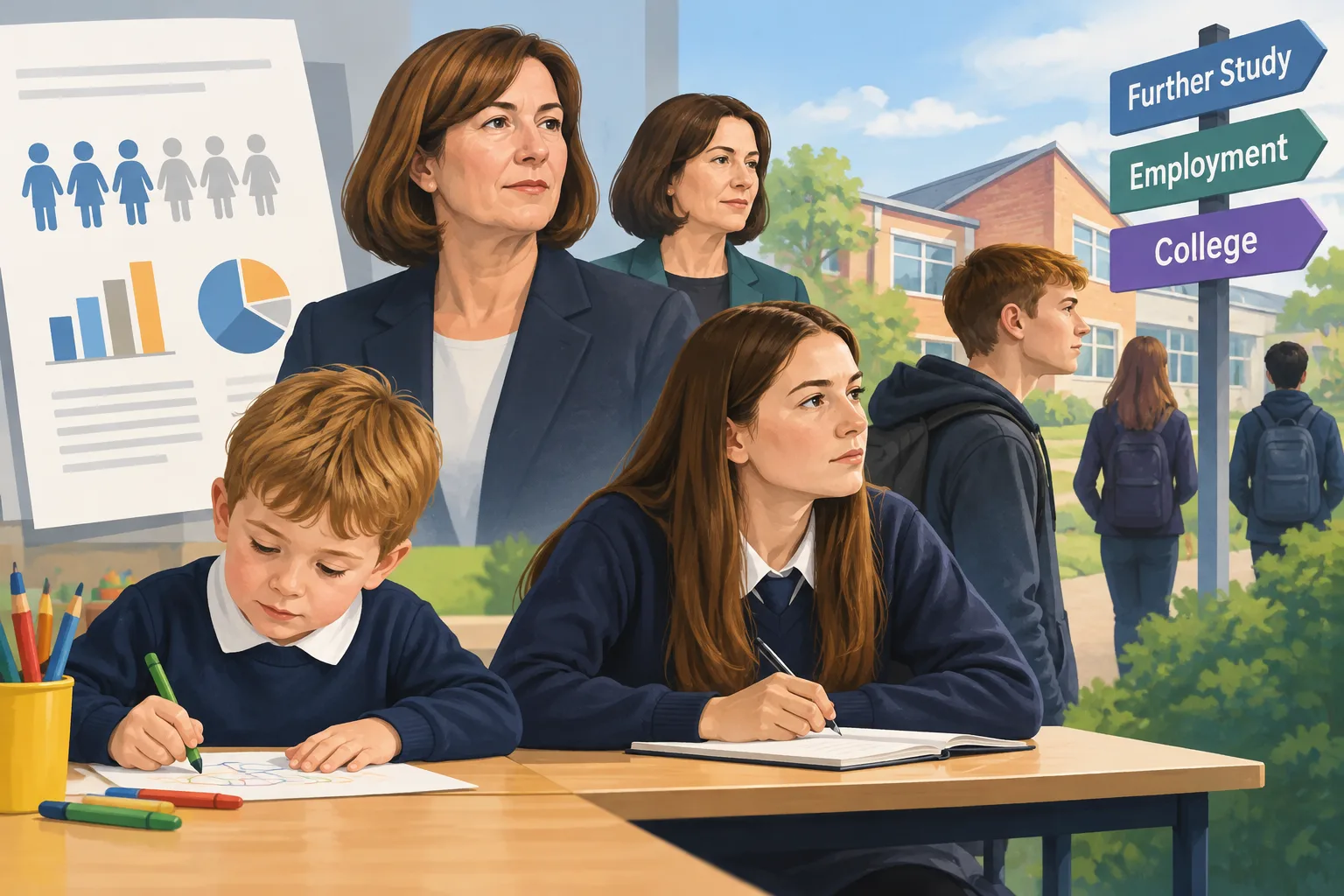
The new phase will develop recommendations for government, schools, colleges and other organisations. It will examine how children move from primary to secondary school and how teenagers can find clearer routes into further study and employment.
The inquiry was commissioned by the multi-academy trust Star Academies and is supported by the Department for Education.
Sign in to give this article a thumbs up or down.
About this discussion and AI questions
Private test discussion. Comments are readers’ views and are not yet automatically fact-checked. Editing is available for 60 seconds after posting.
Sign in with a confirmed reader account and choose a username to read comments and participate.
Sorting applies to top-level comments; replies remain oldest first. New comments and likes can change the order. Refresh for the current ranking.
Loading comments…