Jeffries wins Democratic speaker nomination as Black Senate representation rises
House Democrats have nominated Hakeem Jeffries for speaker, while a preliminary count points to a record seven Black senators in the next Congress.
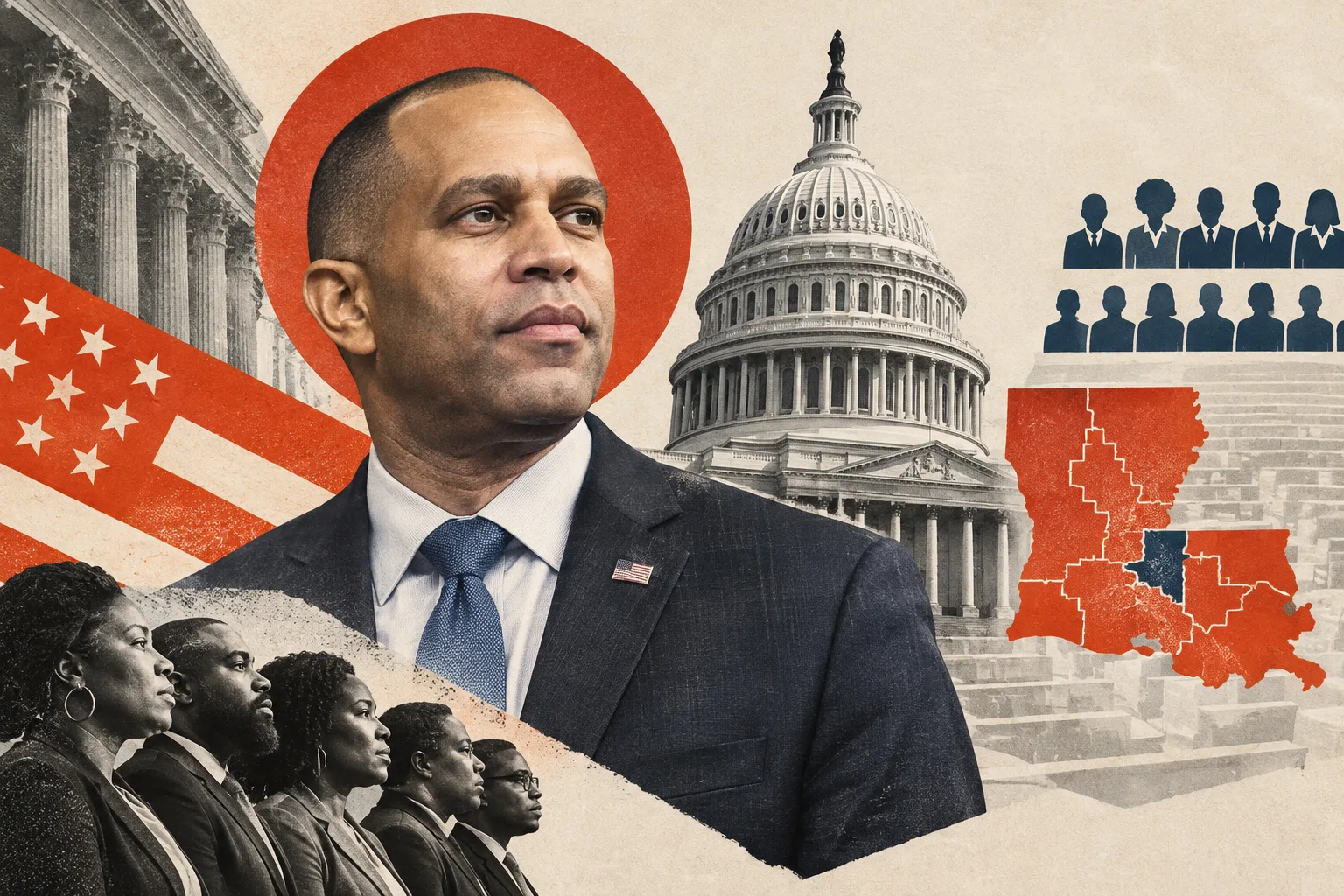
Jeffries, the current House Democratic leader, secured the nomination by 251 votes to 11 in a closed-door party ballot on Wednesday. The full House must still elect its speaker when the new Congress meets on 3 January 2027. If elected, Jeffries would be the first Black person to hold the post.
The Joint Center for Political and Economic Studies, which tracks Black representation, provisionally counted 66 Black voting members in the next Congress as of 13 November: 59 in the House and seven in the Senate. That is the same voting total the centre uses for the current Congress.
The Senate figure would rise from five to a record seven, while the number of voting House members would fall from 61. Including two non-voting delegates, the centre’s total is 68 for each Congress. Its count covers all Black lawmakers, not just caucus members.
The seven include Democrat Scott Colom, whose victory over Republican Cindy Hyde-Smith made him Mississippi’s first Black senator since Reconstruction. The Joint Center notes that seven senators would represent 7% of the chamber, compared with a Black share of about 14% of the US population.
Louisiana representative Troy Carter, who is running unopposed to lead the Congressional Black Caucus, expects it to be the largest in its history, MS NOW reported. The caucus began the current Congress in 2025 with 62 members, then a record. Its final membership for the next Congress is not yet settled.
Two Louisiana House races remain to be decided in runoffs on 12 December. Black Democratic candidates Pat Moore and Chauna Banks are competing in the fifth and sixth districts respectively, so the final representation count could change.
Redistricting and voting rights
In April, the US Supreme Court ruled that a Louisiana map containing a second Black-majority district was an unconstitutional racial gerrymander. Its decision also tightened the standard for challenging district maps under Section 2 of the Voting Rights Act.
The majority said evidence must support a strong inference of intentional racial discrimination; it did not rule out such challenges. Dissenting Justice Elena Kagan warned that the new requirements would make them nearly impossible to win. President Donald Trump praised the ruling as a victory for equal protection.
Louisiana subsequently redrew the sixth district held by Democrat Cleo Fields, changing it from a Black-majority to a white-majority seat. Fields chose not to seek re-election to Congress and said he would instead seek a state Senate seat.
Incoming caucus members told MS NOW they expect to pursue the John R. Lewis Voting Rights Advancement Act. The 2025 version of the bill would establish new criteria for requiring prior approval of voting-rule changes; legislative tracker Congress Swing Tracker says it has not passed either chamber.
Sign in to give this article a thumbs up or down.
From the discussion
Private test discussion. Comments are readers’ views and are not yet automatically fact-checked. Editing is available for 60 seconds after posting.
Sign in with a confirmed reader account and choose a username to read comments and participate.
Sorting applies to top-level comments; replies remain oldest first. New comments and likes can change the order. Refresh for the current ranking.
Loading comments…