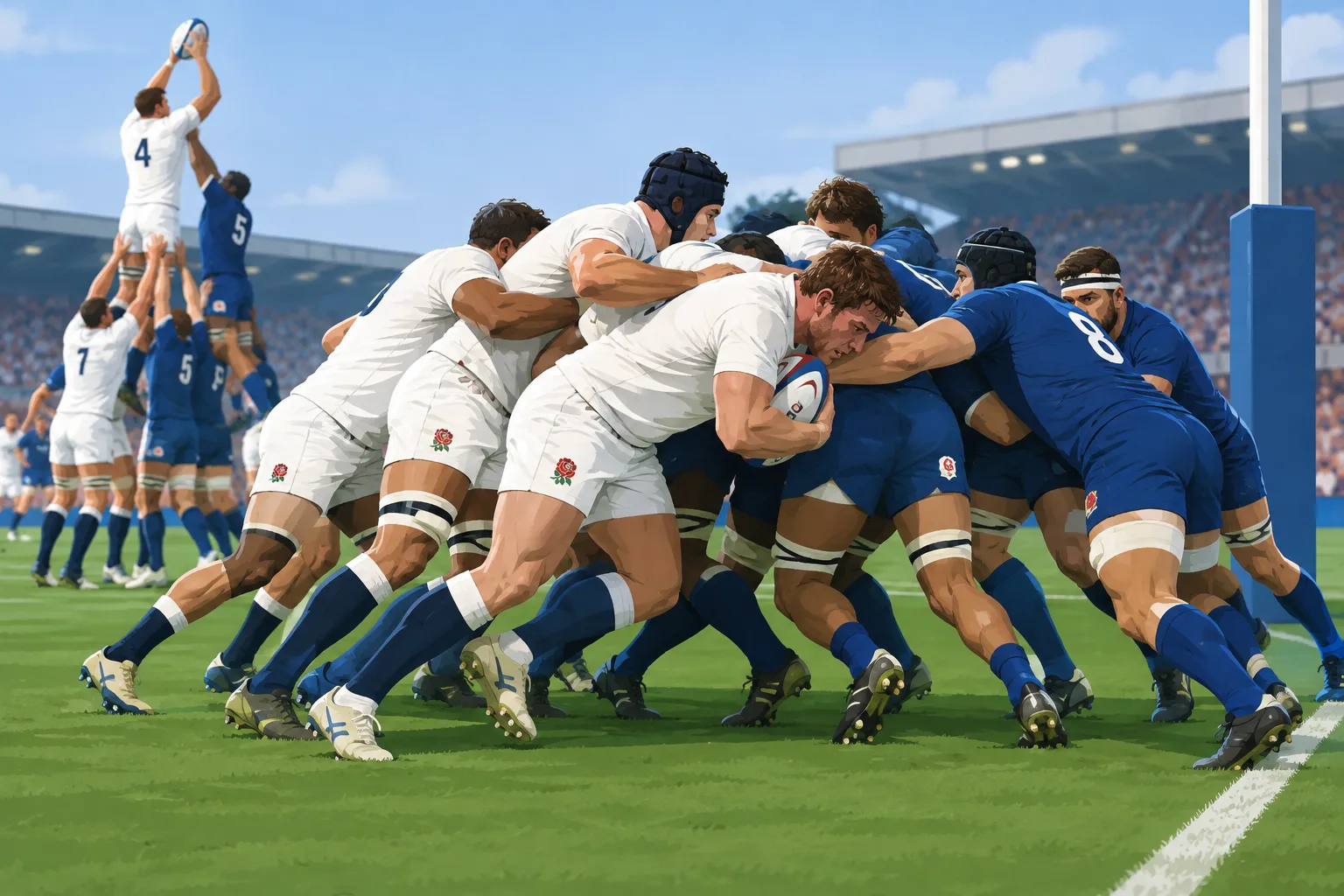
Law change gives rugby’s driving maul a new edge
A change to rugby union’s maul laws has coincided with a sharp rise in tries from the set-piece, encouraging teams to target attacking line-outs instead of kicking for goal.
Review information is loading.
A summer law change has helped make the driving maul a more potent try-scoring weapon in rugby union, prompting teams to choose attacking line-outs over penalty kicks more often in the opening weekend of the Nations Championship.
Across six matches last weekend, teams opted to kick for goal only three times. BBC Sport’s analysis of data from Oval Insights found maul tries are being scored more consistently than at any point since the company began tracking them, in both November internationals and the English Premiership.
The change bars defenders from “swimming” up the side of a maul. If they move beyond the ball and can no longer push, they must detach and rejoin from behind the back foot. Previously, defenders could work around the maul while remaining bound, disrupting its momentum and seeking a turnover.
England forward Alex Coles said the change puts greater emphasis on the first seconds of the contest and shifts the balance towards the attacking side, although it has not transformed the maul entirely.
Mauls have produced 0.67 tries per game in this November international window, compared with 0.3 last year. In the Premiership, the rate is 0.42 per game this season, up from 0.23 across the first five rounds of last season.
Teams are also adjusting their defence. Coles said he expected more aerial contests at line-outs, while defenders who stay on the ground can try to disrupt the set-up with speed and physicality. He predicted the balance could move back towards an even contest as teams adapt.
The threat can have effects beyond the maul itself: a defence concentrating on stopping a push-over try may leave space elsewhere. It also raises the cost of conceding penalties, which can give the attacking side a line-out close to the try line.
England play Japan at Twickenham on Saturday. With the 2027 Rugby World Cup a year away, teams will be weighing how best to exploit the change — and how to counter it.
Sign in to give this article a thumbs up or down.
About this discussion and AI questions
Private test discussion. Comments are readers’ views and are not yet automatically fact-checked. Editing is available for 60 seconds after posting.
Sign in with a confirmed reader account and choose a username to read comments and participate.
Sorting applies to top-level comments; replies remain oldest first. New comments and likes can change the order. Refresh for the current ranking.
Loading comments…