Licence-free mini-car sales double across Europe as teenagers turn from scooters
Licence-free mini-cars are finding a growing market across Europe, particularly among teenagers and rural residents, but their 45km/h top speed brings safety limits on faster roads.
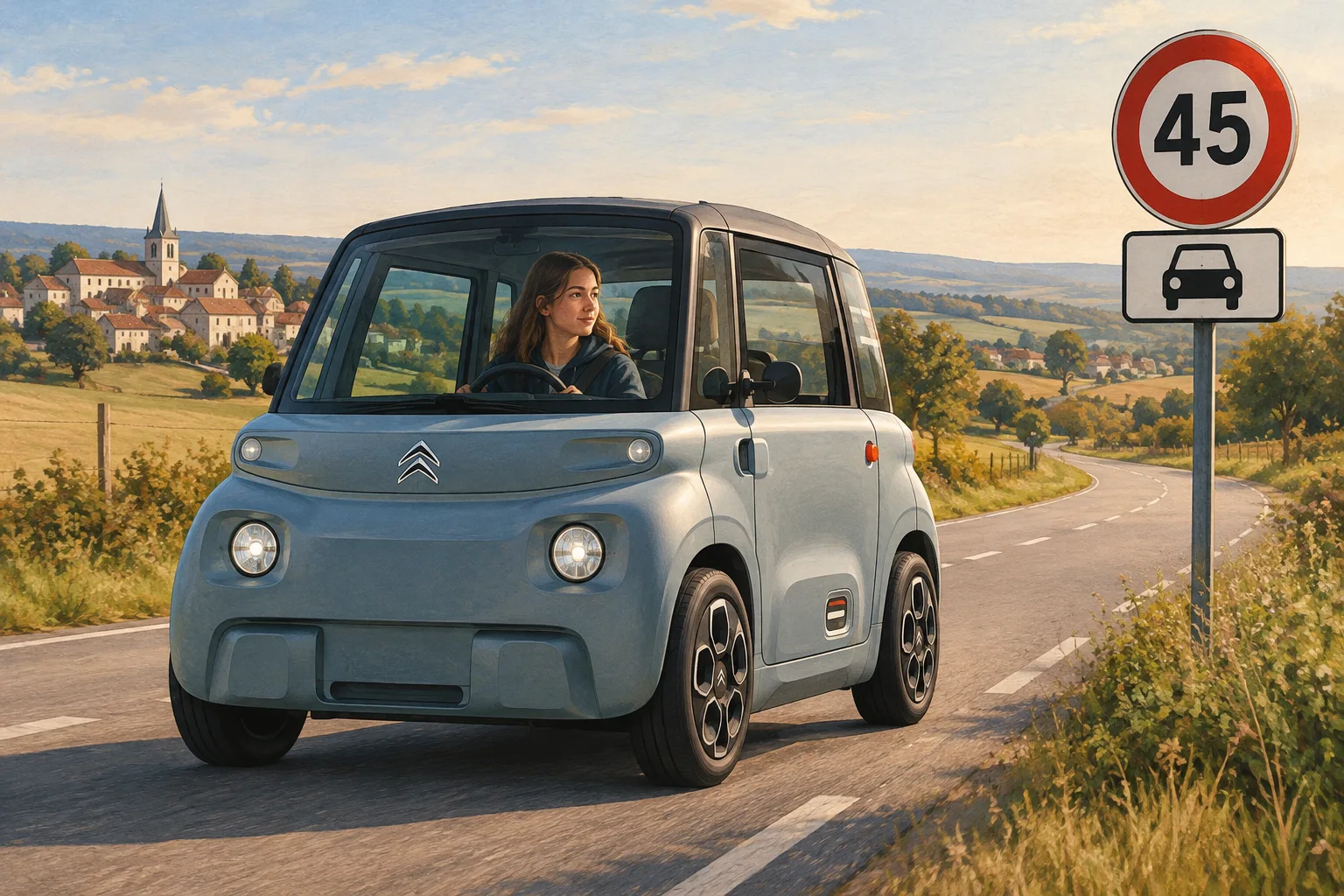
Small, licence-free cars are gaining ground across Europe, with sales doubling over five years as teenagers increasingly choose them instead of scooters and mopeds. Their appeal is strongest in rural areas, where limited public transport can make a slow, two-seat vehicle a route to independence.
Sales across Europe rose from 30,000 to 60,000 in the five years to 2024, according to BBC News. France’s registrations climbed from about 13,000 in 2019 to around 25,000 last year. Teenagers now account for a quarter of mini-car sales, the BBC reports.
The vehicles are classified as motorised quadricycles, or four-wheel mopeds, and can be driven at different minimum ages across Europe. In France and Italy, drivers can start at 14 after road-safety training; the minimum is 15 in Germany and Spain and 16 in the UK. They have a maximum speed of 45km/h (28mph) and are banned from motorways.
For 16-year-old Selena Buse, who lives in rural France, her Citroën Ami is a way to get to school and visit friends. “It’s indispensable in rural areas like where I live,” she told the BBC. She also says drivers sometimes honk when she is on faster roads because she cannot go any quicker.
The market has traditionally served older rural residents and people who have lost their driving licences. The electric Ami, launched in 2020, helped change that image and brought more young customers into the sector. More than 67% of new licence-free cars sold in 2026 are electric, market analyst Marie-Laure Nivot told the BBC.
Nivot said stricter EU rules for motorised two-wheelers made it too costly for manufacturers to update mopeds and small scooters, which have largely disappeared from the market since 2020. Licence-free cars have filled some of that gap.
The growth has not been uniform. Sales in France rose strongly until 2024 but have since flattened following the withdrawal of subsidies for electric models. French manufacturers Aixam and Ligier are also expanding beyond their home market. Aixam says it has invested €30m in French production capacity, while its sales are growing in other European countries.
The cars offer shelter from the weather and more protection than a scooter, but their low top speed can make faster roads hazardous. Daniel Laprès, 77, told the BBC he avoids national highways after finding the speed difference between his Aixam and other traffic frightening. The vehicles’ limits—two seats, 45km/h and no motorways—remain central to the trade-off: greater independence on local journeys, but not a substitute for a conventional car on every road.
Sign in to give this article a thumbs up or down.
From the discussion
Private test discussion. Comments are readers’ views and are not yet automatically fact-checked. Editing is available for 60 seconds after posting.
Sign in with a confirmed reader account and choose a username to read comments and participate.
Sorting applies to top-level comments; replies remain oldest first. New comments and likes can change the order. Refresh for the current ranking.
Loading comments…