Microsoft, FAA and NSA outages raise questions over AI and reliability
Recent failures disrupted Microsoft services, US air travel and a National Security Agency network. Officials describe different causes, while a survey of data-centre operators offers a more complicated picture of the longer-term trend.
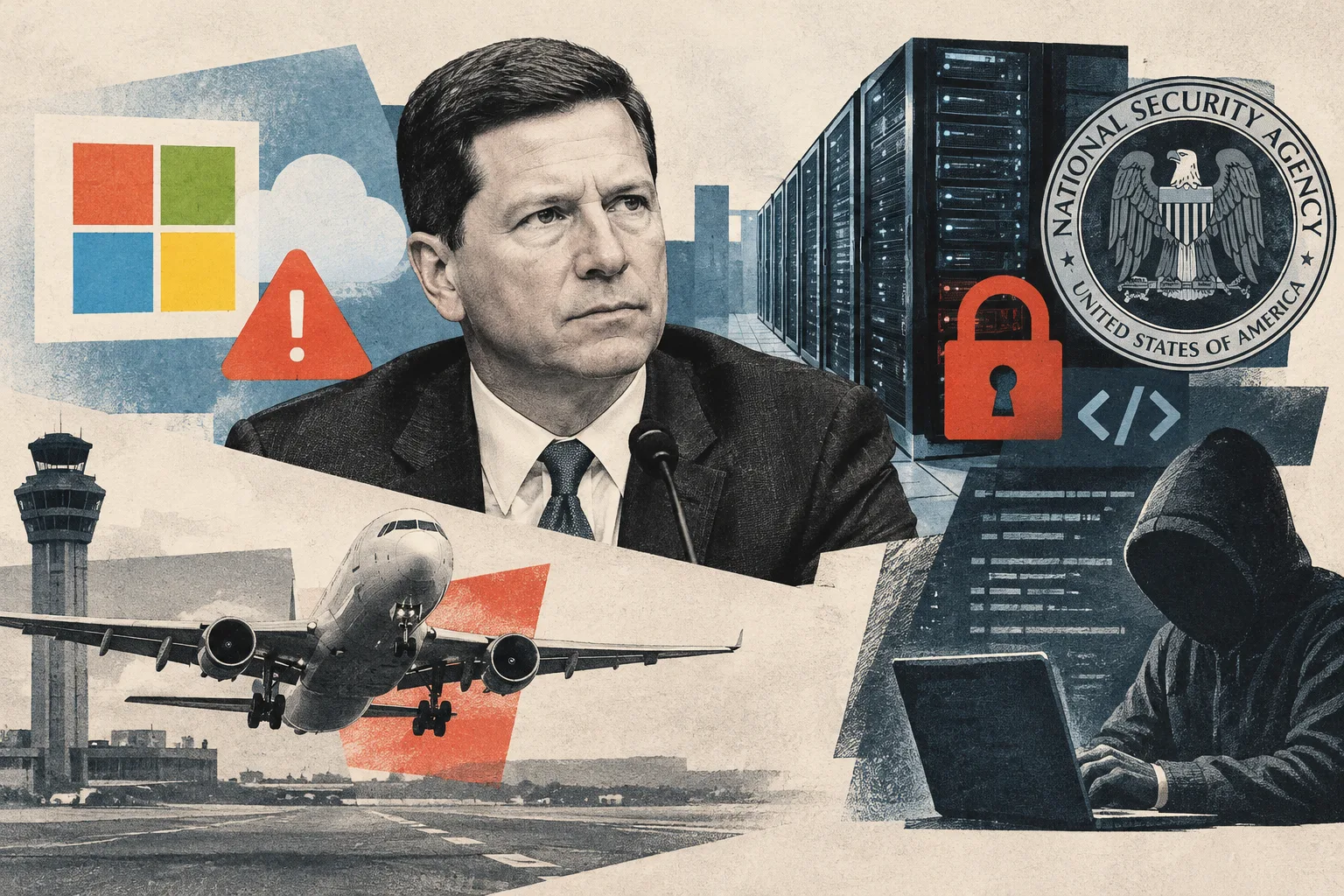
US Director of National Intelligence Jay Clayton told Congress on 18 November that he had a high level of confidence the affected systems had different causes and had not been hit by a cyberattack. He said officials had not seen the usual signs of an attack.
The recent cluster does not by itself establish that outages are becoming more frequent. In a 2026 Uptime Institute survey, 47% of 715 respondents said their organisation had experienced an impactful outage in the previous three years. That was three percentage points lower than in 2025, continuing a six-year decline in the share reporting one.
The survey covered data-centre owners and operators, not every outage worldwide, and was conducted before the November disruptions. Among those reporting an outage, 10% classified their most consequential one as serious or severe, unchanged from the previous survey.
A copy of a preliminary Microsoft incident report says the Microsoft 365 outage lasted almost a day, from 12 to 13 November. It says the greatest impact was on Exchange Online email, with parts of Teams and Copilot also affected.
The report points to a latent defect in a change rolled out from July, combined with extra network load after Teams switched gateways and reduced server capacity. Microsoft also said its outage did not stem from AI or AI agents, according to the Associated Press.
The Federal Aviation Administration halted departing flights across the US for nearly five hours on 13 November. The agency said a flood of connection attempts had made communications and radar feeds unstable. It and its network provider were still investigating the underlying cause on 15 November.
At the National Security Agency, Clayton told Fox Business that some systems had failed to restart as expected after patching a vulnerability in PHP, a programming language used by websites. CBS News reported on 18 November, citing two sources, that the agency’s network was back up but staggered staff arrivals were continuing.
Security firm Wiz says it used AI to help discover and test a group of PHP vulnerabilities known as PHP2Shell. The NSA had urged organisations to patch those vulnerabilities in October.
Elsewhere, security firm Calif says it used AI to find a Java vulnerability and develop an exploit in testing. The US Cybersecurity and Infrastructure Security Agency urged organisations to patch the flaw.
AI tools can also be used by attackers. Google’s threat intelligence team and Mandiant say they have observed attackers using AI-enabled security-testing tools during actual intrusions. Their report concerns cyberattacks more broadly, not the recent outages.
Sign in to give this article a thumbs up or down.
From the discussion
Private test discussion. Comments are readers’ views and are not yet automatically fact-checked. Editing is available for 60 seconds after posting.
Sign in with a confirmed reader account and choose a username to read comments and participate.
Sorting applies to top-level comments; replies remain oldest first. New comments and likes can change the order. Refresh for the current ranking.
Loading comments…