Milburn’s youth reforms forecast to save £200m a year by 2036
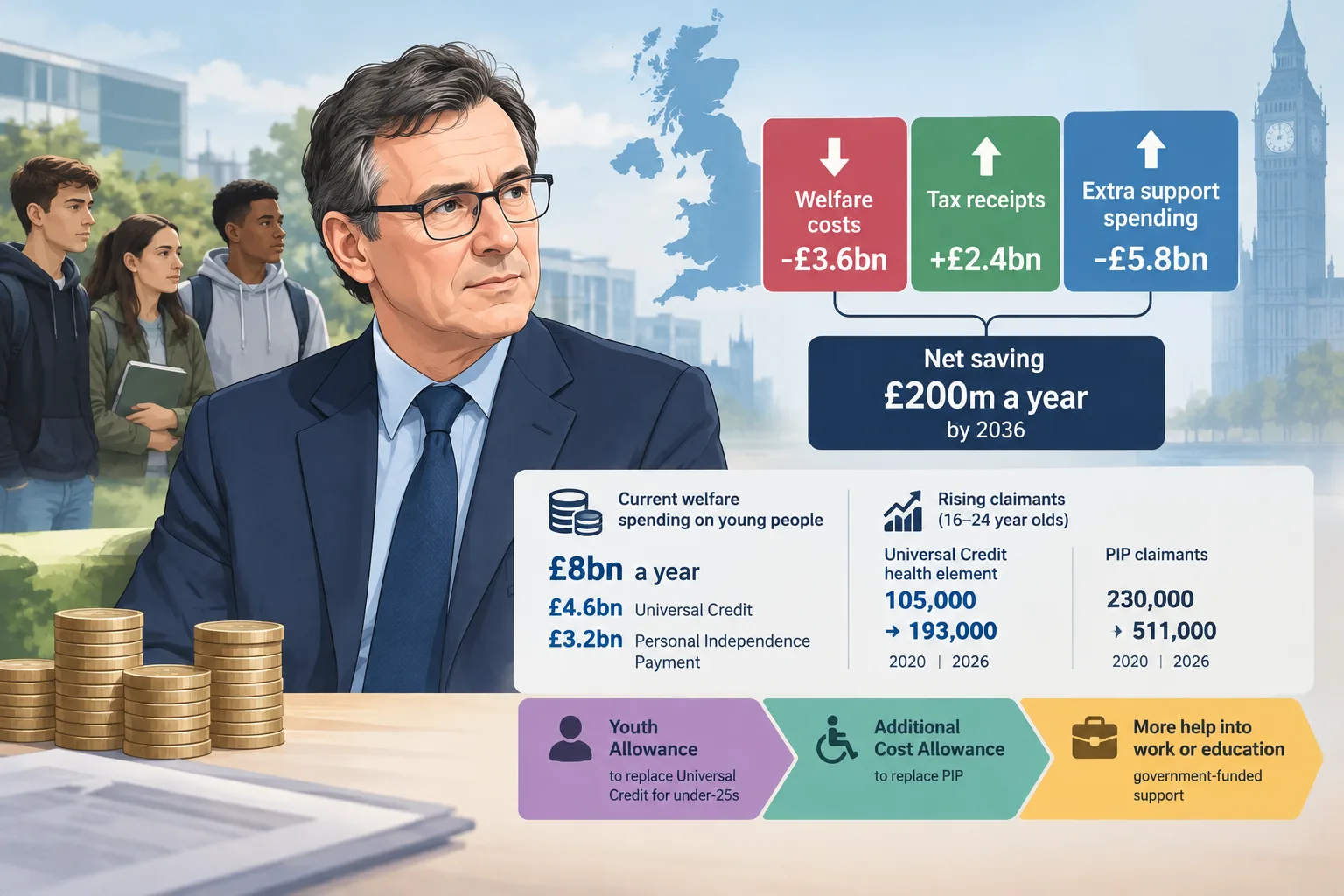
Alan Milburn’s plan is forecast to reduce welfare spending and raise tax receipts, but after £5.8bn in extra annual support costs it would save the government only about £200m a year by 2036.
Review information is loading.
Alan Milburn’s proposed reforms for young people not in education, employment or training would deliver net savings of about £200m a year by 2036, according to estimates in his report — far less than the reductions in welfare spending alone suggest.
The package is projected to cut welfare costs by £3.6bn a year by 2036 and raise a further £2.4bn through additional tax receipts as more people enter work. But it would also involve £5.8bn in extra annual spending on employment support, training and health and education services. Together, those figures leave a net saving of £200m a year.
The estimate is expressed in today’s money. Its cash value in 2036 would be higher, depending on inflation, and the projected net saving is expected to grow over time.
Milburn has said his proposed changes could save £13.8bn cumulatively in welfare costs over the next decade. That figure refers to welfare spending, not the net effect of the full package after the additional support costs are included.
The report estimates that about £8bn a year is currently spent on benefits directly for young people: £4.6bn on Universal Credit and £3.2bn on Personal Independence Payment. The number of 16- to 24-year-olds in England and Wales claiming the health element of Universal Credit rose from 105,000 in 2020 to 193,000 this year, while young PIP claimants increased from 230,000 to 511,000.
Milburn’s proposals include a Youth Allowance to replace Universal Credit for under-25s and a new Additional Cost Allowance that could replace PIP. He also wants more government-funded help to move young people into work or education. His report says the diagnosis applies across the UK, while recognising that education, skills, health and local government are devolved. He has called on the devolved administrations to agree shared outcomes.
The projected £3.6bn reduction in welfare spending would represent about 1% of the UK’s current welfare bill, the BBC reports. Total welfare spending is forecast to rise from £353bn this year to £431bn in 2032; there is no official forecast for the total in 2036.
Sign in to give this article a thumbs up or down.
About this discussion and AI questions
Private test discussion. Comments are readers’ views and are not yet automatically fact-checked. Editing is available for 60 seconds after posting.
Sign in with a confirmed reader account and choose a username to read comments and participate.
Sorting applies to top-level comments; replies remain oldest first. New comments and likes can change the order. Refresh for the current ranking.
Loading comments…