More than 300,000 young people to join UK study of under-16 social media ban
More than 300,000 young people will take part in ten studies exploring how the UK’s planned under-16 social media ban affects mental health, behaviour and phone use. Some findings are expected before the restrictions begin in spring 2027.
Review information is loading.
More than 300,000 young people across Britain are to take part in research examining how the UK’s planned ban on social media for under-16s could affect their mental health and wellbeing.
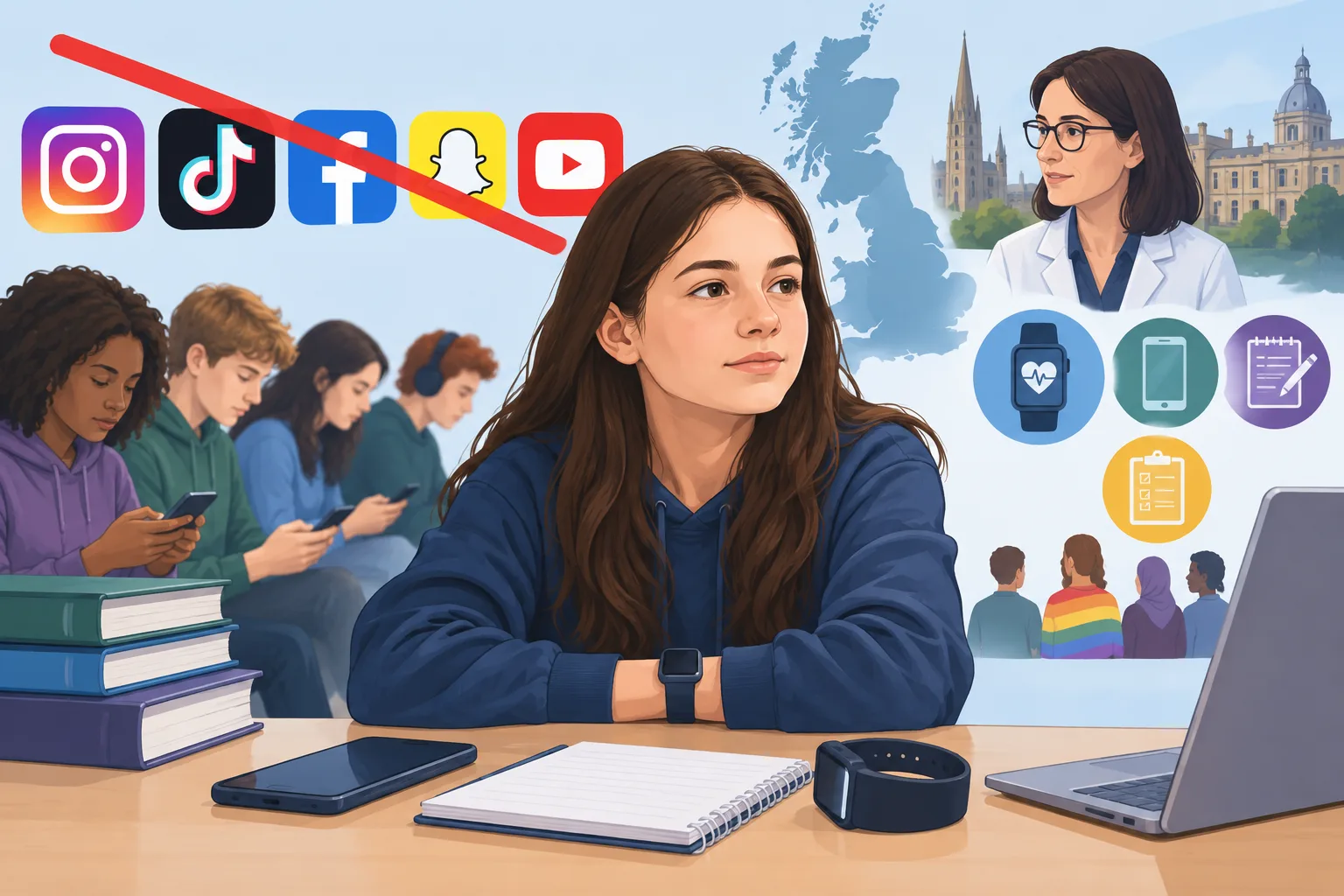
Ten projects, funded by the Wellcome Trust, will run across England, Wales and Scotland. Researchers will track young people’s habits and look at whether they spend less time on their phones, what they do instead and whether they find ways around the restrictions.
The ban is due to begin in spring 2027 and is expected to cover platforms including Instagram, TikTok, Facebook, Snapchat and YouTube. The research will use wearable technology, smartphones, digital diaries and surveys to assess changes in participants’ mental and physical wellbeing. Some early findings are expected before the ban takes effect.
The studies will include young people of different genders and sexual orientations, as well as participants with existing mental health conditions and those who are neurodivergent. Teams are based at eight universities and research institutions, including Cardiff University, the University of Edinburgh and University College London.
Dr Camilla Iannone, Wellcome’s research lead, said the studies would examine whether changes to young people’s digital environment led to meaningful changes in their mental health and wellbeing. She said the question was not simply whether social media was good or bad, or whether restrictions worked.
The research is intended to inform future online safety policies in the UK and internationally. Australia introduced a similar ban in December 2025, but its effects are not yet clear: supporters say it protects young people from harmful content, while critics argue it is too harsh. Some Australian teenagers have also reportedly found ways around the restrictions.
The UK government has said it wants tougher blocks in place, but the British studies will also examine whether young people circumvent the ban.
Sign in to give this article a thumbs up or down.
From the discussion
Private test discussion. Comments are readers’ views and are not yet automatically fact-checked. Editing is available for 60 seconds after posting.
Sign in with a confirmed reader account and choose a username to read comments and participate.
Sorting applies to top-level comments; replies remain oldest first. New comments and likes can change the order. Refresh for the current ranking.
Loading comments…