MS NOW columnist calls for US gerrymandering ban after Democratic House win
Hayes Brown says Democrats should pursue a national ban on partisan map-drawing after their 2026 election victory. But the gap between votes and seats does not on its own show how much difference the maps made.
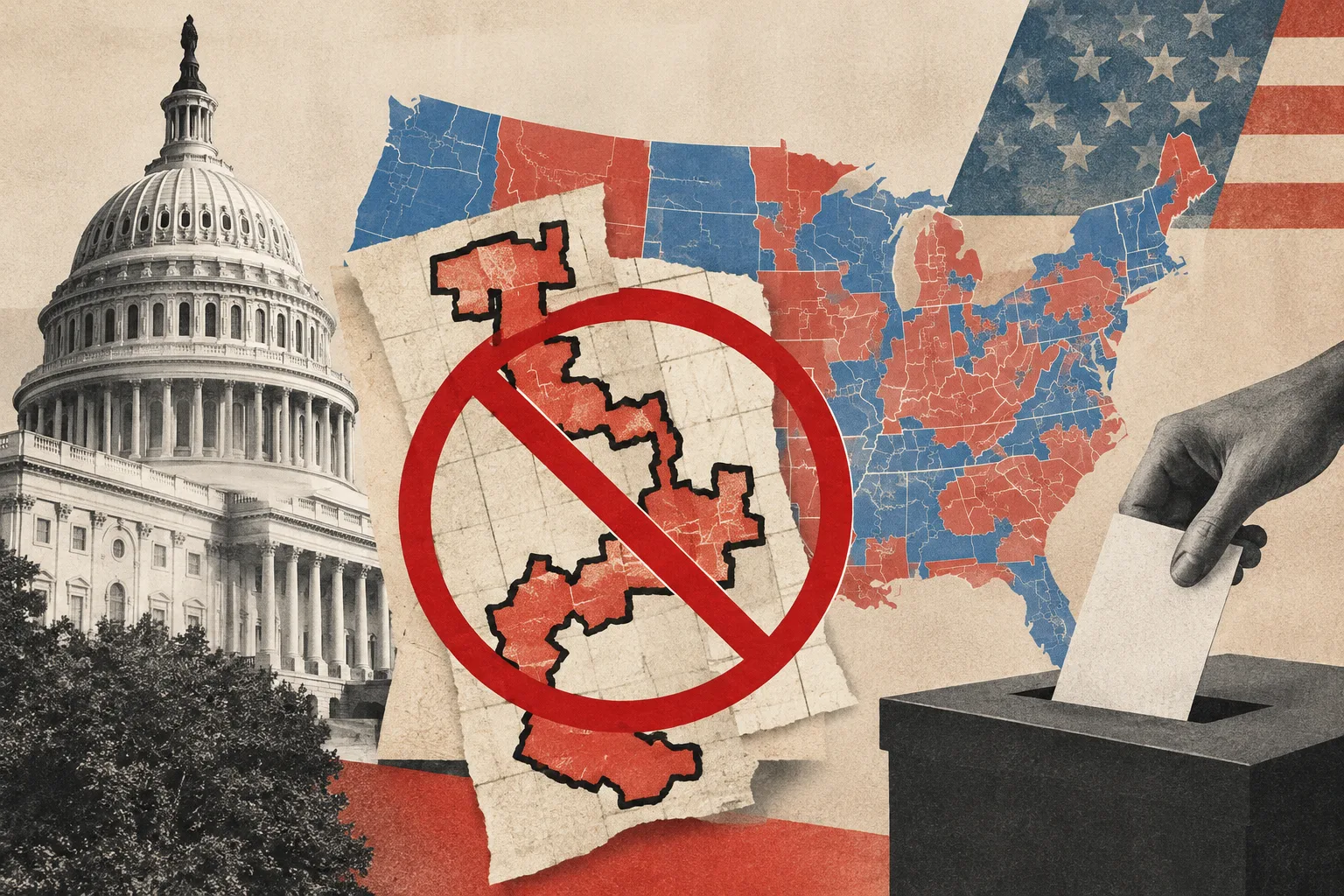
Democrats’ reported victory in the US House of Representatives should be followed by a nationwide ban on gerrymandering, MS NOW columnist Hayes Brown argues, saying the party’s majority does not end the problem of district boundaries drawn for political advantage.
In a column published on 28 November, Brown reported that 48 House seats changed hands and that Democrats had won 259 seats, giving them a majority. He argues that partisan map-drawing continued to constrain Democratic gains despite the result.
The Economist’s Owen Winter, in a social media post embedded in Brown’s column, said Democrats took 53% of the House vote in Texas but 37% of its seats. In Florida, he put their share at 50% of votes and 29% of seats.
Where voters live can also affect the relationship between votes and seats. In 2020, Washington University political scientist Andrew Reeves said Democrats’ concentration in cities could make it harder for them to turn votes into seats. That does not rule out an effect from gerrymandering, but a gap between votes and seats does not, by itself, measure how much difference district boundaries made.
Brown points to North Carolina as a possible exception to the benefits of newer maps for Republicans: he says the state’s Republican delegation might have done better under its previous map, which he says was already heavily gerrymandered.
Brown wants Congress to enact a national ban and argues that Democratic-led states should work to undo gerrymanders ahead of the redistricting cycle after the 2030 census. He also sees a case for applying similar pressure to Republican-held districts in Democratic-controlled states in the meantime, while acknowledging that further diluting voters’ voices gives him pause.
The Census Bureau says House seats are Independently verifiedThe Census Bureau says House seats are redistributed among states according to population after each ten-year census.Methods of Apportionment after each ten-year census. That is separate from drawing district boundaries within a state.
He expects President Donald Trump would probably veto a federal bill, but argues that a vote to override a veto would still be worthwhile.
Sign in to give this article a thumbs up or down.
From the discussion
Private test discussion. Comments are readers’ views and are not yet automatically fact-checked. Editing is available for 60 seconds after posting.
Sign in with a confirmed reader account and choose a username to read comments and participate.
Sorting applies to top-level comments; replies remain oldest first. New comments and likes can change the order. Refresh for the current ranking.
Loading comments…