Mudryk denies Shevchenko’s claim that his team sought false blame for drugs test
The Ukraine winger denies that his representatives sought a false admission of blame over his positive test for meldonium.
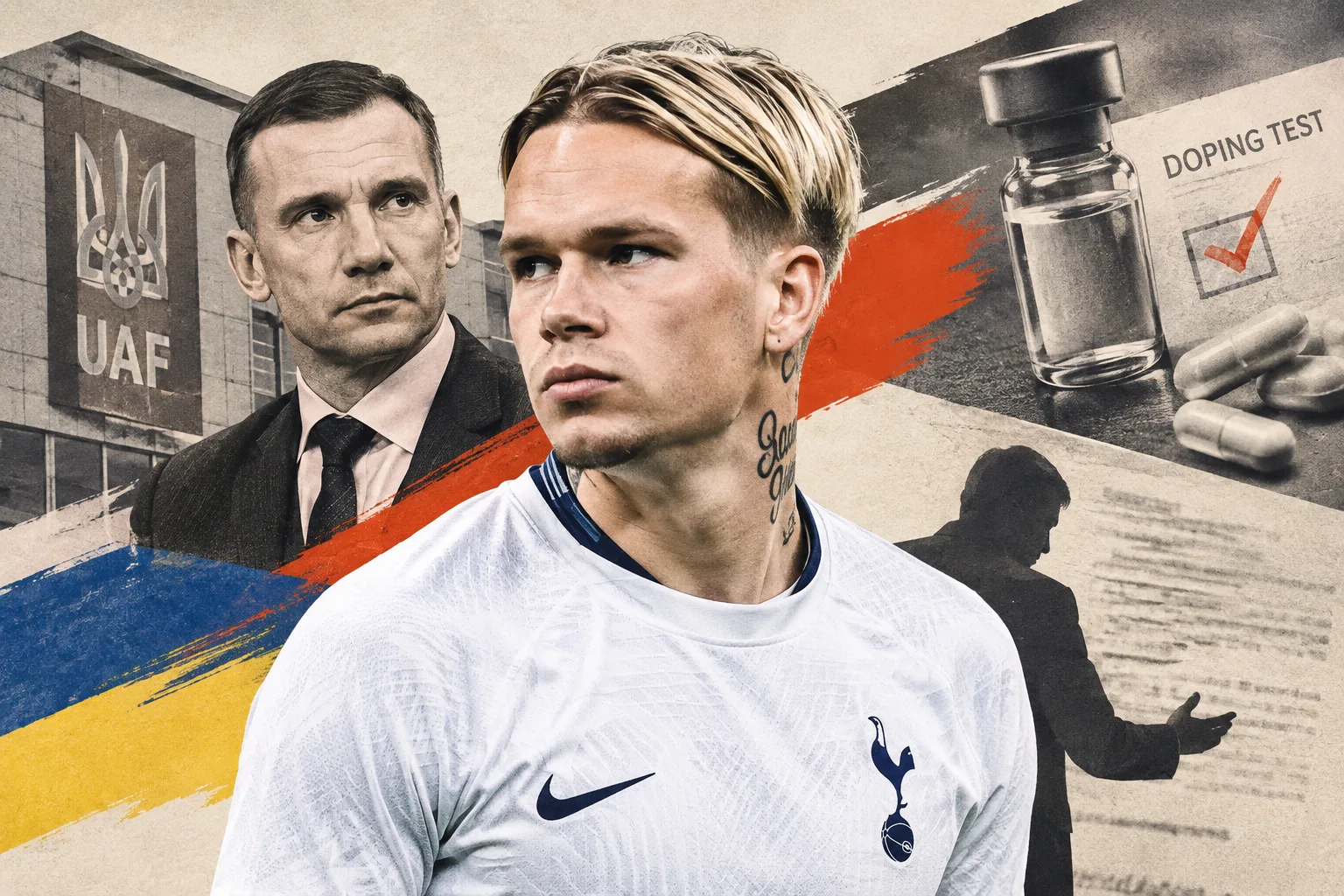
Mykhailo Mudryk has accused Andriy Shevchenko of lying after the Ukrainian football chief claimed the player’s representatives had asked for someone else to take false blame for his positive drugs test.
The Tottenham winger, who is on loan from Chelsea, called the allegation a “lie” on Friday and said “neither I nor my representatives made any such request”.
Shevchenko, president of the Ukrainian Association of Football (UAF), had said on Thursday that Mudryk’s representatives repeatedly asked the association to find an employee who would falsely take responsibility for the meldonium in his sample. He said the UAF refused.
The allegation came in Shevchenko’s response to Mudryk’s earlier criticism of the national-team set-up. Mudryk had said he believed the banned substance entered his system while he was on international duty. Shevchenko called the accusations against the UAF baseless and challenged him to provide evidence.
Mudryk said his lawyers had sought truthful information that could be independently verified. Sport.ua published a Ukrainian text which it said came from a letter by Mudryk’s lawyers released by the TaToTake programme. The text offers a substantial reward for information about the source of the meldonium, including from someone found to have caused the positive test. It says payment would depend on independent, objective evidence and would not be made for fabricated information. The text alone does not establish what was said in any other requests.
Mudryk also accused the UAF of being slow to respond and withholding information and documents from his lawyers. Shevchenko had said the association provided the information Mudryk’s representatives requested. The BBC said it had contacted the UAF for comment on the player’s latest statement.
Mudryk also said UAF staff had testified at his hearing that he did not use the association’s supplements, but that he had WhatsApp messages showing he used its products at training camps. Shevchenko had previously said Chelsea asked the UAF not to give Mudryk medication during international camps and that staff complied.
The English Football Association said an out-of-competition test on 22 October 2024 found a low concentration of meldonium, a banned substance. An independent commission initially imposed a four-year ban, which Mudryk appealed.
In a July 2026 settlement agreed with the World Anti-Doping Agency, he accepted the anti-doping violations and a ban equal to the time he had already served, allowing him to return. The FA said changes to reporting rules, although not retrospective, meant the same concentration would no longer be reported. Its published account of the settlement did not say how the meldonium entered his body.
Sign in to give this article a thumbs up or down.
From the discussion
Private test discussion. Comments are readers’ views and are not yet automatically fact-checked. Editing is available for 60 seconds after posting.
Sign in with a confirmed reader account and choose a username to read comments and participate.
Sorting applies to top-level comments; replies remain oldest first. New comments and likes can change the order. Refresh for the current ranking.
Loading comments…