NASA tests solid-state batteries for possible lunar use
NASA reports that prototype solid-electrolyte batteries survived extreme-temperature exposure and operated at minus 80 C with reduced performance. The SPEARS project is developing them for potential lunar use, with further spaceflight preparation under way. [1]
Review information is loading.
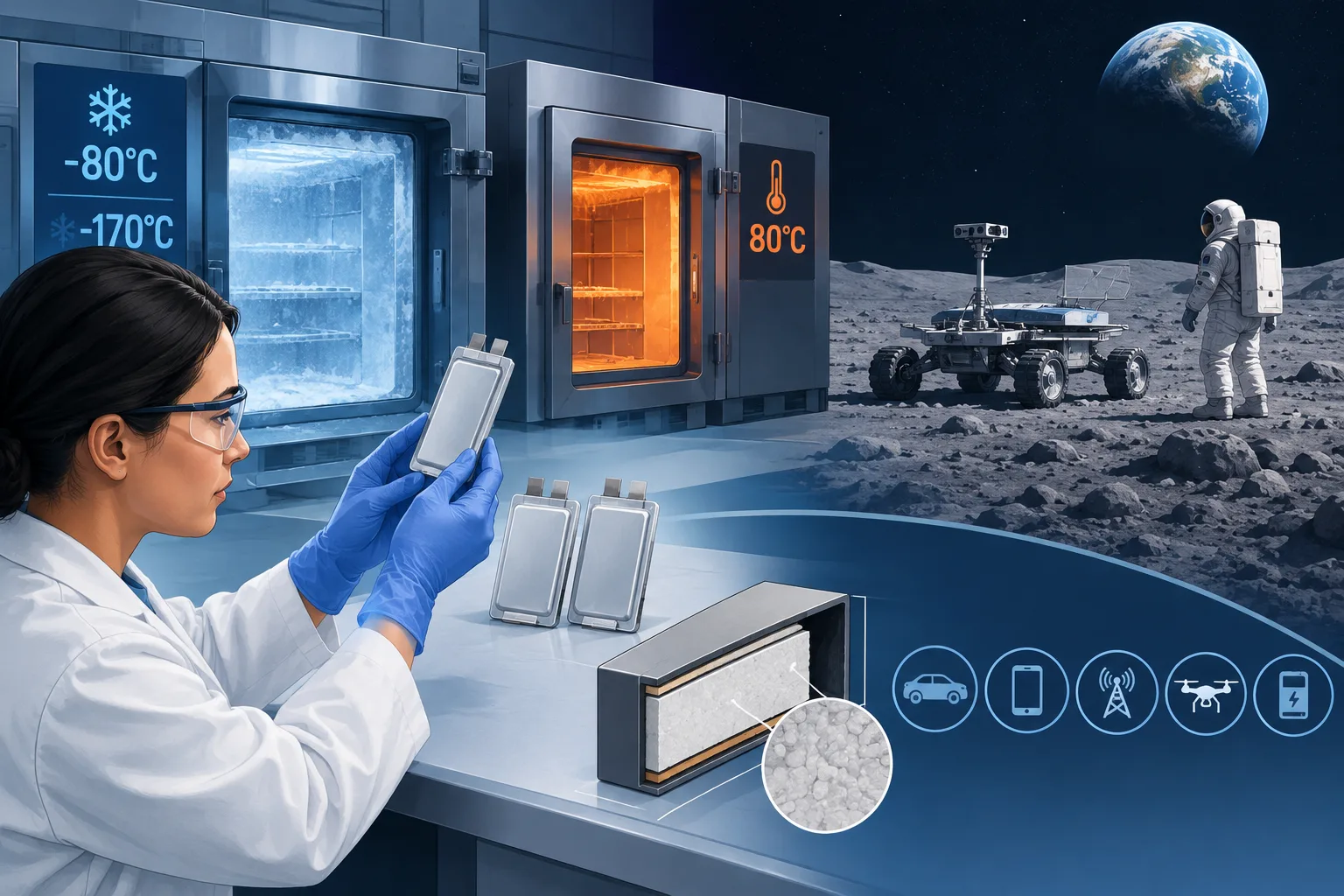
NASA says small prototype batteries developed under its SPEARS project have operated at temperatures as low as minus 80 degrees Celsius in tests, and survived exposure to conditions as cold as minus 170 C. The technology is being developed for equipment that could support future lunar operations, including tools, rovers and astronauts’ emergency power packs. [1]
The project, Solid Power for Extreme Environment Adaptability and Resilience in Space, is led by NASA’s Glenn Research Center. Its batteries use a solid ceramic- or polymer-based electrolyte instead of the liquid electrolyte in conventional lithium-ion batteries. NASA says the change could help them withstand severe heat and cold without the liquid freezing or evaporating in a vacuum. [1]
In thermal-vacuum tests at NASA’s Langley Research Center, the small cells operated up to 176 F (80 C), down to minus 76 F (minus 60 C), and with slightly reduced performance at minus 112 F (minus 80 C). NASA also reported that exposure to temperatures between 212 F (100 C) and minus 274 F (minus 170 C) did not damage them. The batteries would not operate at that lowest temperature; small heaters would be needed to bring them back to working temperature. [1]
NASA says the approach might reduce the need for heavy temperature-control systems in spacecraft and lunar habitats, potentially making designs lighter and lowering costs. The batteries are intended to cope with the Moon’s extreme temperature swings; NASA cites nighttime temperatures at the lunar south pole of minus 328 F (minus 200 C). [1]
The project began in 2026, funded through NASA’s Advanced Research and Technology division. NASA’s Ames Research Center is developing flight hardware, including test boards and electronics, to prepare the batteries for spaceflight and testing in space environments. NASA says the work will initially focus on technology development and could later move towards commercial collaboration. [1]
NASA researchers also see possible uses on Earth, including in cars, phones, communications equipment and drones. The project developed from earlier battery work focused on aeronautical applications. [1]
Sign in to give this article a thumbs up or down.
About this discussion and AI questions
Private test discussion. Comments are readers’ views and are not yet automatically fact-checked. Editing is available for 60 seconds after posting.
Sign in with a confirmed reader account and choose a username to read comments and participate.
Sorting applies to top-level comments; replies remain oldest first. New comments and likes can change the order. Refresh for the current ranking.
Loading comments…