Netherlands funds satellite-independent public time service, due by end of 2027
The Dutch government is putting €250,000 towards a public time service that will not rely on satellite signals and is expected to be available by the end of 2027.
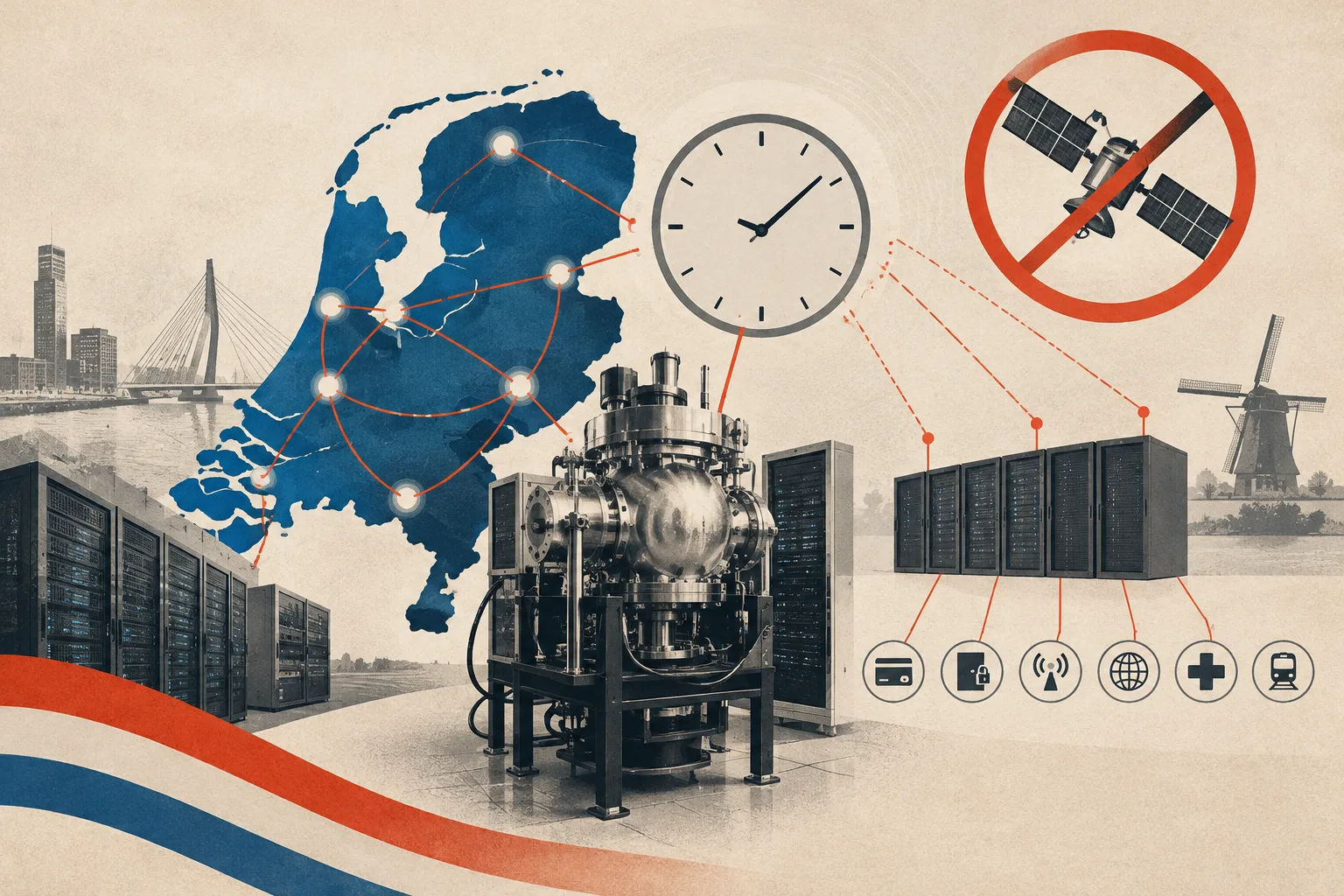
The Dutch government is funding a satellite-independent public time service to reduce the risk of disruption to digital systems that rely on computers sharing an accurate clock. The service is expected to be available by the end of 2027 and will be free for Dutch users, including small and medium-sized businesses, the government says.
State Secretary Willemijn Aerdts has made €250,000 available for the project. AMS-IX, SIDN, SURF and VSL will develop it on behalf of the Ministry of Economic Affairs and Climate Policy.
Many digital systems currently get their precise time from satellite navigation networks such as GPS. The government says those signals can be disrupted or manipulated, and that the Netherlands still depends on a small number of separate time sources.
The planned service will connect to atomic clocks at locations around the Netherlands. Existing digital infrastructure will distribute official Dutch time to independently managed servers, allowing the service to continue if satellite signals fail.
Accurate synchronisation matters for payments, access systems, communications and internet services. The government says mismatched clocks can also cause problems in healthcare and networks used for rail and air transport. Aerdts said reliable time was essential to almost everything that happens digitally and that essential services needed to withstand growing digital and geopolitical threats.
Sign in to give this article a thumbs up or down.
From the discussion
Private test discussion. Comments are readers’ views and are not yet automatically fact-checked. Editing is available for 60 seconds after posting.
Sign in with a confirmed reader account and choose a username to read comments and participate.
Sorting applies to top-level comments; replies remain oldest first. New comments and likes can change the order. Refresh for the current ranking.
Loading comments…