New studies reveal more about children sacrificed at Inca mountain shrines
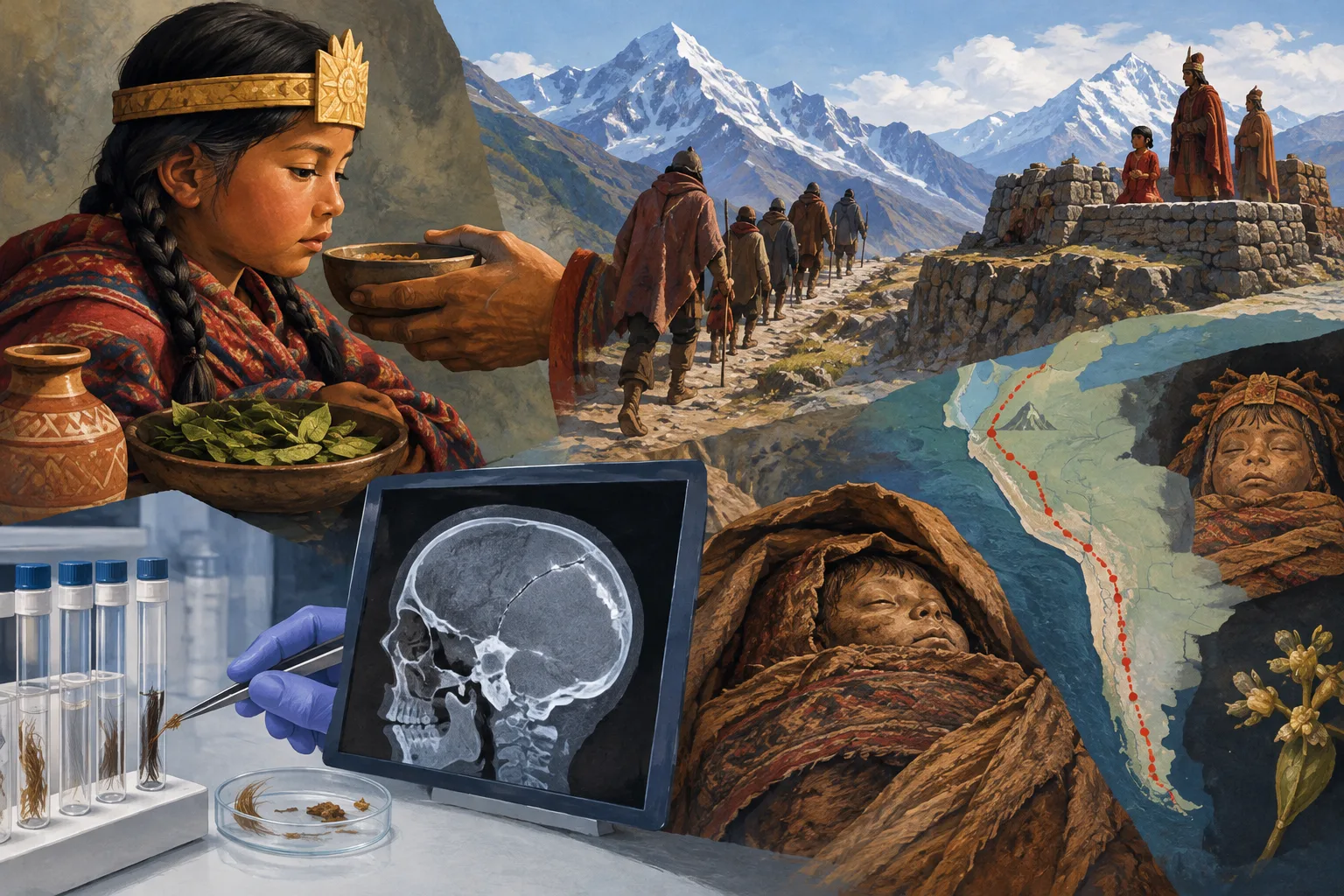
Chemical tests, CT scans and isotope analysis are adding detail to the lives and deaths of children sacrificed at Inca mountain shrines. Researchers have found evidence of drug use, revised earlier conclusions about some deaths and traced one child’s journey across thousands of kilometres.
Review information is loading.
Three new studies are giving researchers a closer look at how children chosen for Inca human sacrifices were prepared for death, how some were killed and the long journeys they made to high-altitude shrines.
The findings, published during 2026, draw on chemical analysis of hair and nails, CT scans and evidence from burials. They suggest the children’s final experiences varied: some were given coca and alcohol in the months before they died, while scans indicate that at least one boy was killed by a blow to the head. In other cases, researchers cannot establish exactly how the children died.
The sacrifices, known as capacocha, took place across the Inca Empire in the 15th and 16th centuries. Children and young women were taken to sacred sites in the Andes, sometimes after journeys lasting months. Their bodies were preserved by the cold, dry conditions at altitude.
Traces of drugs in hair and nails
A study led by archaeologist Dagmara Socha examined hair and nail samples from eight mummified children found on five mountains in Peru and Argentina. Researchers detected traces of cocaine in all eight, consistent with the consumption of coca leaves, and evidence of alcohol in four. The alcohol was most likely chicha, a maize beer.
One sample, from an eight-year-old girl found on Mount Chuscha in Argentina, showed that cocaine and alcohol levels changed over the six months before her death. That suggests the substances were consumed well before the final days, rather than only at the moment of sacrifice.
The researchers also found harmine, a compound associated with plants used in ayahuasca, in the remains of Juanita, the 14-year-old known as the Ice Maiden. Socha said it was unclear whether she had been given the substance to induce hallucinations. The study noted that harmine can also have antidepressant properties when used alone.
Coca may have helped ease altitude sickness and fatigue, while alcohol may have dulled the children’s senses, according to accounts written by Spanish colonizers. Socha said researchers have no direct testimony from people who witnessed the rituals, and that those chronicles could contain misunderstandings.
Scans revise accounts of how some died
A separate study revisited three mummies from two sacrificial sites in Chile. Earlier interpretations suggested two girls had been strangled and that an eight- or nine-year-old boy had frozen to death. New CT scans found that marks on the girls’ necks could have come from the textiles wrapped around their bodies after death, rather than from a ligature. Their cause of death remains unclear.
The boy’s skull showed blunt-force trauma. The damage pattern suggested he had been struck with an Inca mace, according to Verónica Silva-Pinto, who led the research. The scan also showed a full stomach and signs that he vomited; Silva-Pinto said the vomiting could have followed the blow.
Scans of Juanita and other children also found full digestive tracts. Research published earlier this year found trauma to Juanita’s skull, chest and pelvis, indicating a violent death.
Chemical traces in braided hair also point to long journeys. The boy at El Plomo travelled more than 1,615 miles (2,600 kilometres) over nine months, according to analysis of nitrogen isotopes. Researchers said changes in his diet and unusually thick skin on his feet were consistent with the extended trek.
Other questions remain. A 14-year-old girl found on Mount Llullaillaco was buried with botanical remains that helped narrow the date of her death to between 1462 and 1507. Archaeologist Socha has suggested the sacrifice may have had a political purpose, helping to reinforce Inca presence in the region, rather than being tied to a natural event. That remains an interpretation, not a settled explanation.
Researchers say improved DNA techniques may reveal more about the children’s origins and health. Further findings are expected in coming months.
Sign in to give this article a thumbs up or down.
About this discussion and AI questions
Private test discussion. Comments are readers’ views and are not yet automatically fact-checked. Editing is available for 60 seconds after posting.
Sign in with a confirmed reader account and choose a username to read comments and participate.
Sorting applies to top-level comments; replies remain oldest first. New comments and likes can change the order. Refresh for the current ranking.
Loading comments…