OBR forecasts UK growth slowing to 1% in 2027 as energy costs squeeze incomes
The OBR expects UK growth to slow to 1% in 2027 as higher energy prices lift inflation and weigh on household purchasing power. It warns that the outlook—and the government’s narrow fiscal margin—is uncertain.
Review information is loading.
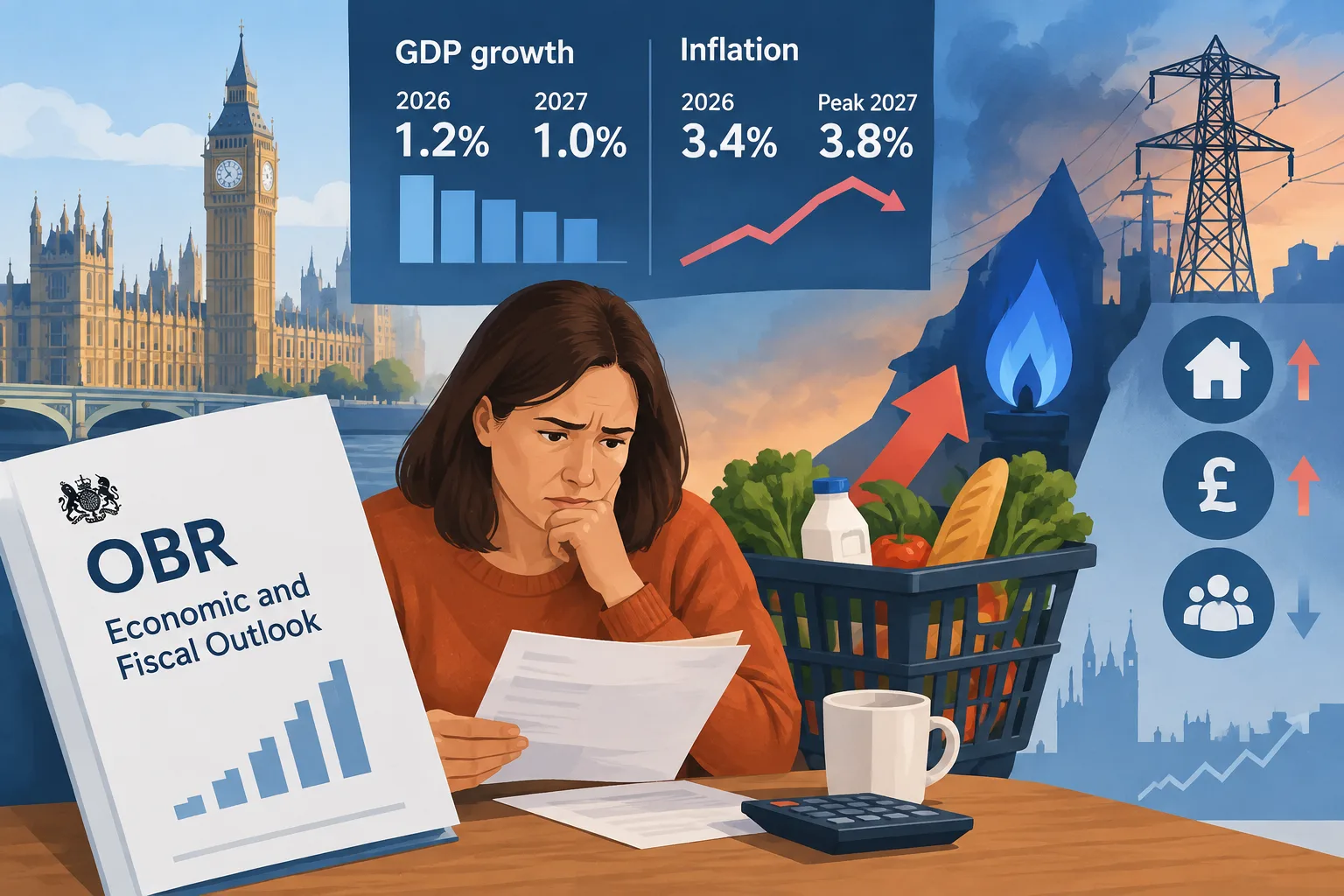
The UK’s economy is forecast to grow more slowly next year as higher energy prices push up inflation and squeeze household incomes, according to the Office for Budget Responsibility (OBR). Its October outlook puts growth at 1.2% in 2026 and 1.0% in 2027, with consumer price inflation averaging 3.4% next year and reaching a quarterly peak of 3.8% in early 2027.
The forecasts, published on 28 October, mark a downgrade to the OBR’s March outlook for 2027 growth, which had been 1.6%. The watchdog expects growth to recover to 1.6% in 2028 and 1.8% in 2029, assuming energy prices fall in line with market expectations. These are projections, not outturns, and the OBR says the outlook is highly uncertain.
The OBR attributes the weaker near-term outlook chiefly to the rise in global energy prices following the conflict in the Middle East. As a net importer of energy, the UK faces higher costs for fuel and utilities, while more expensive energy can also feed into the prices of goods and services. The forecast assumes those pressures ease over time; the OBR warns that a more severe or prolonged shock could mean higher inflation and weaker growth.
The squeeze is also expected to affect living standards. The OBR forecasts a slight near-term fall in real household disposable income per person, a measure of purchasing power, before a partial recovery as energy prices ease. By 2030-31, it expects the measure to be about 0.75% below its March forecast and only around 2% above its pre-pandemic level.
Higher inflation and interest rates are also raising pressure on the public finances. The OBR forecasts government borrowing will be higher than it expected in March in every year of its outlook, with higher debt-interest costs a major factor. It projects borrowing will fall from 4.2% of GDP in 2026-27 to 1.8% in 2030-31, but says the forecast is subject to substantial uncertainty.
The government’s fiscal target is forecast to be met in 2029-30, but the OBR puts the probability at 56%. It says the £15bn margin is small relative to the risks surrounding the forecast. The watchdog also expects inflation to return to the Bank of England’s 2% target around the middle of 2028, conditional on energy prices falling as assumed.
Sign in to give this article a thumbs up or down.
From the discussion
Private test discussion. Comments are readers’ views and are not yet automatically fact-checked. Editing is available for 60 seconds after posting.
Sign in with a confirmed reader account and choose a username to read comments and participate.
Sorting applies to top-level comments; replies remain oldest first. New comments and likes can change the order. Refresh for the current ranking.
Loading comments…