Oxfam warns of widespread contamination risks in Gaza after Israeli attacks
A joint assessment found indicators of potential contamination across more than 99% of the territory, but that figure is not a measurement of polluted land.
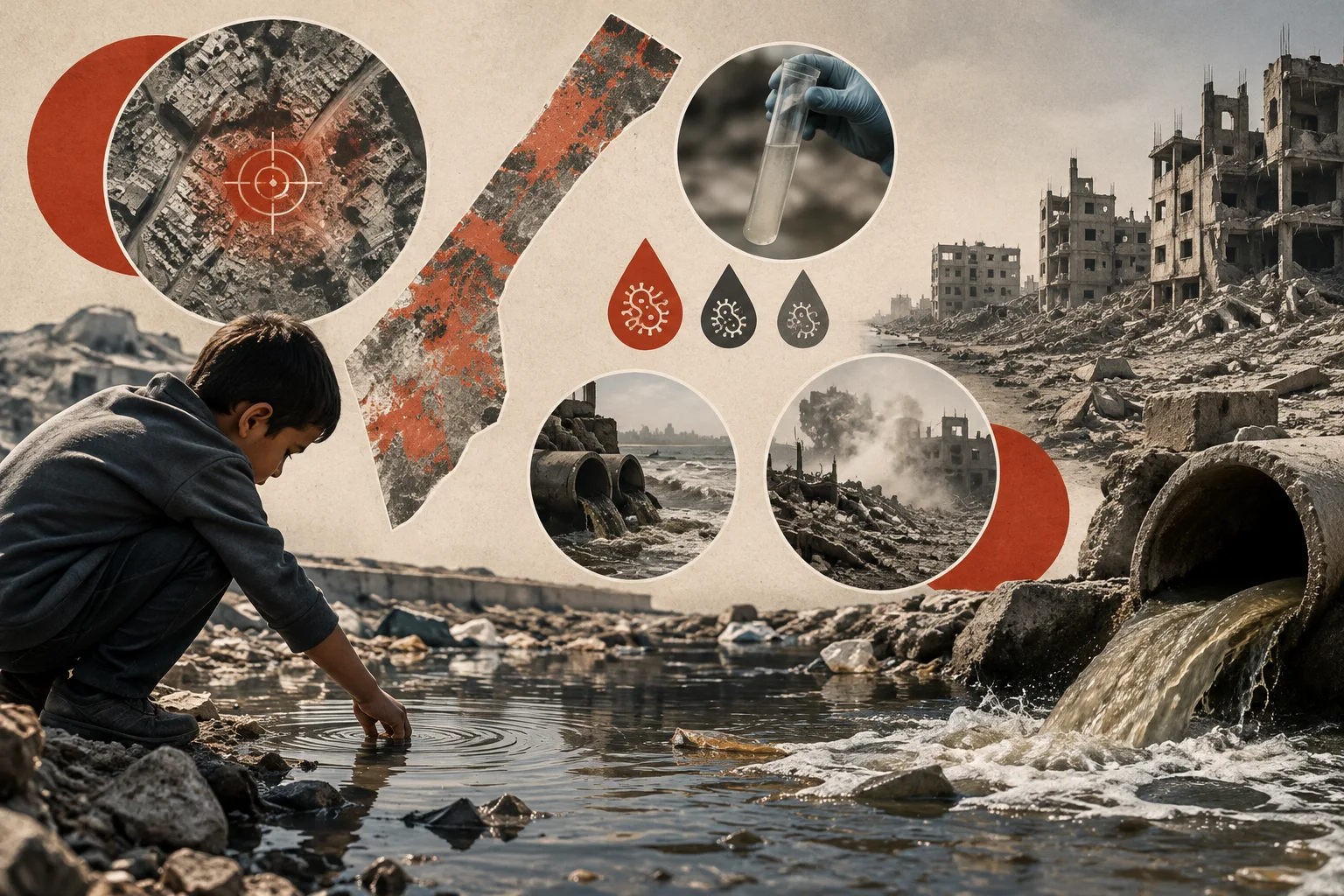
Oxfam and the Conflict and Environment Observatory (CEOBS) say their analysis found indicators of potential contamination across more than 99% of Gaza’s territory. They also estimate that the scale and intensity of Israeli military attacks affected about 78% of Gaza’s land area. The two figures describe different things.
The 99% figure refers to indicators of potential contamination, not a measurement that 99% of Gaza’s land is contaminated or that 99% of its residents are exposed. The groups combined satellite imagery and other remote-sensing data with information on strikes and incidents, open-source data and research from other conflicts. Their summary does not explain the assumptions and thresholds behind the geographic calculation.
The report also draws on water testing. Oxfam says faecal coliform bacteria were found in 19% of 79 groundwater wells sampled across Gaza in July 2026. It compares that with 2% of wells reported contaminated in 2021, although its summary does not say how many wells were tested that year or how they were selected.
Citing an April 2026 assessment by the Coastal Municipalities Water Utility, Oxfam says 19% of sewage pumping stations were functional and 30% of the wastewater network had some operational capacity. It estimates that 40,000 cubic metres of raw sewage flow into the Mediterranean each day, with another 15,000 cubic metres lost daily from the collection system.
Earlier this month, the US-backed Board of Peace urged Israel to allow more winter supplies into Gaza after flooding, including sanitation equipment.
Oxfam also cites a UN Environment Programme estimate that Israeli military operations have generated more than 61 million tonnes of debris across Gaza. The charity says the rubble is a potential source of hazardous material. It warns that dust from destroyed buildings and the burning of waste pose respiratory risks, with children particularly vulnerable to possible lasting harm.
A 2020 review of the scientific evidence found substantial evidence for a causal link between outdoor air pollution, particularly particulate matter, and lung cancer. The review was not specific to Gaza and did not estimate the effects of its current conditions.
Oxfam says restrictions on testing equipment and technical specialists have prevented a full assessment, and calls on Israel to allow a detailed environmental survey on the ground. The BBC reported that Gaza laboratories had been destroyed and that the UN Environment Programme said security concerns had also previously prevented its experts from travelling to Gaza.
Oxfam’s executive director, Amitabh Behar, accused Israel of “environmental war crimes” as part of what he called an ongoing genocide. Israel has rejected genocide allegations as baseless and distorted in an ongoing case at the International Court of Justice and says its campaign is an act of self-defence against Hamas following the group’s 7 October 2023 attack, the BBC reported. The broadcaster said it had asked Israel’s government for a response to the report.
Sign in to give this article a thumbs up or down.
From the discussion
Private test discussion. Comments are readers’ views and are not yet automatically fact-checked. Editing is available for 60 seconds after posting.
Sign in with a confirmed reader account and choose a username to read comments and participate.
Sorting applies to top-level comments; replies remain oldest first. New comments and likes can change the order. Refresh for the current ranking.
Loading comments…