Poundland enters administration, putting 11,000 jobs at risk as shops stay open
Poundland has entered administration, putting 11,000 jobs at risk, but its shops will stay open for now as administrators seek a buyer. Disagreement over the chain’s finances leaves its longer-term future uncertain.
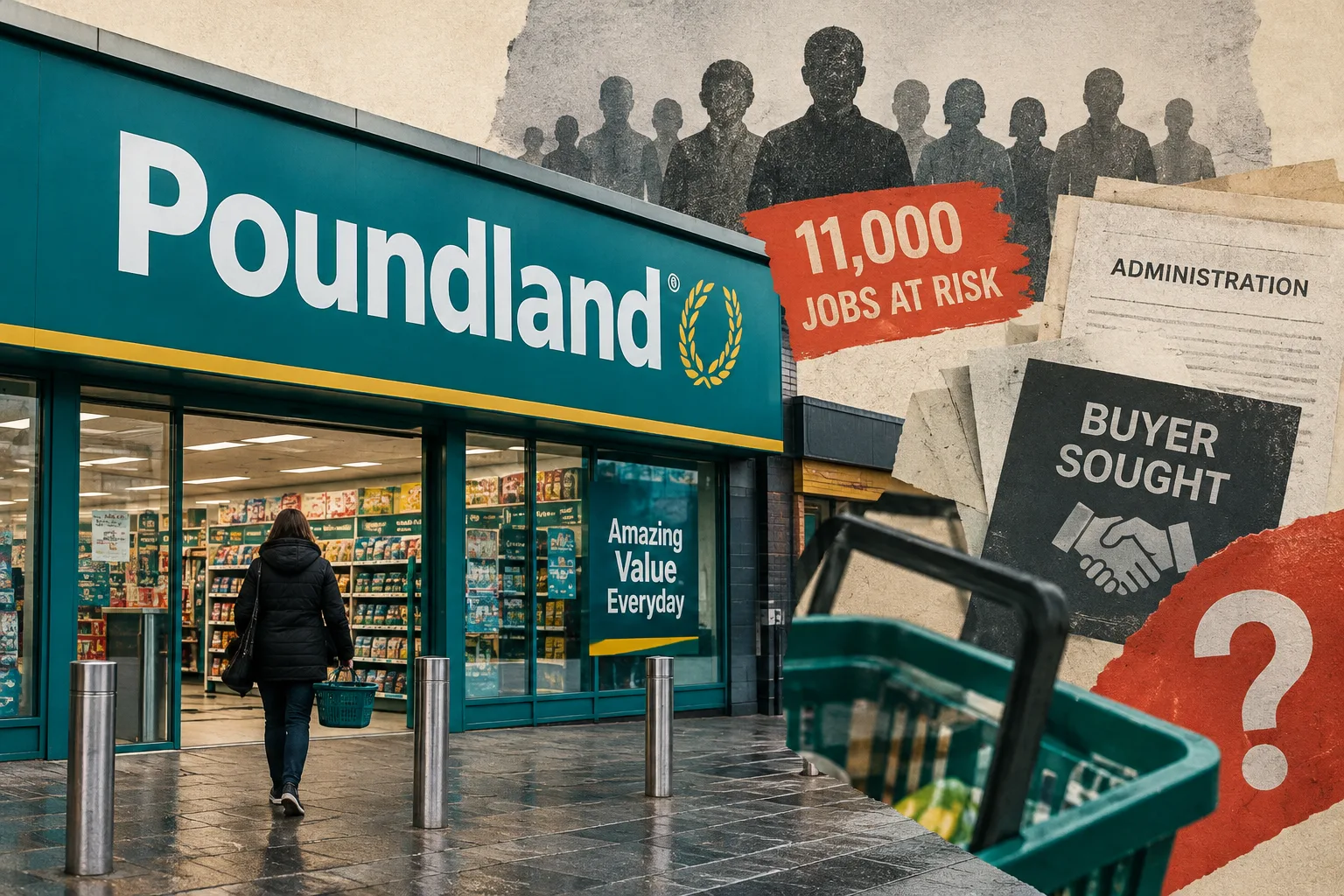
Poundland’s 11,000 staff face an uncertain future after the discount retailer entered administration, but its shops will stay open for now while administrators seek a buyer for all or part of the business.
The administrators have released about £70m in funds that had been locked up by owner Gordon Brothers. That has allowed the retailer to pay staff and suppliers in the run-up to Christmas and could help restore stock, at least in the short term. Shoppers can still buy items on the shelves, although from 26 November Poundland will no longer refund goods returned simply because customers have changed their minds. Faulty items remain eligible for refunds.
Why has Poundland entered administration?
The reasons are disputed. Poundland managing director Barry Williams had said the chain was seeing a “strong recovery”. In the year to September it recorded a profit of £18.1m, compared with a £68m loss in the previous 12 months, and first-quarter sales were up 3.3%.
Gordon Brothers, however, said the business was not generating the cash needed to buy stock and invest. A spokeswoman said it had moved from a £70m loss to “around break-even” on paper, but had repeatedly missed budget targets. “A few good weeks do not make a turnaround,” she said.
Usdaw, the union representing shopworkers, said the owners forced Poundland into administration. Gordon Brothers said rising costs and economic pressures threatened the business’s viability. Poundland’s administration has reset the sale process: administrators are considering selling the chain as a whole or breaking it up, which the BBC reports is considered more likely.
What does administration mean for staff and stores?
Stores are trading as usual in the short term, but there is no confirmed closure timetable. If the business is broken up, new owners would not be obliged to retain existing staff. Administrators have a legal duty to maximise returns for secured creditors, and could choose a break-up even if Poundland remains viable as a business, if that would raise more money.
Before the administration, Poundstretcher owner Fortress had been interested in about 200 stores, but its current position is unclear. A source close to Martin Property Group, which had considered buying Poundland as a going concern, told the BBC a new bid was “unlikely” because the administration process had caused “irreparable harm” to the brand.
The consequences could extend beyond the retailer’s workforce. Highcrest Retail Brands, a major Poundland supplier, has warned that the chain’s collapse could cost it several million pounds and put smaller suppliers at risk. The supplier’s warning about the impact of a Poundland collapse came as its customers and suppliers entered the busy Christmas trading period.
If Poundland is broken up, administrators could sell the brand separately from its shops, or sell stores to competitors. That could reduce the number of discount outlets on the high street, though customers may turn to rival retailers. For now, the shops remain open; what happens next depends on whether administrators can find a buyer for the whole chain or secure more value by selling it in parts.
Sign in to give this article a thumbs up or down.
From the discussion
Private test discussion. Comments are readers’ views and are not yet automatically fact-checked. Editing is available for 60 seconds after posting.
Sign in with a confirmed reader account and choose a username to read comments and participate.
Sorting applies to top-level comments; replies remain oldest first. New comments and likes can change the order. Refresh for the current ranking.
Loading comments…