Rabobank customer loses claim over €3,515 in unauthorised payments
Kifid rejected the customer’s claim despite finding that the six Apple Pay transactions were unauthorised. Its disputes committee also set out a new test for gross negligence in such cases.
Review information is loading.
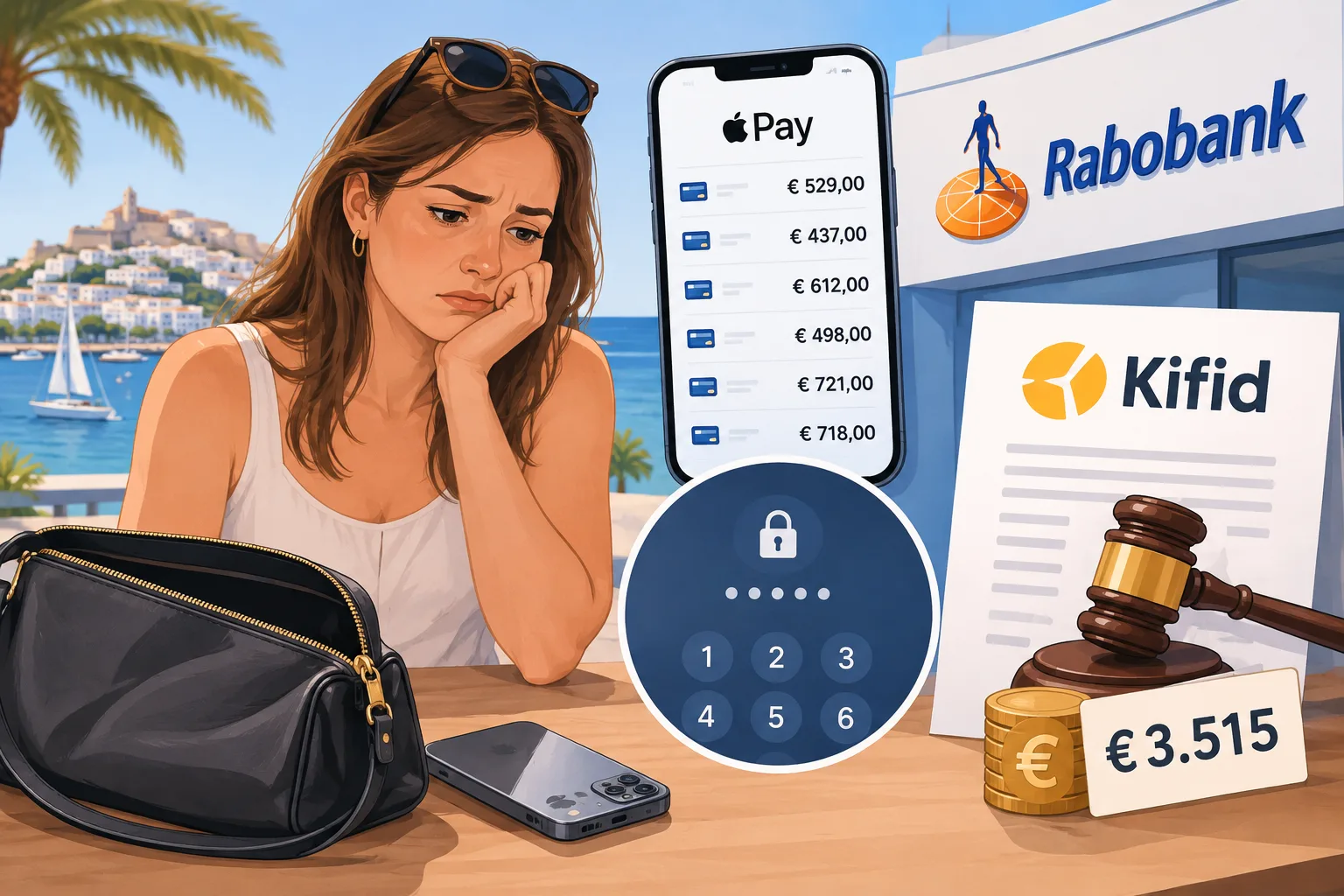
A Rabobank customer must bear the loss of €3,515 taken through Apple Pay after her phone was stolen, the Dutch financial complaints body Kifid has ruled. Its disputes committee found that the payments were unauthorised but concluded that she had been grossly negligent in keeping her security codes safe.
The customer said her locked phone had been stolen from her closed handbag at a party while she was on holiday in Ibiza. She reported the theft to police and disputed six payments made in October 2025. Rabobank challenged her account that the payments had been made without her consent.
The committee said the bank had shown that two transactions were authenticated using the phone’s passcode, but that this did not in itself prove the customer had consented. For the other four, the bank had not provided sufficient evidence of authentication. The committee therefore treated all six as unauthorised.
Banks are generally required to refund unauthorised payments. Exceptions include fraud and deliberate or grossly negligent breaches of a customer’s security obligations.
Kifid’s committee said the bank normally bears the burden of proving gross negligence, but that the customer was required to give more detail about events within her knowledge. She had not explained how another person obtained her phone’s security codes, it said, so it assumed she had seriously failed to keep them secret. The decision did not establish how another person gained access.
In the ruling, Kifid’s disputes committee set out a new test for gross negligence: whether a payer did or failed to do something that a reasonable and careful payer would never do or fail to do. It said the test was intended for all cases of unauthorised payments, including bank-impersonation scams, and that each case must be assessed on its circumstances.
The decision, issued on 29 October and published on 5 November, is binding. The committee said an appeal to Kifid’s appeals board was available within six weeks of the ruling being sent.
Sign in to give this article a thumbs up or down.
About this discussion and AI questions
Private test discussion. Comments are readers’ views and are not yet automatically fact-checked. Editing is available for 60 seconds after posting.
Sign in with a confirmed reader account and choose a username to read comments and participate.
Sorting applies to top-level comments; replies remain oldest first. New comments and likes can change the order. Refresh for the current ranking.
Loading comments…