School anxiety keeps children out of education as 168,000 pupils are severely absent in England
New figures show 168,000 pupils in England were severely absent in 2025-26. Young people and support workers describe how anxiety can keep children away from school and threaten their prospects.
Review information is loading.
School anxiety is keeping some children in England out of education for months or years, with new figures showing 168,000 pupils were severely absent in the autumn and spring terms of 2025-26. Experts warn that prolonged absence can narrow young people’s future options, including increasing the risk of becoming not in employment, education or training (Neet).
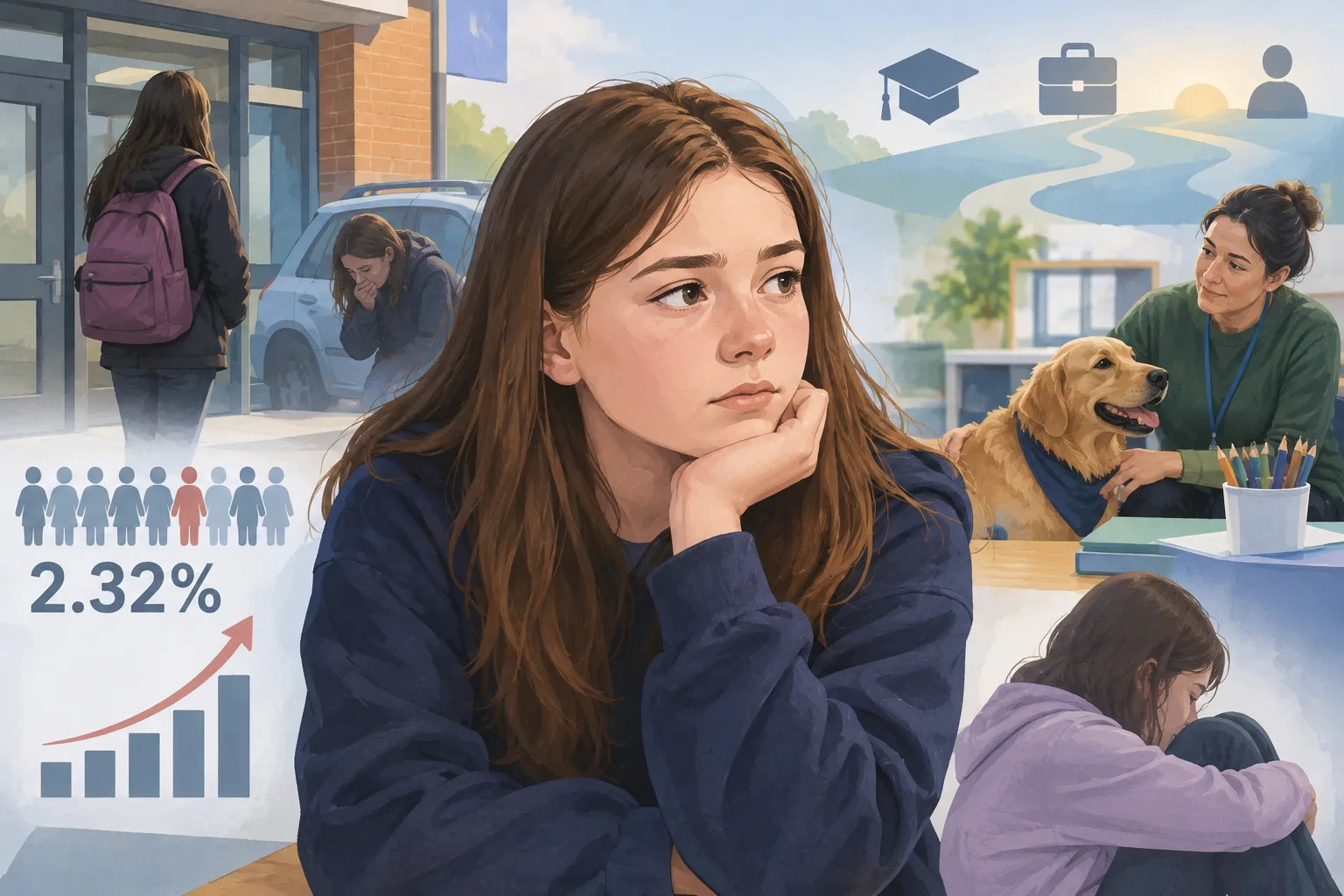
Thirteen-year-old Eva told the BBC she had missed 15 months of school before starting at an alternative provision setting this September. She said she used to get stuck at the front door and, when she made it to the car, would sometimes faint or vomit in the school car park.
Eva, who is autistic, said she stopped attending after struggling with the move to secondary school. Her new school has smaller classes, therapy animals and more freedom to take breaks, but she remains worried that her attendance record could put off employers.
“We’re not lazy, we want to go, we want to do something, we want to live our lives, but we can’t,” she said.
The latest official figures cited by the BBC show that 2.32% of pupils—168,000 children—were classed as severely absent in the autumn and spring terms of 2025-26, meaning they missed more than half their lessons. In spring 2019, fewer than 60,000 pupils were in that category.
Overall absence has eased from its pandemic-era peak but remains above pre-pandemic levels. The absence rate was 6.6% in the autumn and spring terms of 2025-26, compared with 7.38% in 2021-22 and below 5% before Covid.
Absence and later prospects
Analysis by the Centre for Social Justice (CSJ) estimates that 133,000 persistently absent pupils taking GCSEs are on course to spend at least a year as Neets. Persistent absence means missing more than 10% of school. The CSJ’s estimate concerns this group, rather than all pupils who miss school.
Dan Lilley, the organisation’s head of youth, said ministers should recognise that getting children back into school is the first step towards helping young people enter work. The BBC also cites research by the National Centre for Social Research linking persistent absence with higher rates of being out of work, education or training between the ages of 16 and 24.
The Department for Education said it was addressing barriers to attendance through free breakfast clubs in every primary school, improved mental health support and earlier help for pupils with special educational needs.
For some families, anxiety and difficulties with the school environment are central. Sheila Griffiths, co-founder of the charity Hope4More, said autism and ADHD can contribute to school avoidance. Her organisation runs art classes and supports parents seeking help from schools or local authorities. She said some families had given up work while trying to manage the situation.
Mali, 18, told the BBC she stopped attending school in Year 10 after experiencing panic attacks. Diagnosed with autism at 15, she said her mental health deteriorated after she left school and that she still did not leave the house. She said she had no GCSEs and had not taken her SATs.
The figures and experiences show how school absence can persist beyond missed lessons. For pupils such as Eva and Mali, the challenge is not simply returning to class, but finding support that makes education manageable and keeps future routes open.
Sign in to give this article a thumbs up or down.
About this discussion and AI questions
Private test discussion. Comments are readers’ views and are not yet automatically fact-checked. Editing is available for 60 seconds after posting.
Sign in with a confirmed reader account and choose a username to read comments and participate.
Sorting applies to top-level comments; replies remain oldest first. New comments and likes can change the order. Refresh for the current ranking.
Loading comments…