Serbia’s student victory followed election-monitoring help from Hungary
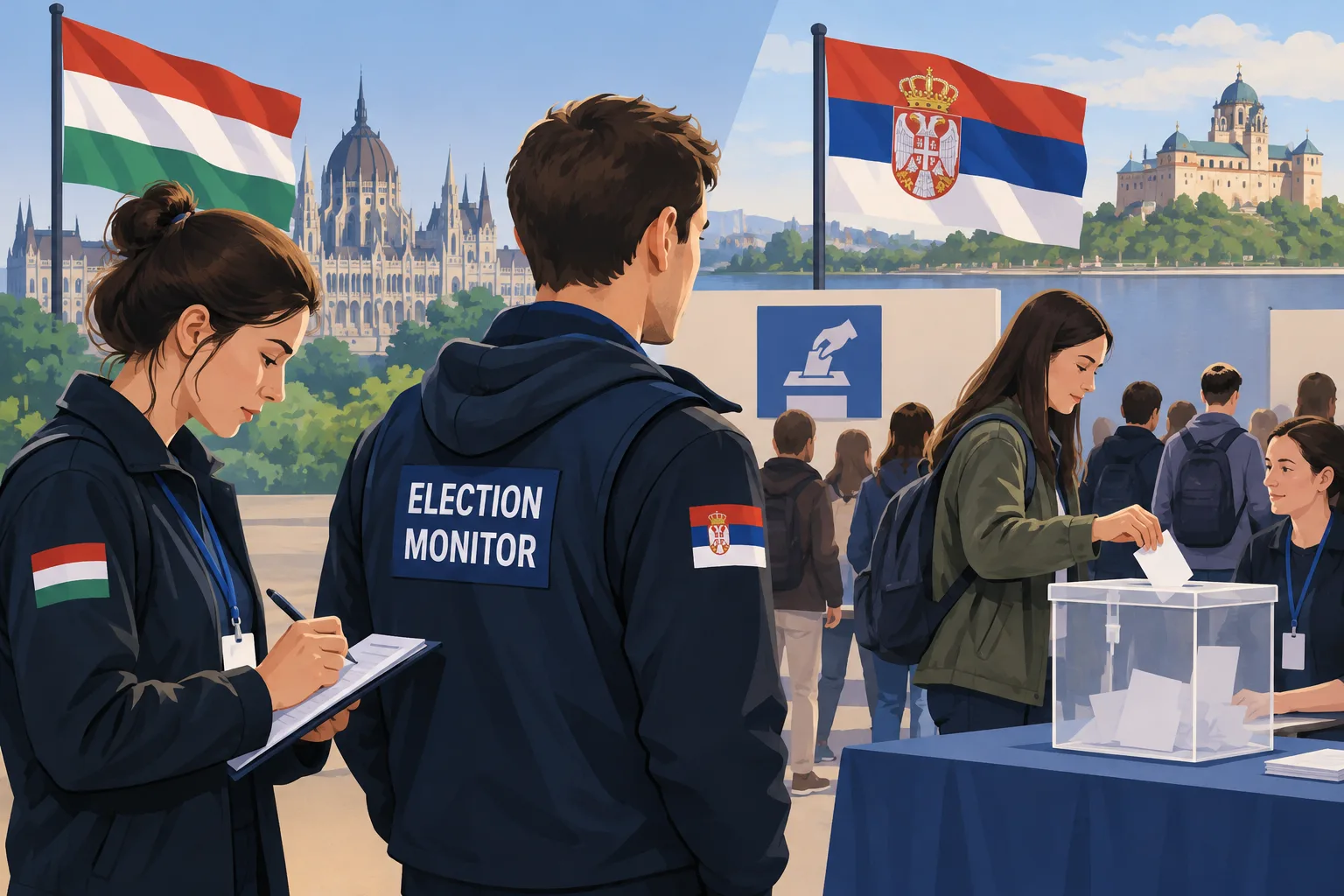
Hungarian activists shared election-monitoring techniques with Serbian students and sent observers to Vojvodina, the BBC reports. Serbia’s Student List went on to win a clear lead over Aleksandar Vučić’s alliance.
Review information is loading.
Serbia’s student-led opposition won a clear lead in the 25 October parliamentary election after receiving help from Hungarian activists who had organised against Viktor Orbán, according to the BBC.
The co-operation links two opposition campaigns that have challenged long-serving allies: Orbán was defeated in Hungary’s April election, while Serbia’s Student List defeated the alliance led by former president Aleksandar Vučić.
Preliminary Serbian election commission figures published on 26 October gave the Student List 52.71% of votes cast and 140 of the 250 parliamentary seats. Vučić’s list had 39.17% and 104 seats. Those figures were based on 8,187 polling stations; repeat voting at 53 stations ended on 1 November, and the final seat distribution has not been established.
Vučić had already resigned as president on 27 September to lead his party’s parliamentary campaign. He conceded defeat on election night.
Sharing election tactics
The Hungarian civic group DE held workshops with Serbian students over the summer to share experience from Hungary’s election, the BBC reported. It later sent 70 election monitors to visit polling stations in Serbia’s northern province of Vojvodina.
Péter Klemm, a student activist from Subotica, told the BBC that mobile teams began filming after he noticed masked groups near polling stations. He believed the presence of volunteers helped prevent intimidation or fraud.
Serbian election-monitoring organisation CRTA said the broader mobilisation of well-prepared polling board members, observers and mobile teams had largely prevented systemic manipulation at polling stations. Its assessment did not isolate the Hungarian teams’ effect on turnout or the result.
CRTA also reported irregularities, including ballot photography at roughly half the polling stations it observed and inconsistent identity checks at 8%. It estimated turnout at 69%, with a margin of error of one percentage point.
The Serbian movement grew out of protests following the collapse of a railway station canopy in Novi Sad in November 2024, which killed 16 people. Its candidates have promised to tackle corruption and restore the rule of law.
In Hungary, Péter Magyar’s Tisza party defeated Orbán in April. Unlike Tisza, which is closely associated with its leader, Serbia’s student movement describes itself as leaderless.
Sign in to give this article a thumbs up or down.
From the discussion
Private test discussion. Comments are readers’ views and are not yet automatically fact-checked. Editing is available for 60 seconds after posting.
Sign in with a confirmed reader account and choose a username to read comments and participate.
Sorting applies to top-level comments; replies remain oldest first. New comments and likes can change the order. Refresh for the current ranking.
Loading comments…