South Sudan’s planned elections face warnings over security and political divisions
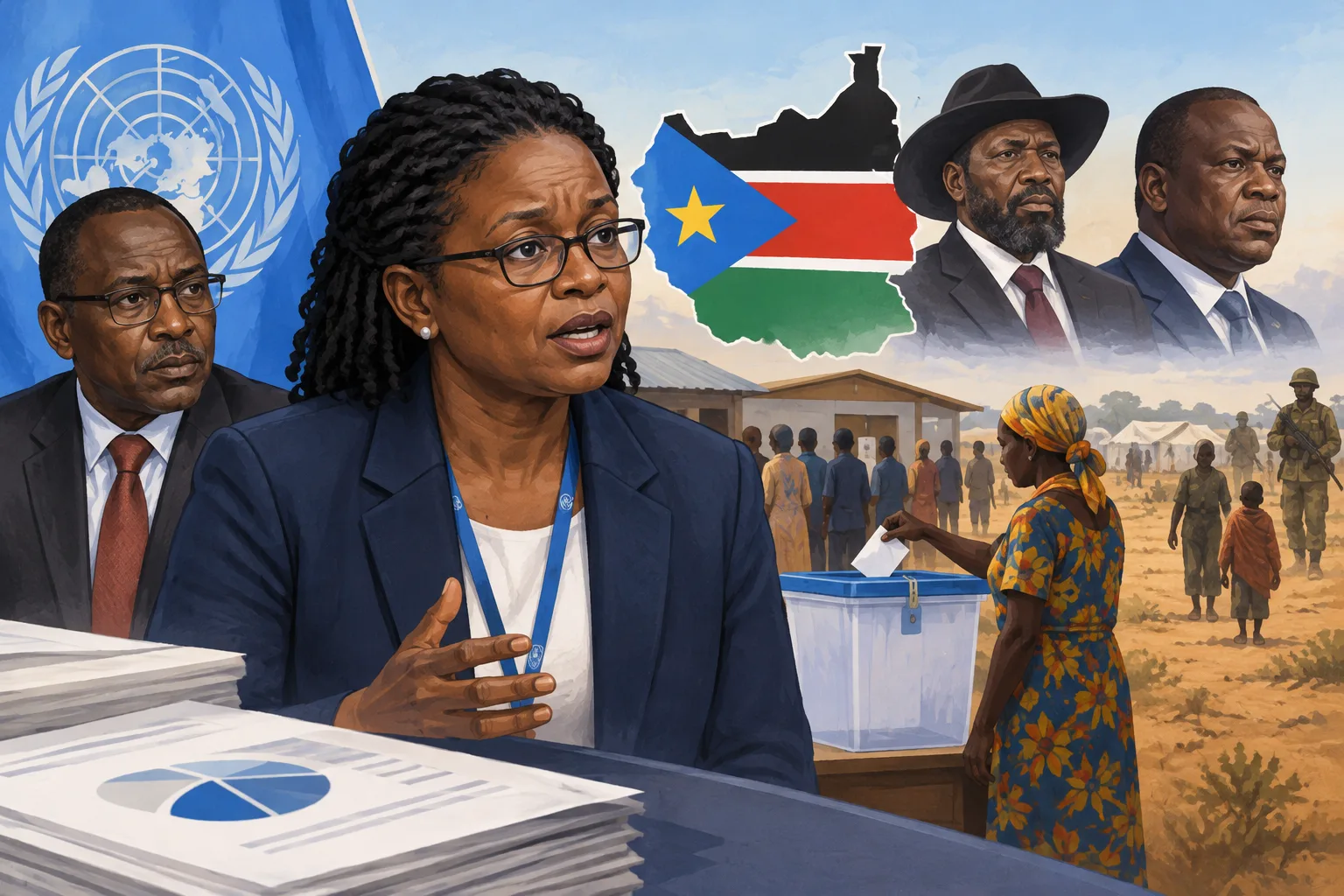
UN officials and an international conflict analyst have warned that security, funding and political divisions threaten preparations for South Sudan’s planned December vote. The government says the country cannot remain under transitional arrangements indefinitely.
Review information is loading.
South Sudan’s first national elections since independence were scheduled for 22 December, 42 days after the Security Council meeting on 10 November. The vote has been repeatedly postponed during the country’s political transition.
Anita Kiki Gbeho, head of the UN mission in South Sudan, said serious concerns remained about security, logistics and the election commission’s ability to organise the vote in the time available. She warned that elections could not substitute for political dialogue or the implementation of the 2018 peace agreement.
Murithi Mutiga, Africa programme director at the International Crisis Group, told the council that the conditions for credible elections were not in place. He warned that a rushed vote could further undermine the peace agreement and open the door to sustained, large-scale violence.
The agreement created a power-sharing arrangement between President Salva Kiir and opposition leader Riek Machar. Machar was placed under house arrest in March 2025, and the unity government was replaced by a caretaker administration in September 2026.
Gbeho said some opposition groups remained outside talks between parties, according to Eye Radio. Machar’s SPLM/A-IO movement has made his release a condition for joining the dialogue. The ruling SPLM was holding party primaries, she said, while election activity among other registered parties remained limited.
She also reported a decline in armed confrontations between the main signatories to the peace agreement, but said civilian casualties and displacement had increased during the year.
Funding concerns
African Union representative Jakaya Kikwete told the council that the election commission had received $21 million after requesting $276 million. Earlier in the year, the commission’s then chair, Abednego Akok, told Radio Tamazuj it had received about US$21 million for operations and a further US$6 million for voter education. It is unclear whether Kikwete’s figure covers the same funding.
South Sudan’s representative defended the push for a vote, saying the country could not remain indefinitely under transitional power-sharing arrangements. State broadcaster SSBC reported that election commission chair Gabriel Bol Deng had reaffirmed the commission’s commitment to holding free and fair elections as planned.
Russia’s representative cautioned against premature conclusions about South Sudan’s ability to conduct the vote. South Africa said it was arranging technical expertise and equipment at South Sudan’s request.
Sign in to give this article a thumbs up or down.
About this discussion and AI questions
Private test discussion. Comments are readers’ views and are not yet automatically fact-checked. Editing is available for 60 seconds after posting.
Sign in with a confirmed reader account and choose a username to read comments and participate.
Sorting applies to top-level comments; replies remain oldest first. New comments and likes can change the order. Refresh for the current ranking.
Loading comments…