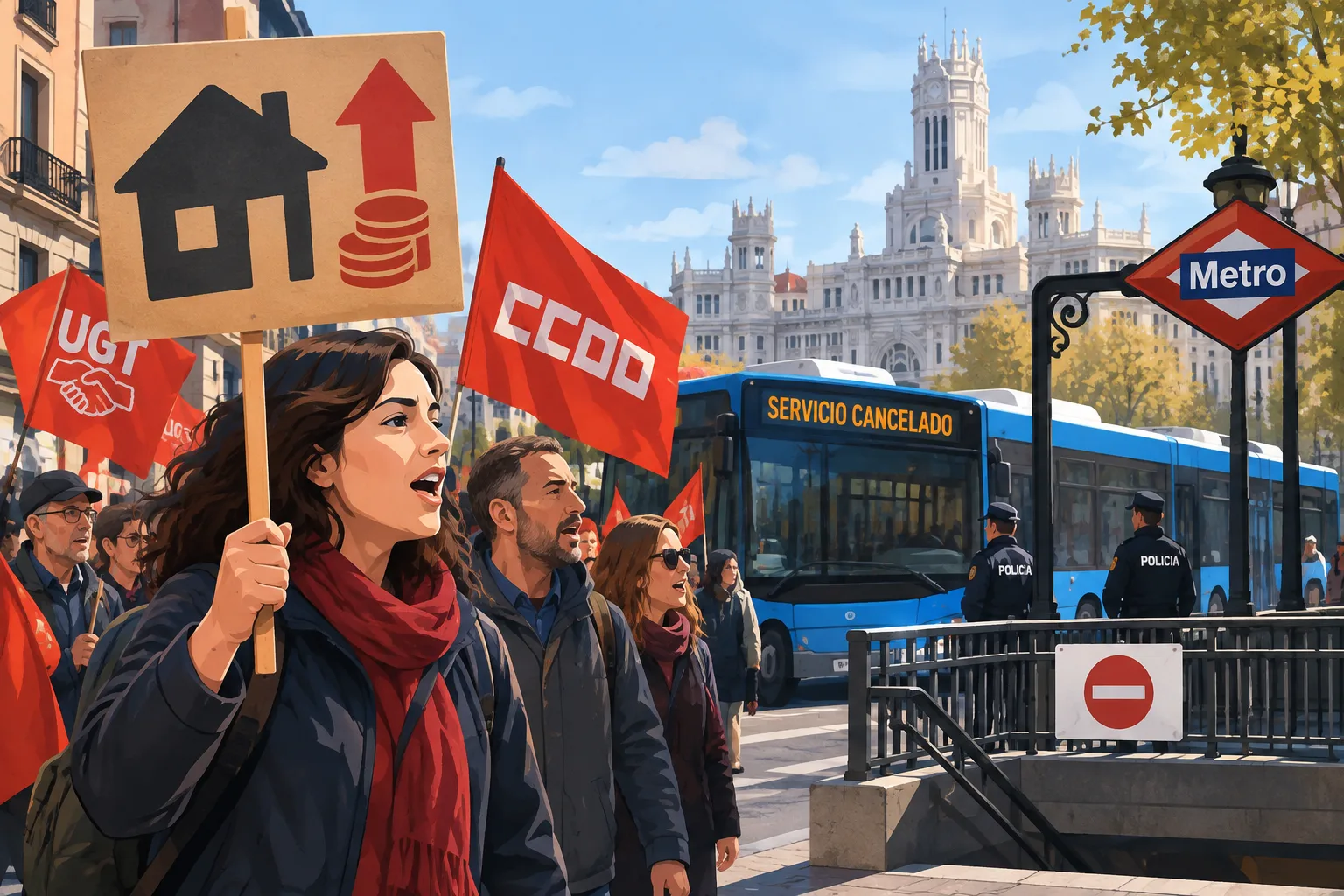
Spain’s first general strike in 14 years disrupts transport and public services
Transport and public services were disrupted across Spain as unions staged the country’s first general strike in 14 years over housing and living costs, with a parliamentary election due on 29 November.
Review information is loading.
Spain’s first general strike in 14 years disrupted transport and other public services on Wednesday, as unions protested over housing costs and the cost of living just over two weeks before a parliamentary election.
Traffic was halted on several major roads in Madrid and Catalonia, the BBC reported. Demonstrations were planned in Madrid and Barcelona later in the day. Spain is due to vote on 29 November.
Union leaders described participation as high: UGT chief Pepe Álvarez called it “massive”, while CC OO leader Unai Sordo said turnout was “very significant”. The Spanish Confederation of Business Organisations, by contrast, said participation was “low and uneven” across areas and sectors.
The interior ministry said dozens of people had been arrested in connection with various incidents. Spanish media reported attacks on estate agency offices.
The strike followed protests over housing affordability and rising living costs, which intensified after the eviction of 87-year-old Maricarmen Abascal from her Madrid flat in September. She died in hospital weeks later. Rents in the capital have risen sharply: property portal Idealista put the average monthly rent for a 50-square-metre flat at €1,170 in October. Spain’s average gross monthly salary is about €2,460, according to the BBC.
The dispute has become entangled with the election campaign. Prime Minister Pedro Sánchez and his allies have backed the strike, while the opposition People’s Party has accused the government of using it for electoral advantage. Sánchez called the election after parliament failed to approve his housing reform plan.
The strike’s support was also reflected in electricity demand: industrial power use fell by 7.5% in the early hours of Wednesday, according to grid operator Red Eléctrica. During the previous general strike, in 2012, equivalent consumption fell by more than 15%.
Sign in to give this article a thumbs up or down.
About this discussion and AI questions
Private test discussion. Comments are readers’ views and are not yet automatically fact-checked. Editing is available for 60 seconds after posting.
Sign in with a confirmed reader account and choose a username to read comments and participate.
Sorting applies to top-level comments; replies remain oldest first. New comments and likes can change the order. Refresh for the current ranking.
Loading comments…