Strong El Niño raises chance of wetter winter in southern and eastern US
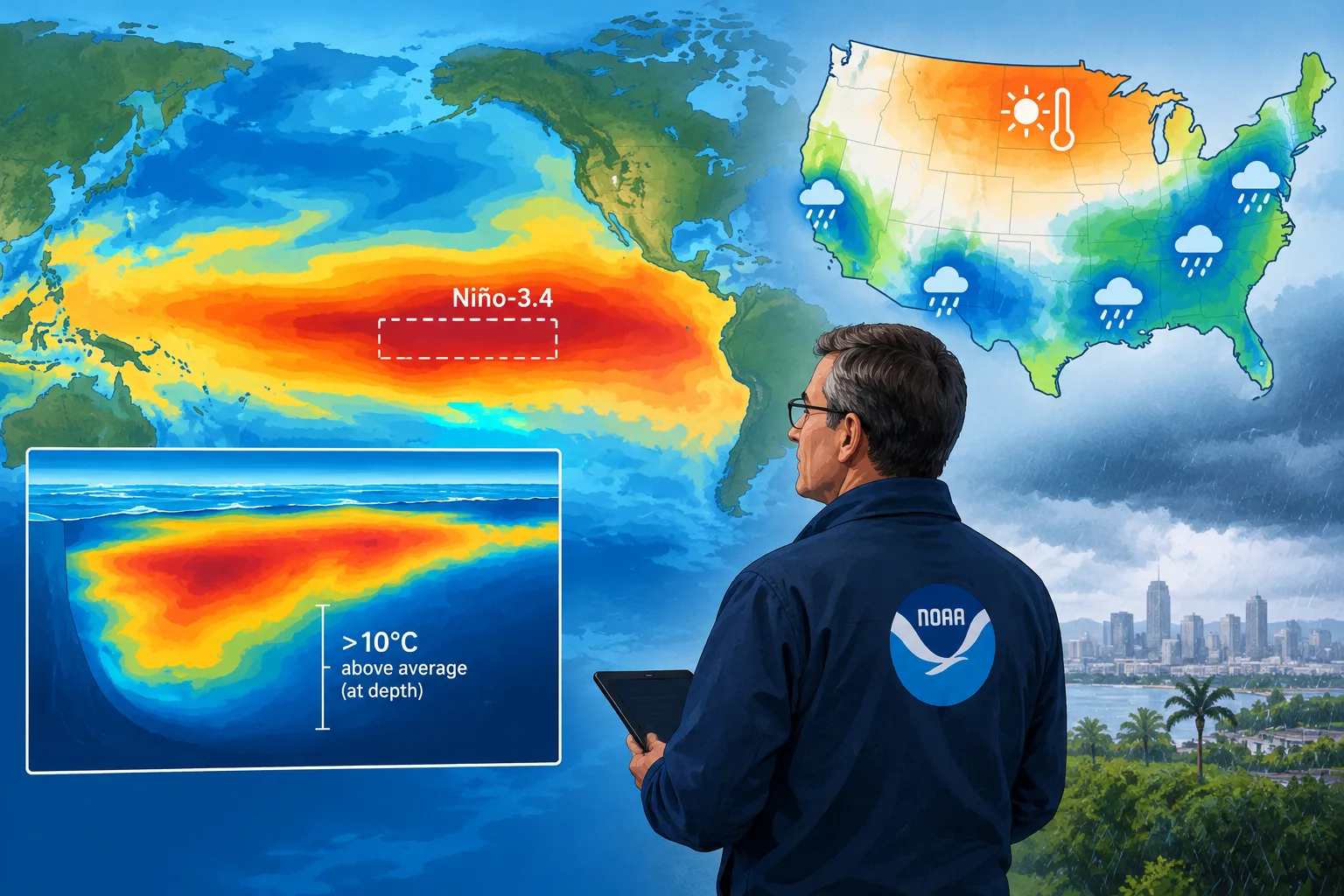
Unusually warm Pacific waters have strengthened El Niño, while US forecasters expect a greater chance of wetter conditions across the South and East this winter.
Review information is loading.
The US National Oceanic and Atmospheric Administration (NOAA) reported on 12 November that El Niño had strengthened since the previous month. It expects the event to remain strong to very strong into the first three months of 2027.
El Niño is a recurring pattern of unusually warm water in the tropical Pacific that can shift weather patterns far beyond the ocean. In October, NOAA’s relative sea-surface temperature index for a central and eastern Pacific region known as Niño-3.4 reached 2.5°C above its 1991–2020 baseline. The index is adjusted for the average temperature across the tropics.
Farther east, unusually warm water has also been found below the surface. NOAA reported temperatures more than 10°C above average at depth in parts of the eastern Pacific.
Kris Karnauskas, an atmospheric scientist at the University of Colorado Boulder, told CNN that this was a “textbook example of an East Pacific El Niño”. He said the location of the warm water can affect how the atmosphere responds. Some studies have linked eastern Pacific El Niños to wetter California winters than those centred farther west, though the question is still being researched.
NOAA’s winter outlook, issued on 15 October, favoured wetter-than-average conditions from California to Florida and along the US East Coast between December and February. It also favoured warmer-than-average temperatures across much of the northern US.
Those are probabilities for the season as a whole, not predictions of individual storms. NOAA says even a very strong El Niño does not guarantee its typical effects. The agency’s next seasonal outlook update is scheduled for 19 November.
Sign in to give this article a thumbs up or down.
About this discussion and AI questions
Private test discussion. Comments are readers’ views and are not yet automatically fact-checked. Editing is available for 60 seconds after posting.
Sign in with a confirmed reader account and choose a username to read comments and participate.
Sorting applies to top-level comments; replies remain oldest first. New comments and likes can change the order. Refresh for the current ranking.
Loading comments…