Study finds gaps in end-of-life and bereavement support for minority ethnic groups
Research by King’s College London and the University of Sheffield says people from minority ethnic backgrounds can face barriers to culturally and religiously appropriate end-of-life care and bereavement support. Accounts from families and a community group show how those gaps can affect people — and how local support can help.
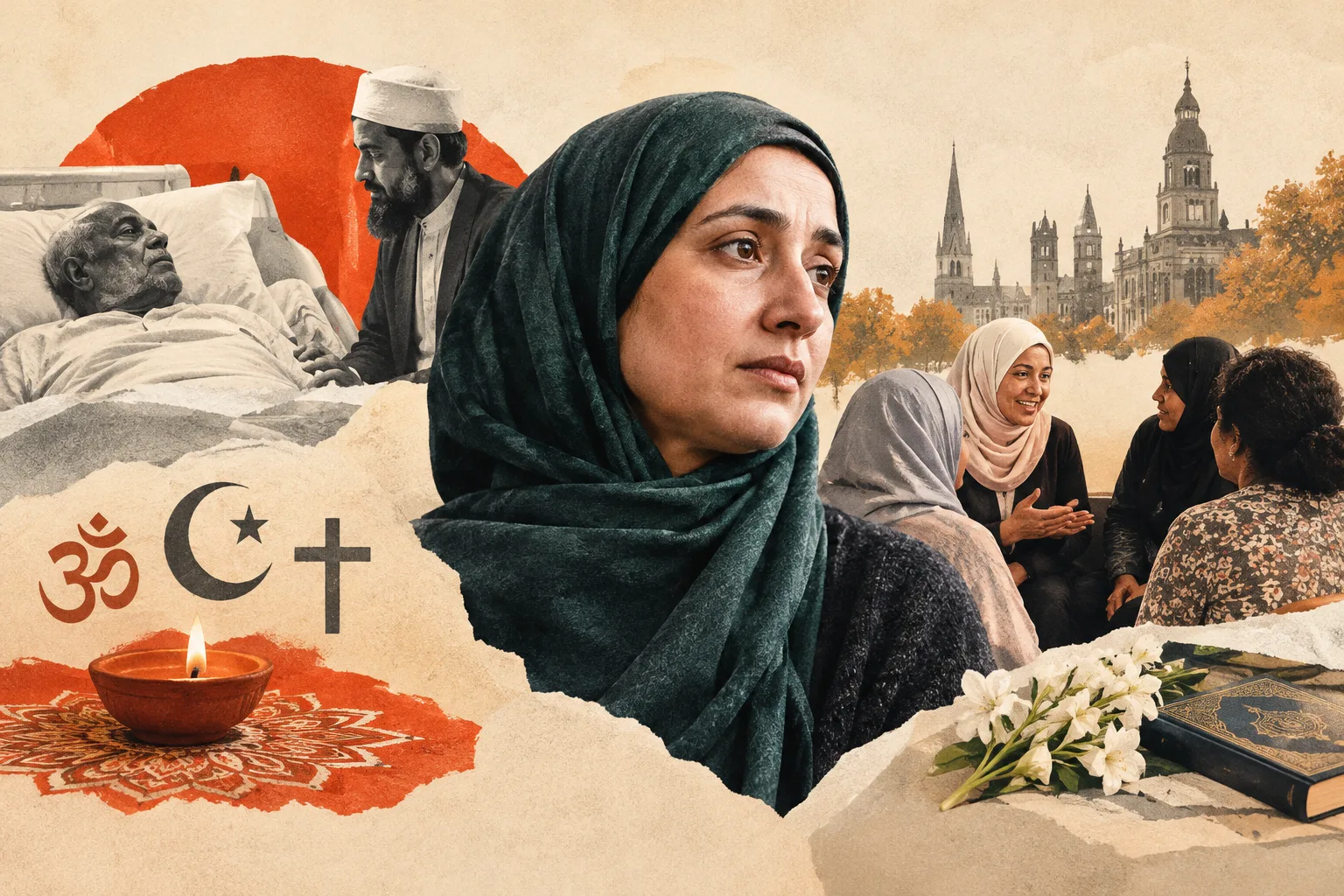
A study by King’s College London and the University of Sheffield says people from minority ethnic backgrounds can struggle to get end-of-life care and bereavement support that reflects their cultural and religious needs. Its findings point to gaps in services and training at a time when families are particularly vulnerable.
One woman interviewed for the research said a hospital sent an imam to her dying Hindu father’s bedside. Sabrina Bajwah, one of the study’s co-authors, said researchers heard about both structural racism — including services treating everyone the same when their needs differ — and direct racism.
People interviewed also described difficulty finding grief support in their own language or from people who understood their background. One woman of Polish background said she had been unfamiliar with support services after a death in the UK and coped alone. A woman from a Bangladeshi background said religious leaders might not be trained to offer mental-health support to someone grieving.
The study’s findings echo concerns about trust in healthcare. A separate study last year by the NHS Race and Health Observatory found an “alarming” lack of trust among some ethnic minority groups; just over half of its participants said they had experienced some form of discrimination from healthcare providers.
Pravin Navekar, from Leicester, said culturally appropriate care was sometimes lacking while his wife Gita was in hospital. He said Diwali went unacknowledged, unlike Christmas, and argued that care should recognise a person’s beliefs and needs as part of who they are.
The research also highlights how community support can help. Marwa Soliman had recently moved from Egypt to Nottingham and was pregnant when her father died in 2013. She said she felt alone and afraid. Six years later, she founded Heya, a support group for Muslim, Arabic-speaking women. It has grown from 50 members to more than 700, and Soliman says members rally around families after a death with visits, condolences, food and Quran readings.
Soliman said more research and clearer information about where to seek help were needed, and warned that funding for community groups was scarce. Co-author Catriona Mayland said services should build on existing community strengths and work with them, rather than try to replace them.
A Department of Health and Social Care spokesperson said ethnicity or background should not be a barrier to bereavement support and that everyone had the right to the same level of care. The department said it would consider the research findings in future policymaking.
Sign in to give this article a thumbs up or down.
From the discussion
Private test discussion. Comments are readers’ views and are not yet automatically fact-checked. Editing is available for 60 seconds after posting.
Sign in with a confirmed reader account and choose a username to read comments and participate.
Sorting applies to top-level comments; replies remain oldest first. New comments and likes can change the order. Refresh for the current ranking.
Loading comments…