Sweden’s centre-left deadlock leaves government formation and new election in doubt
Sweden’s centre-left parties have failed to agree on sharing power despite winning a narrow parliamentary majority in September. The speaker is due to set out the next step on Tuesday, with another election possible if negotiations fail.
Review information is loading.
Sweden’s centre-left parties remain deadlocked over forming a government two months after winning September’s election, leaving the country facing continued political uncertainty and the possibility of a fresh vote. The parliamentary speaker is due to decide the next step on Tuesday.
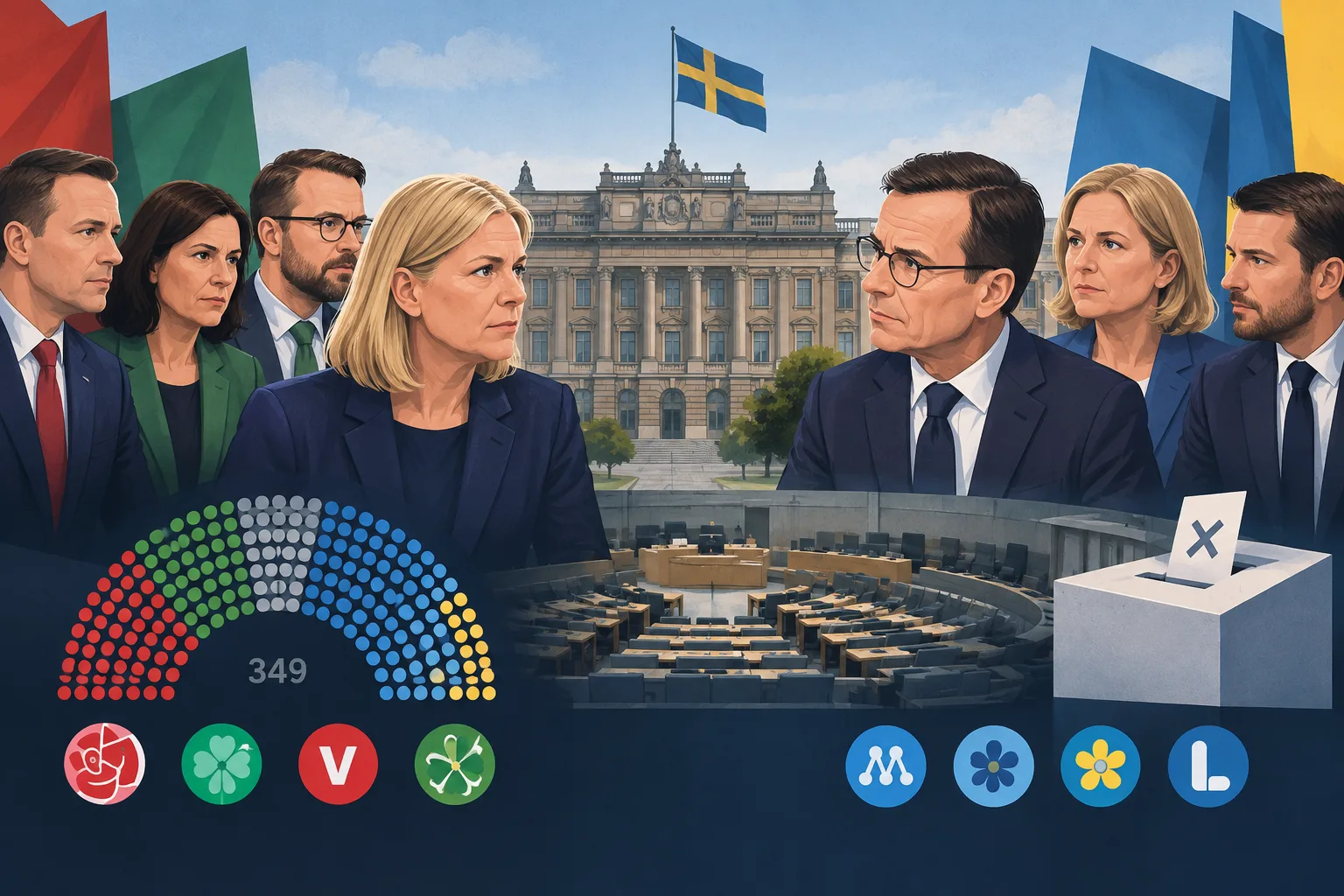
The four centre-left parties won 176 of the 349 seats in parliament, against 173 for the centre-right bloc led by former prime minister Ulf Kristersson. But they campaigned separately and have yet to agree how to share power.
The main obstacle is the Centre Party’s opposition to the Left Party’s demand for cabinet posts. Social Democrat leader Magdalena Andersson, who is seeking to head a new government, must persuade either the Left or the Centre to compromise and then negotiate a policy programme.
The speaker previously tasked Kristersson with forming a government after Andersson and the Centre Party leader lost votes on their bids to form cabinets. But the Centre is currently backing Andersson, making a parliamentary majority for Kristersson appear unlikely. The Centre has also ruled out cooperation with the far-right Sweden Democrats, whose support Kristersson would need alongside his other allies to secure a majority.
If neither bloc can form a government, four parliamentary votes can be held before an election is automatically called. A fresh election would have to take place within three months if the Centre refuses to soften its opposition to both the Left and the Sweden Democrats.
The political stakes include climate policy, immigration, taxes and the role of the far right. Sweden’s support for Ukraine and its focus on rearmament are expected to continue whichever bloc governs. A centre-left government would be likely to put more emphasis on phasing out fossil fuels and rebuilding welfare services, while largely retaining the centre-right’s tougher immigration and criminal justice policies. Kristersson’s bloc has proposed income tax cuts, tighter benefit rules and a fleet of new nuclear power plants.
Sign in to give this article a thumbs up or down.
About this discussion and AI questions
Private test discussion. Comments are readers’ views and are not yet automatically fact-checked. Editing is available for 60 seconds after posting.
Sign in with a confirmed reader account and choose a username to read comments and participate.
Sorting applies to top-level comments; replies remain oldest first. New comments and likes can change the order. Refresh for the current ranking.
Loading comments…