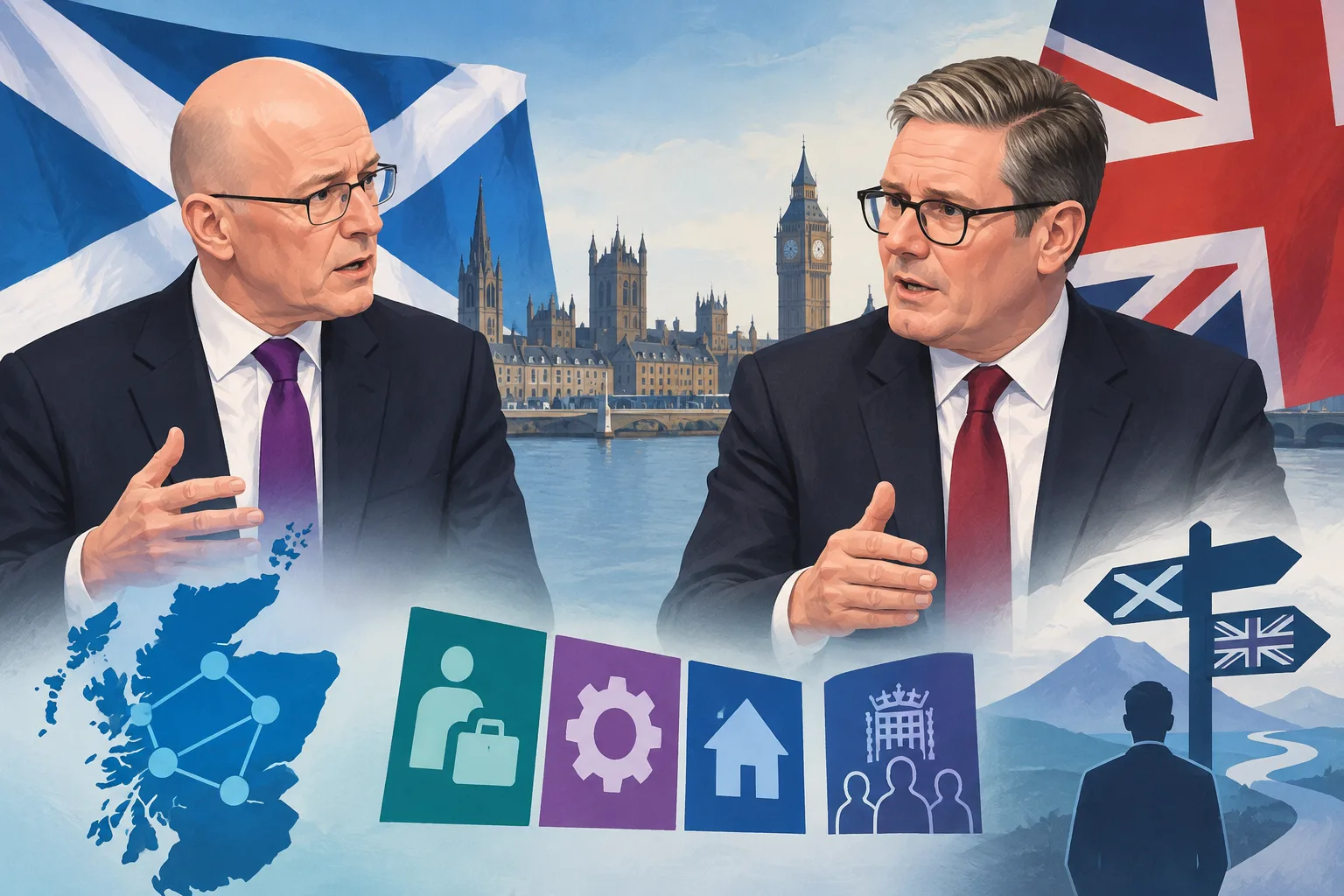
Swinney and Starmer clash over who should hold power in Scotland
At the SNP conference in Aberdeen, John Swinney rejected the UK government’s description of Scotland as highly centralised, while Keir Starmer promoted regional economic powers and played down renewed debate over independence.
Review information is loading.
John Swinney and Keir Starmer have set out competing visions for where power should sit in Scotland, as the SNP gathers in Aberdeen after winning a fifth consecutive Scottish Parliament election in May.
The prime minister proposed designing a new model of regional economic empowerment with the Scottish government, including devolving local employment support currently handled by the Department for Work and Pensions. He said he wanted to work with Swinney despite their disagreements.
Starmer and Scotland Secretary Douglas Alexander described Scotland as “one of the most centralised nations in Europe”. Swinney rejected that characterisation. He has said he wants more regional involvement in skills, economic opportunity and planning, though the SNP’s approach would not include mayors like those leading some English combined authorities. [1]
The dispute over devolution sits alongside a deeper divide over independence. Starmer has called the debate a distraction and said he wants to “move on” from it; independence remains Swinney’s long-term political goal. Senior SNP figures acknowledge that Westminster holds the authority to approve another referendum, while the UK government opposes one.
At the conference, SNP activists pointed to Starmer’s recent comments on Brexit and to an exchange in the Commons in which Labour’s Andy Burnham suggested a referendum could take place if public opinion supported one. Starmer and Downing Street have since sought to dismiss the idea that he backs another Scottish independence vote.
The SNP’s political position has shifted sharply since its poor performance at the 2024 general election, when Labour gained 36 seats from the party. Its May victory, although it won fewer seats than in 2021, has given Swinney a fresh mandate and put Labour’s Scottish gains back in play as the parties look towards the next UK general election.
The conference takes place as the SNP approaches 20 years in devolved government at Holyrood. Its critics cite problems including NHS performance and drug-related deaths; the party points to Scotland’s police numbers per person and spending per school pupil. [1]
Sign in to give this article a thumbs up or down.
About this discussion and AI questions
Private test discussion. Comments are readers’ views and are not yet automatically fact-checked. Editing is available for 60 seconds after posting.
Sign in with a confirmed reader account and choose a username to read comments and participate.
Sorting applies to top-level comments; replies remain oldest first. New comments and likes can change the order. Refresh for the current ranking.
Loading comments…