Timms review proposes linking England and Wales disability benefit to claimants’ extra costs
A review of disability benefits in England and Wales recommends linking PIP payments more closely to claimants’ extra costs, a shift that could reduce support for some. Ministers have accepted proposals for faster payments for some people and fewer reassessments, but will give their full response early next year.
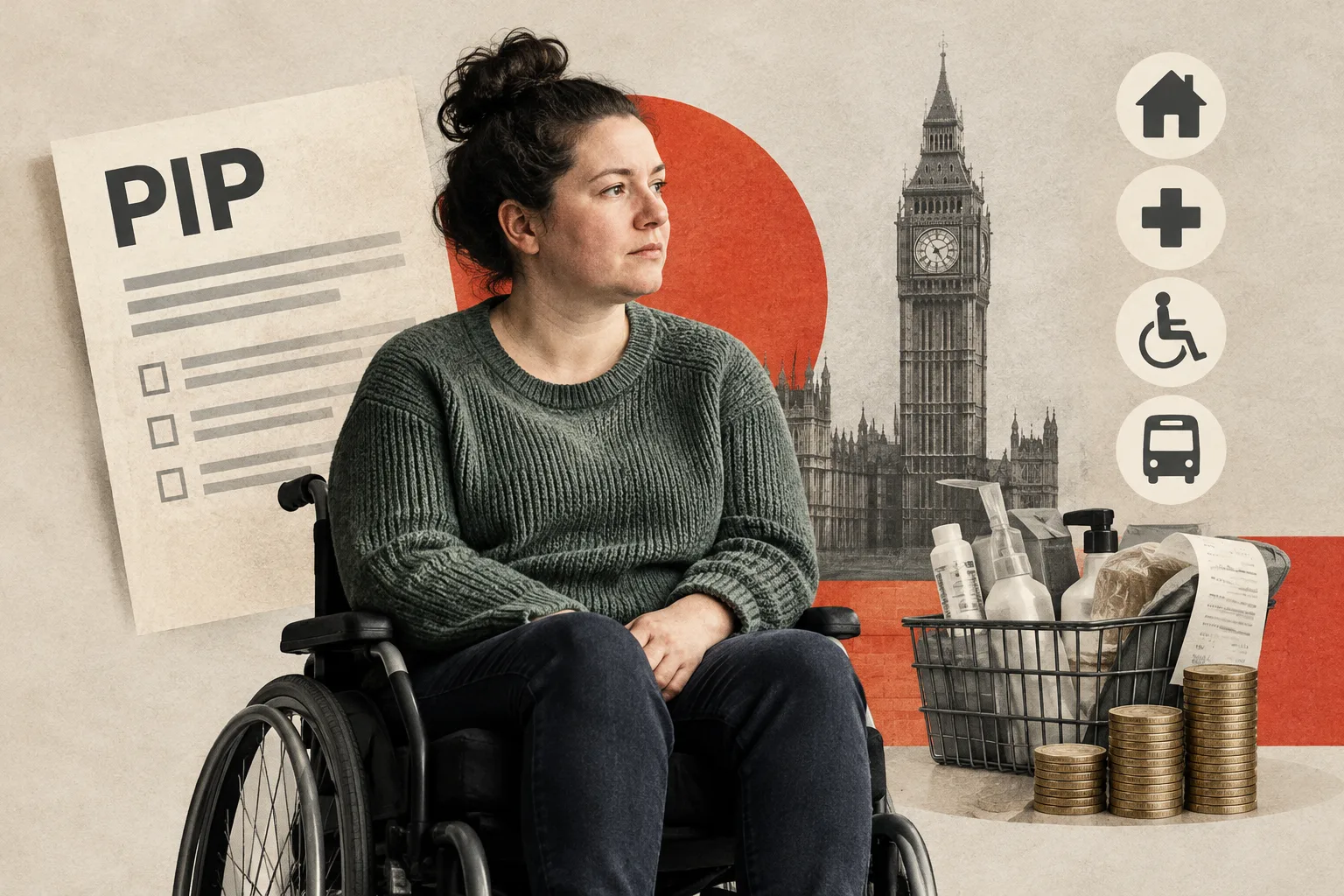
A government review has recommended linking Personal Independence Payment (PIP) more closely to the extra costs disabled people face, a change that could leave some claimants with less support or no payment.
The review, led by Disability Minister Sir Stephen Timms, says the current system is “not appropriate” for people who incur no additional costs because of their condition. It suggests future payment bands should reflect claimants’ individual needs and costs, while stopping short of requiring them to calculate expenses or produce receipts.
Ministers have committed to fast-track payments for people receiving end-of-life care or with serious, well-evidenced conditions, and to reduce unnecessary reviews for people whose conditions are lifelong or unlikely to improve. The government will not set out its full response until early next year.
PIP supports people in England and Wales with long-term physical or mental health conditions that make everyday tasks difficult. It is not means-tested. The number of claimants in England and Wales has roughly doubled since 2019 to about four million.
The review says a closer focus on costs could “rebalance” payments, with people facing the highest additional costs receiving the most support. Some claimants could receive less than they do now, or cease to qualify. The report also recommends more face-to-face assessments, which the BBC says have been shown to reduce eligibility.
The review was not tasked with finding savings and does not say whether its proposals would reduce the overall benefits bill. PIP spending is forecast to rise from about £32bn this financial year to £41.5bn by the end of the decade.
The proposals follow a separate review of young people not in education, employment or training, which recommended a new benefits system for under-25s. Ministers say they will consider the two reviews together, prompting concern about uncertainty for younger disabled people and the possibility that people with the same conditions could receive different support depending on their age.
The Institute for Fiscal Studies’ senior research economist Eduin Latimer said the Timms review could better tailor PIP to claimants’ needs, but warned that defining and fairly measuring disability-related costs would be difficult. Disability charities have broadly welcomed proposals for faster support and fewer reassessments, while saying changes should not leave disabled people worse off.
The review applies to England and Wales. Scotland has a separate disability-benefit system, while Northern Ireland’s benefits are devolved but in practice reflect changes made in England and Wales.
Sign in to give this article a thumbs up or down.
From the discussion
Private test discussion. Comments are readers’ views and are not yet automatically fact-checked. Editing is available for 60 seconds after posting.
Sign in with a confirmed reader account and choose a username to read comments and participate.
Sorting applies to top-level comments; replies remain oldest first. New comments and likes can change the order. Refresh for the current ranking.
Loading comments…