Trading Standards warns of AI-powered scams using fake shops and cloned voices
National Trading Standards’ first AI scam watchlist warns of fake shops, convincing phishing messages and cloned voices—and urges people to pause and verify before paying or sharing information.
Review information is loading.
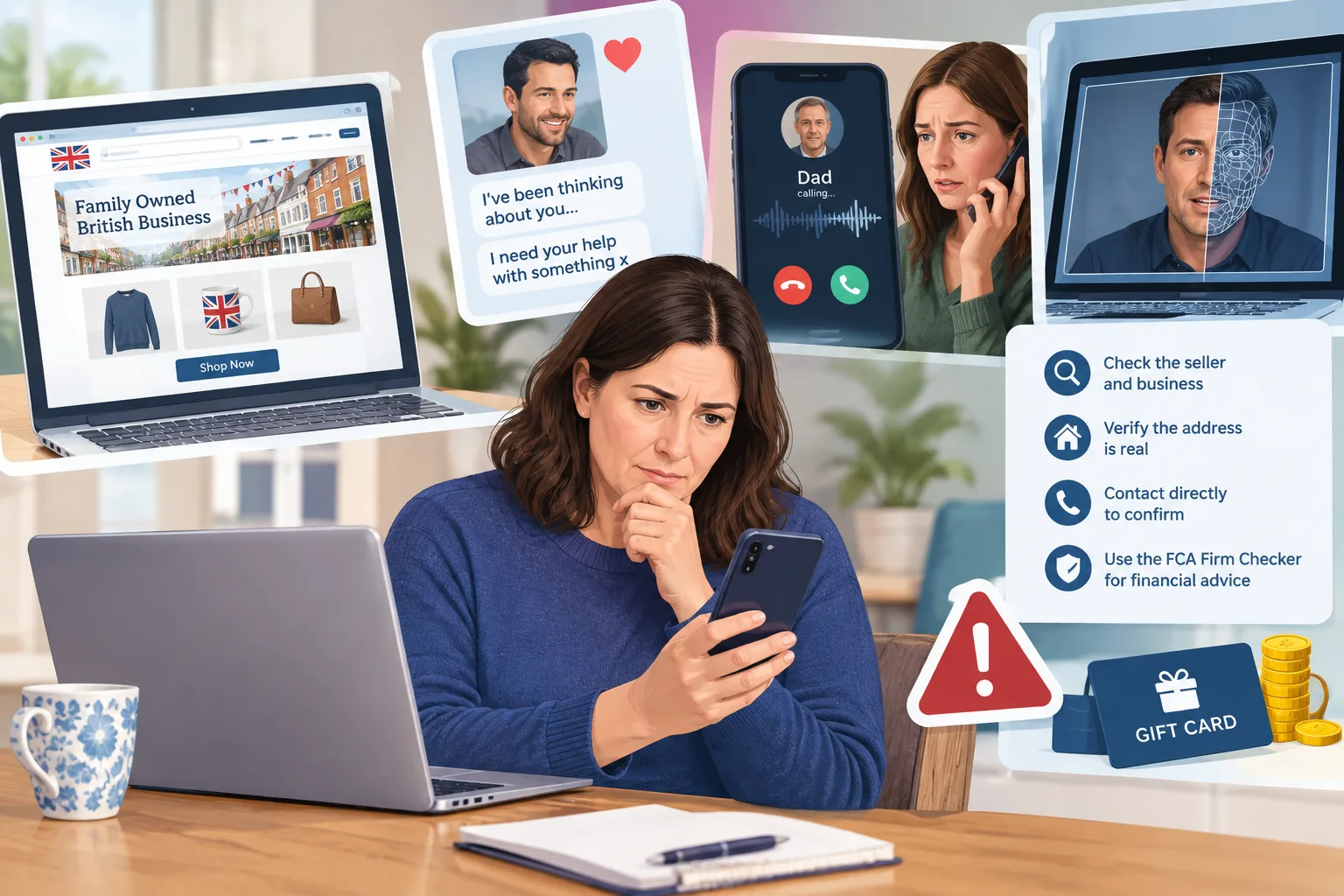
National Trading Standards has published its first AI scam watchlist, warning that criminals are using generated images, cloned voices and deepfake videos to deceive people and steal money. Its advice includes checking sellers and businesses independently, and not relying on spelling mistakes to spot a scam.
The watchlist highlights fake online shops that present themselves as family-owned businesses selling quality UK-made goods. Their websites may feature polished images of British high streets, but customers may receive cheap mass-produced products—or nothing at all, trading standards officers say.
Other tactics include using AI to help sustain romance scams by remembering victims’ personal details, and generating convincing emails, texts and social media messages at scale. Criminals may also clone the voice or image of a relative or friend to make an urgent request for money.
Consumer group Which? warns that grammatical errors and typos are no longer reliable signs of a scam: AI can produce fluent, personalised messages.
Trading standards advises people to research a seller, check whether an address is real and contact a business directly to verify a job advert. Anyone considering financial advice can use the Financial Conduct Authority’s Firm Checker to check whether a company is authorised.
People should not assume someone is genuine simply because they recognise a voice or see them on a video call. Trading standards also advises against sending money, gift cards or personal or financial information to someone they have not met in person, and says to be wary of pressure to act quickly.
Suspected fraud can be reported to Report Fraud online or by calling 0300 123 2040. Citizens Advice’s Consumer Service can be reached on 0808 223 1133 for advice. [1]
Sign in to give this article a thumbs up or down.
About this discussion and AI questions
Private test discussion. Comments are readers’ views and are not yet automatically fact-checked. Editing is available for 60 seconds after posting.
Sign in with a confirmed reader account and choose a username to read comments and participate.
Sorting applies to top-level comments; replies remain oldest first. New comments and likes can change the order. Refresh for the current ranking.
Loading comments…