AI ANALYSIS & OPINION
Trump misstates El-Sayed’s position on Social Security tax
The Democrat wants Social Security benefits exempt from income tax. His position on existing deductions for older taxpayers, tips and overtime is less clear.
Review information is loading.
Donald Trump has wrongly portrayed Michigan Senate candidate Abdul El-Sayed as opposed to tax-free Social Security, while warning that three tax breaks would end if the Democrat and his party gained power.
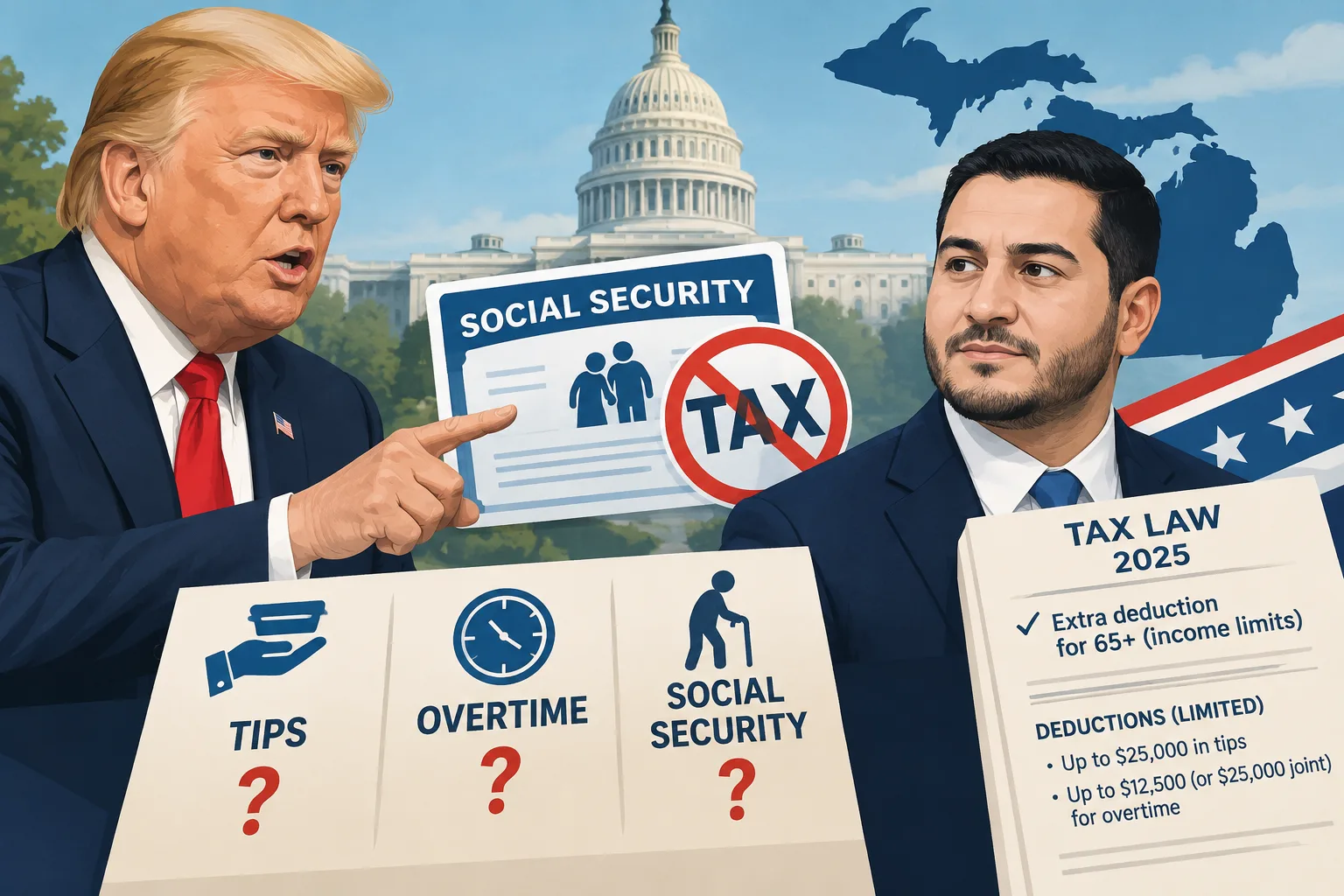
In a 31 October 2026 Truth Social post endorsing Republican Mike Rogers, Trump said El-Sayed opposed tax relief on tips, overtime and Social Security. He predicted that “all of these things will be terminated” if El-Sayed and the Democrats gained power. The post, reproduced by the Trump’s Truth archive, came during early voting for the 3 November election.
Social Security is the federal programme that provides retirement, disability and survivor benefits. El-Sayed’s campaign says those payments should be excluded from gross income. In a debate with Rogers before the post, he said: “I also think it’s crazy that we tax Social Security.”
Trump’s 2025 law did not generally exempt Social Security benefits from income tax. Instead, it created an extra deduction of up to $6,000 for each eligible taxpayer aged 65 or over, subject to income limits. It can reduce taxes on other income as well as benefits. El-Sayed’s position on keeping or extending that separate deduction is unclear.
His position on retaining the existing tips and overtime deductions is also unclear. During the debate, Rogers promised to make the tax cuts permanent. El-Sayed used his immediate response to criticise Rogers over corporate influence rather than saying what he would do with the deductions.
The rules offer limited income-tax deductions, not blanket exemptions. Eligible workers can deduct up to $25,000 in qualifying tips. For overtime, the deduction covers the legally required premium above normal pay, up to $12,500, or $25,000 on a joint return. The amounts are reduced at higher incomes, and Social Security and Medicare payroll taxes can still apply to tips.
All 212 House Democrats who voted on the broader 2025 bill opposed it, as did two Republicans. That was a vote on the entire package, including healthcare and food-assistance provisions, not a separate vote on each deduction. El-Sayed has told Detroit public radio station WDET that he wants to reverse the law’s healthcare cuts.
Earlier in 2025, Democratic senator Jacky Rosen and Republican Ted Cruz introduced a separate bill for a tips deduction. The Senate passed it without objection.
Trump also accused El-Sayed of wanting large tax increases. His programme calls for a higher marginal rate on earnings above $1 million, a tax on wealth over $1 billion and removal of the cap on wages subject to Social Security payroll tax. That payroll tax is separate from income tax on benefits.
El-Sayed also backs Medicare for All. Bridge Michigan reported in September that his campaign had not answered its question about how he would pay for it. Experts cited by the publication said a broad single-payer system would probably require higher middle-class taxes, although some households could save overall if insurance premiums and other costs fell.
Trump did not identify a plan by El-Sayed and the Democrats to repeal the three deductions. Under the law he signed, they are already scheduled to expire after the 2028 tax year unless Congress extends them, whoever wins the Michigan race.
Sign in to give this article a thumbs up or down.
About this discussion and AI questions
Private test discussion. Comments are readers’ views and are not yet automatically fact-checked. Editing is available for 60 seconds after posting.
Sign in with a confirmed reader account and choose a username to read comments and participate.
Sorting applies to top-level comments; replies remain oldest first. New comments and likes can change the order. Refresh for the current ranking.
Loading comments…