Trump praises $50bn rural health fund as Medicaid changes are forecast to leave millions uninsured
States are funding projects under the programme, but the law that created it is also expected to leave millions more Americans without health insurance.
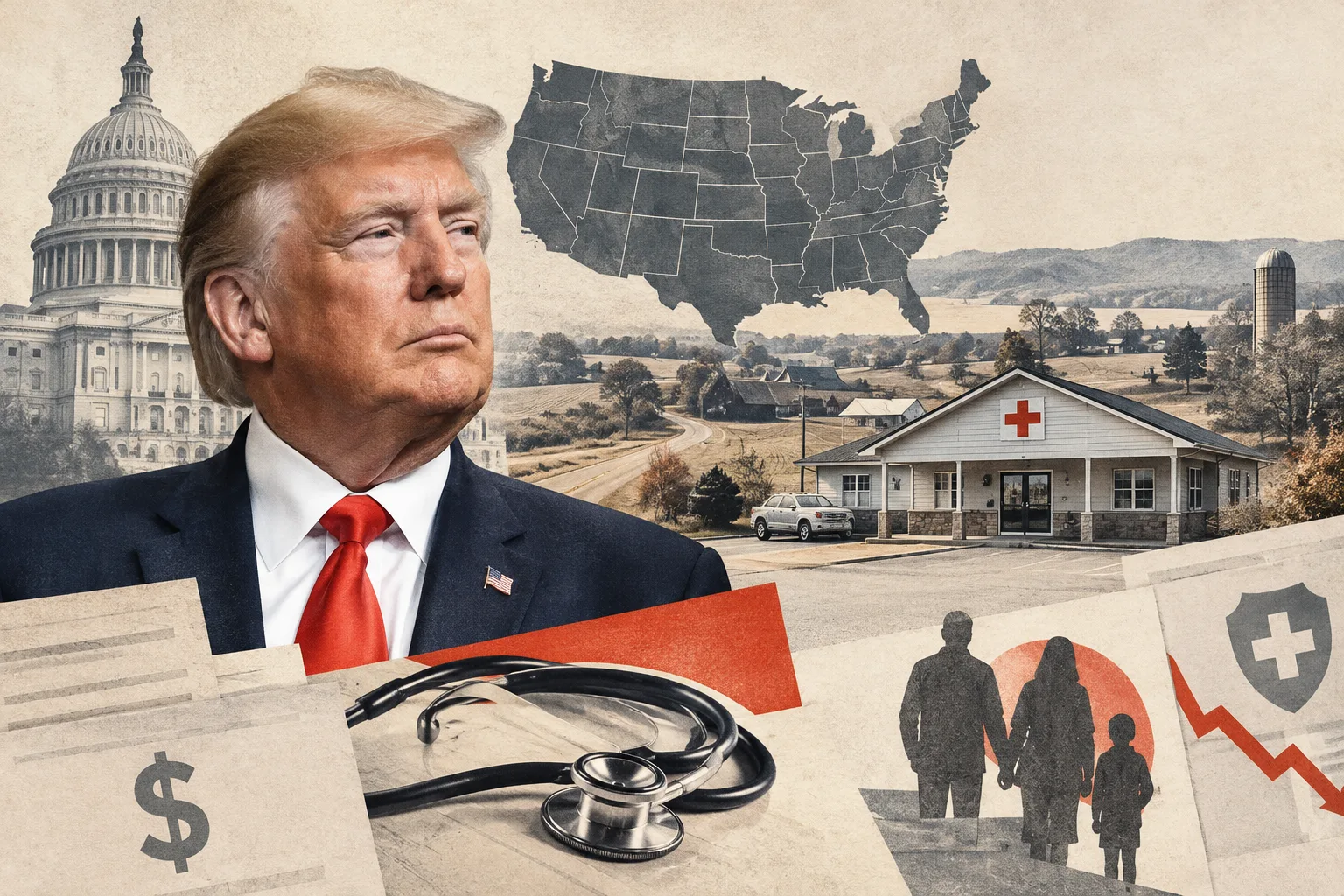
President Donald Trump said in a National Rural Health Day message on 19 November that the five-year Rural Health Transformation Program was working in all 50 states and helping bring services closer to patients. His message did not present figures showing how far access had improved.
All 50 states have submitted first-year progress reports, according to the federal agency running the programme, the Centers for Medicare & Medicaid Services (CMS). It says some initiatives are already reaching patients and communities, while others are building the infrastructure needed for future services.
The Government Accountability Office, the US federal watchdog, says $10 billion was awarded to the 50 states at the end of 2025 for the programme’s first budget period. Another $10 billion was awarded for the second year, according to CMS. An award does not mean the money has all been spent or that services have been delivered.
In South Carolina, the state’s health department announced in September that it had awarded $167.3 million to 228 projects. Those included 21 awards, worth a combined $13.4 million, for remote patient monitoring and assistive technology.
CMS figures show how commitments differed as of 31 July: Idaho had committed $430,414 of its roughly $186 million first-year award, all for administration, while Illinois had committed about $165.2 million of its $193.4 million award. CMS cautions that commitments alone do not measure a state’s overall progress; they are not necessarily payments or a measure of care delivered.
The law creating the rural fund also changed Medicaid, the joint federal-state health insurance programme for people on low incomes. The Congressional Budget Office and the Joint Committee on Taxation estimate that those Medicaid changes will leave 7.5 million more people uninsured nationwide in 2034 than otherwise expected.
They also project 12.9 million fewer Medicaid enrolments, including about 1.5 million duplicate enrolments involving people expected to remain eligible in their state of residence. The estimates are national forecasts, not a separate calculation of the rural fund’s effect or of how many rural residents will lose coverage.
CMS says states will begin more detailed quarterly reporting in November.
Sign in to give this article a thumbs up or down.
From the discussion
Private test discussion. Comments are readers’ views and are not yet automatically fact-checked. Editing is available for 60 seconds after posting.
Sign in with a confirmed reader account and choose a username to read comments and participate.
Sorting applies to top-level comments; replies remain oldest first. New comments and likes can change the order. Refresh for the current ranking.
Loading comments…