Trump’s Board of Peace warns Gaza ceasefire could collapse as plan stalls
The US-backed board says continued fighting and delays to its peace plan threaten the truce, while Gaza faces severe shortages and another winter in tents.
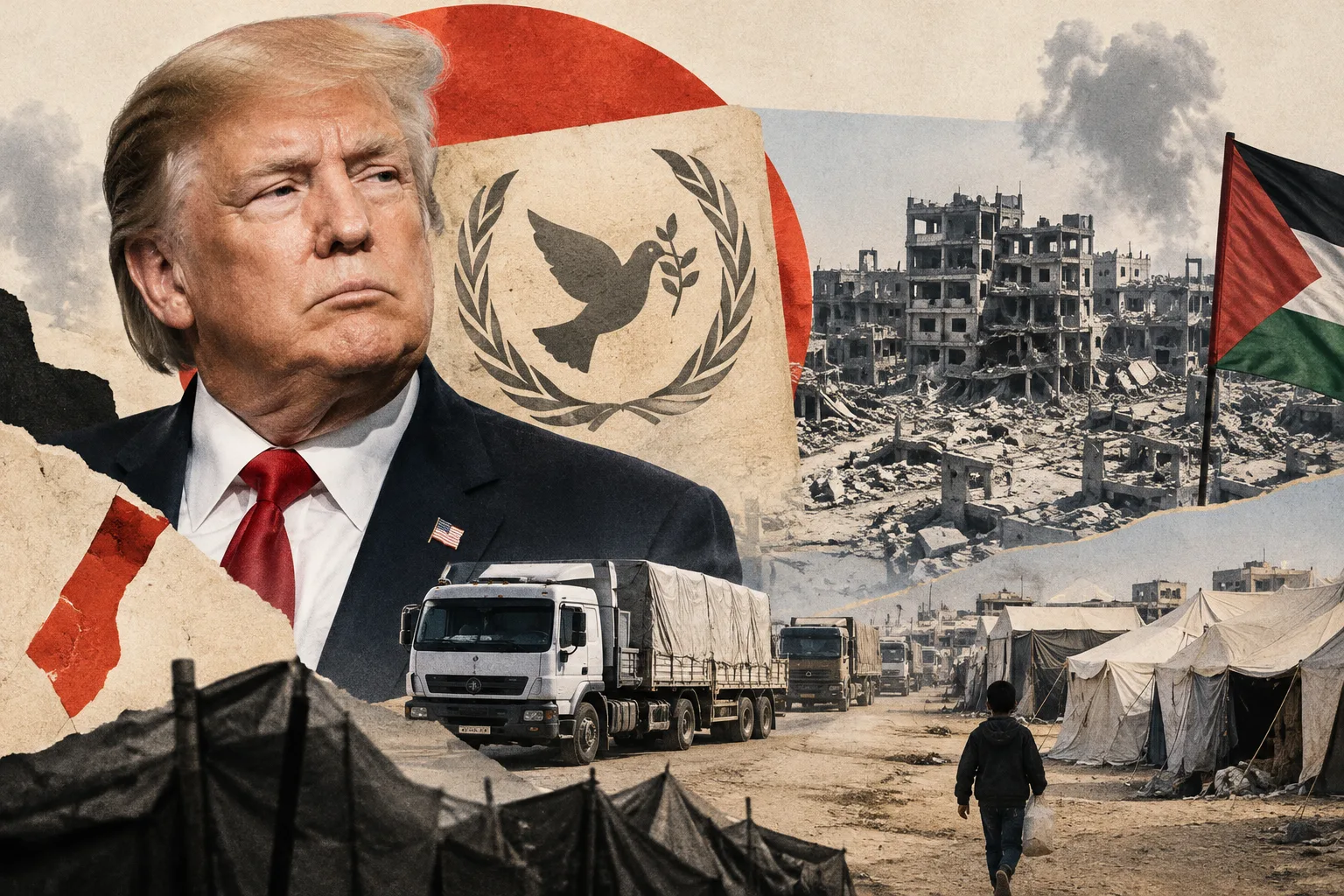
The Board of Peace overseeing Donald Trump’s Gaza plan has warned that the ceasefire could collapse unless Israel and Hamas take steps to implement it.
The board points to continued Israeli strikes and restrictions on supplies, as well as Hamas’s military activity, according to the Associated Press and Reuters, which obtained copies of its report. AP said the report was delivered to the UN Security Council on 17 November.
The board also criticised a lack of Israeli decisions needed to train and deploy a Palestinian civilian police force. It said Israeli restrictions and funding shortfalls had hampered preparations for winter. Earlier this month, the board called on Israel to allow more winter aid into Gaza after flooding.
The ceasefire took effect on 10 October 2025; the board’s founding charter was signed in January 2026. In its May report, the board said the ceasefire, the return of hostages and resumed aid had brought relief, but called Hamas’s refusal to accept verified disarmament the main obstacle to the plan.
Conditions in Gaza
A UN estimate published in November puts the number living in tents at about 1.43 million, or 68% of Gaza’s population. The UN humanitarian office, OCHA, said 42% of monitored essential medicines were out of stock in October.
It also reported that 228 UN and partner lorries were offloaded on the Israeli side of Kerem Shalom from 2 to 8 November, about 42% fewer than the previous week. OCHA attributed the fall mainly to Israel’s suspension of the Egyptian aid corridor, as well as reduced supplies available because of funding constraints.
Aid increased after the ceasefire, according to a February briefing by the House of Commons Library citing UN and Israeli data. A UN mechanism’s figures show aid offloaded through that channel falling from about 58,500 tonnes in November 2025 to 17,800 tonnes in September 2026; those figures do not include all aid or commercial goods.
Gaza’s health ministry reported 1,613 deaths and 5,833 injuries in conflict-related incidents from the ceasefire through 9 November, according to OCHA. The total does not distinguish all civilians from fighters or identify who was responsible for each incident.
Israel’s aid coordination agency COGAT told The New Humanitarian that Hamas exploited aid and civilian surroundings for its military build-up, and said reconstruction equipment would not be allowed in until Hamas was fully and verifiably disarmed.
Disarmament and withdrawal
A July roadmap accepted by Hamas but rejected by Israel linked a phased process of disarming and storing weapons to a phased Israeli withdrawal. In August, the board said withdrawal beyond the ceasefire’s “yellow line” would come only after disarmament was complete, an apparent shift from the earlier proposal, according to The Times of Israel.
Israeli Defence Minister Israel Katz said on Wednesday that Israel would not withdraw until Hamas was dismantled and Gaza demilitarised. Hamas official Basem Naim dismissed the report as “pure disinformation” and accused the board of giving Israel cover, Reuters reported.
The UN Security Council had scheduled a briefing on the report for 30 November.
Sign in to give this article a thumbs up or down.
From the discussion
Private test discussion. Comments are readers’ views and are not yet automatically fact-checked. Editing is available for 60 seconds after posting.
Sign in with a confirmed reader account and choose a username to read comments and participate.
Sorting applies to top-level comments; replies remain oldest first. New comments and likes can change the order. Refresh for the current ranking.
Loading comments…