AI ANALYSIS & OPINION
Trump’s petrol-price delay claim overlooks falls before US midterms
The national average fell for six weeks ahead of the 3 November vote. A steeper fall followed, but the figures do not establish that anyone deliberately delayed it.
Review information is loading.
On 17 November, President Donald Trump wrote on Truth Social: “Biggest drop in gasoline in 18 years. Notice that they waited until after the ‘Election?’” He did not say who “they” were or specify a time period for the comparison.
The post he shared, published earlier that day by the account @Schoenlaw, said “The blockade is working” and urged readers to credit Trump. It linked to a Traders Union article about sharp daily falls in petrol prices but did not identify the blockade.
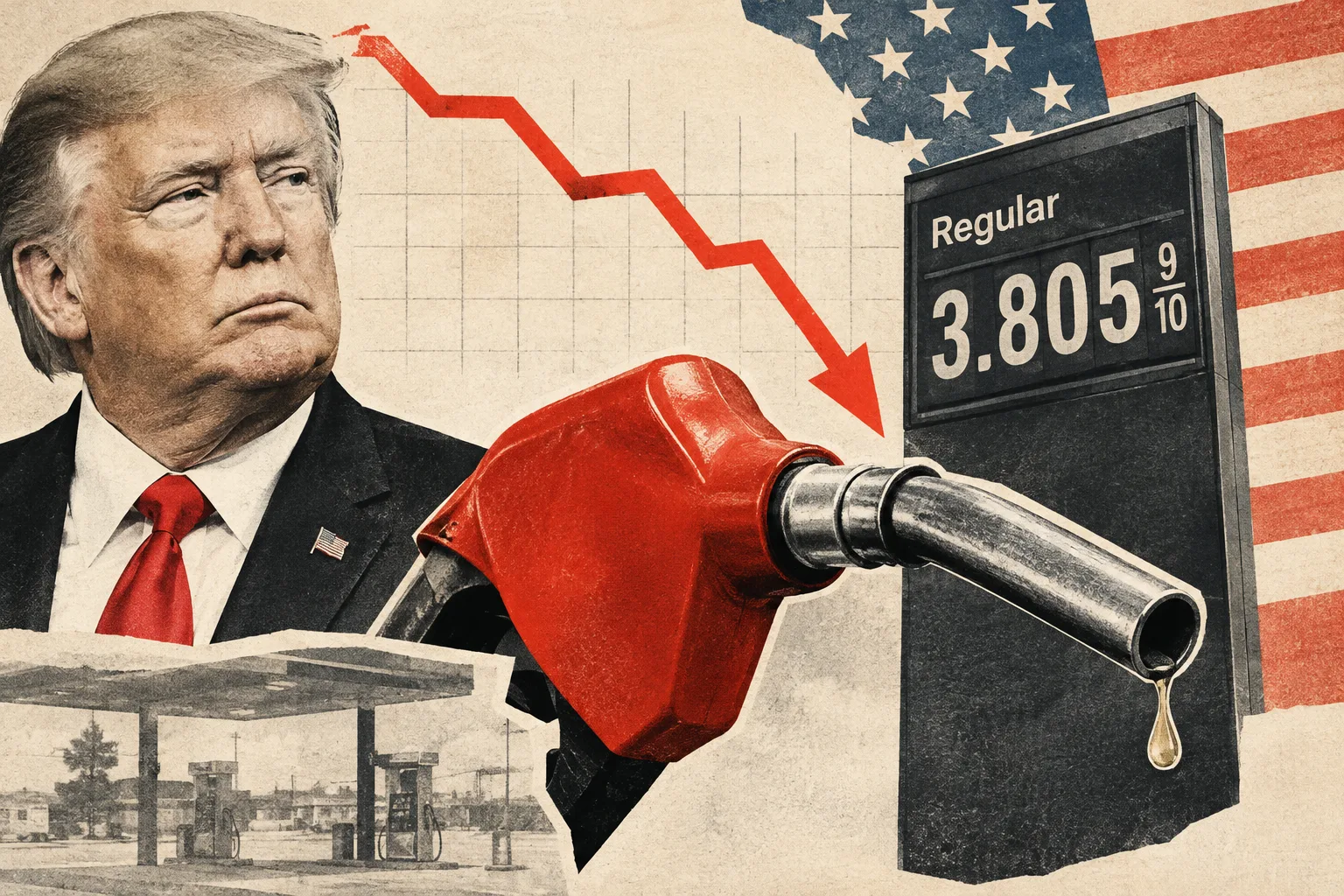
The US Energy Information Administration (EIA) recorded a national average for regular petrol of $4.478 per gallon on 21 September. Its next six weekly readings all fell, reaching $4.153 on 2 November, the day before the midterm elections — a drop of 32.5 cents a gallon.
During an exchange about Iran on 9 September, Trump had predicted that oil prices would fall after the election “because they’d like to have it that way”.
By 9 November, the EIA petrol average was $3.995; by 16 November it was $3.805. That 19-cent weekly fall was the largest in the agency’s series since November 2008 when measured in cents, without adjusting for inflation. A weekly fall in March 2020 was larger in percentage terms.
The linked Traders Union article described unusually large daily falls on 11 and 12 November. Energy columnist Javier Blas said AAA figures showed a fall of about 3.6 cents to $3.94 a gallon on 11 November, the largest one-day decline in 18 years. The EIA’s weekly series measures something different.
A 2022 ConsumerAffairs report said GasBuddy analyst Patrick De Haan had reported a national one-day fall of more than four cents, though it is unclear whether he used the same price series as Blas.
Even after the recent fall, the EIA average on 16 November remained roughly 24% higher than a year earlier, ahead of Thanksgiving travel. It was almost 30% higher than on 23 February, before the US and Israel attacked Iran.
AAA pointed to lower crude oil prices, cheaper winter-blend petrol and reduced autumn demand as factors in the decline. The EIA also reported a slight increase in Middle Eastern oil exports in October, following the restart of a Saudi pipeline. PolitiFact reported that some analysts thought the election result might also have changed oil-market expectations about the Iran war.
The US has enforced a naval blockade against Iran for months, restricting Iranian oil exports, although Schoenlaw did not say whether that was the blockade meant. Separately, US military protection of other tankers has helped return Gulf oil shipments towards pre-war levels, according to the Associated Press. The separate effects of those measures on US petrol prices are unclear. Nor does the timing of the steep fall establish that anyone deliberately held it back until after the election.
Sign in to give this article a thumbs up or down.
From the discussion
Private test discussion. Comments are readers’ views and are not yet automatically fact-checked. Editing is available for 60 seconds after posting.
Sign in with a confirmed reader account and choose a username to read comments and participate.
Sorting applies to top-level comments; replies remain oldest first. New comments and likes can change the order. Refresh for the current ranking.
Loading comments…