UK AI minister calls for state expertise alongside AI regulation
Narayan wants Britain to develop AI capability, not just set rules for it. A published government cyber trial shows how AI has been used, but does not explain his claim that one exercise found 500 new vulnerabilities.
Review information is loading.
Britain needs to build AI expertise within government as well as regulate the technology, AI minister Kanishka Narayan has told the BBC. He argued that the British public and its democratic institutions must assert power over AI rather than leave it to “tech bros and oligarchs”.
In an interview with the BBC’s *Political Thinking* podcast, Narayan said developing AI in Britain would help the country shape working conditions and reduce its reliance on other countries for essential technology. He compared the scale of the change with the Industrial Revolution, but warned against repeating a transition that he said had been painful for too many people. He did not name any company or technology executive.
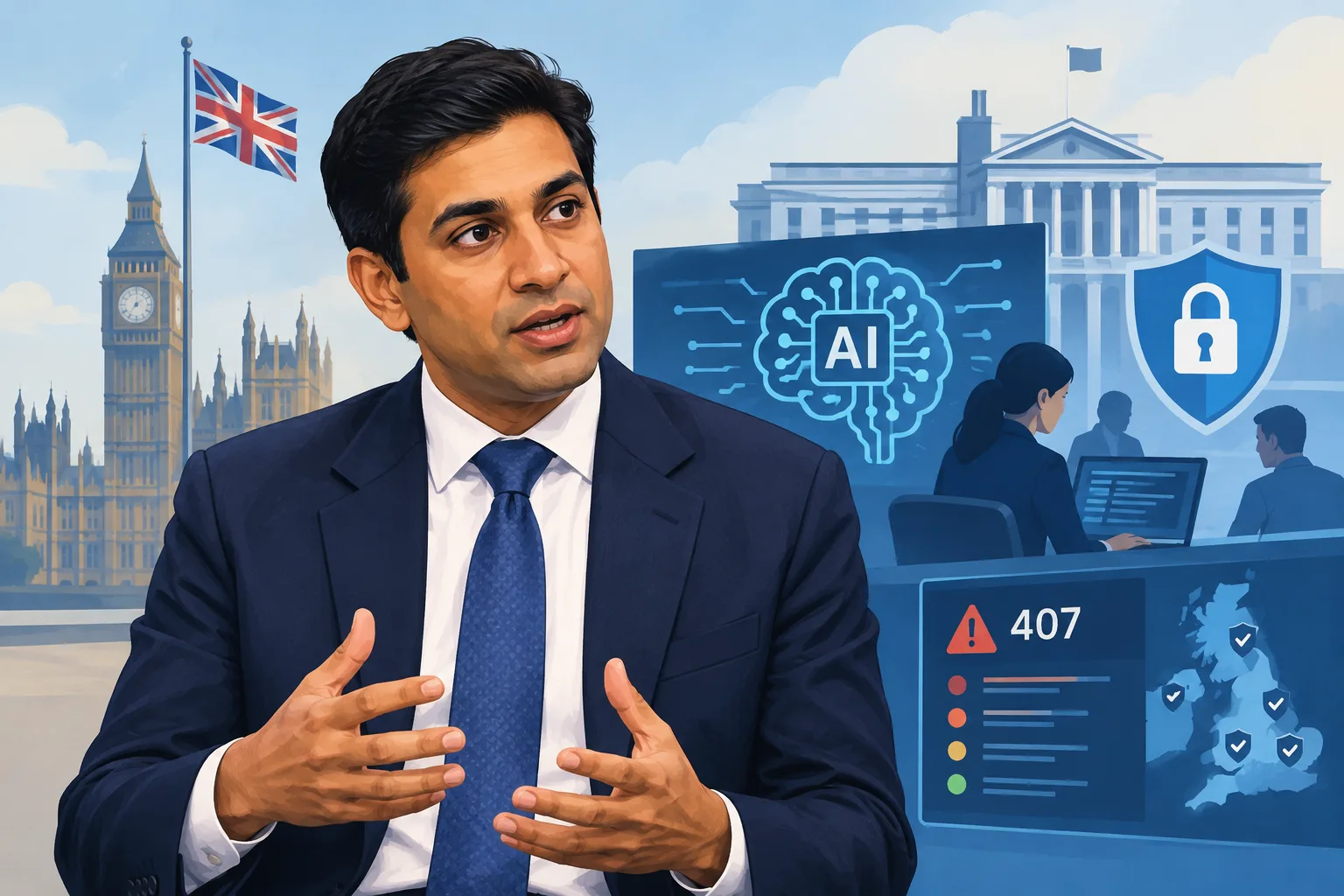
As an example of what government could do with AI, Narayan said a £13,000 exercise had found 500 new vulnerabilities in public-sector systems. A government case study links the same sum to a month-long cyber-security trial across nine organisations, but records 407 findings. Some were previously unknown; others were already understood and covered by existing safeguards. The agencies involved say all critical weaknesses identified in that trial have been fixed.
The case study does not establish whether Narayan’s figure refers to a different exercise or a different way of counting. It also specifies that £13,000 was spent on AI model use, not the full cost of the trial, which involved human checks and conventional security scanners.
The government said earlier in October that two pilots had helped identify and address more than 1,000 potential cyber vulnerabilities. It announced plans to extend the work and said it would explore stronger legal protections against AI-related risks; those further steps were not presented as measures already in force.
Sign in to give this article a thumbs up or down.
From the discussion
Private test discussion. Comments are readers’ views and are not yet automatically fact-checked. Editing is available for 60 seconds after posting.
Sign in with a confirmed reader account and choose a username to read comments and participate.
Sorting applies to top-level comments; replies remain oldest first. New comments and likes can change the order. Refresh for the current ranking.
Loading comments…