UK parties clash over school absence as government prepares response to Milburn review
A government review into young people not in education, employment or training has sharpened debate over why pupils miss school. Ministers are expected to respond to its recommendations, while parties trade blame over the causes and solutions.
Review information is loading.
The government is expected to accept the broad direction of a review into young people not in education, employment or training, as political parties argue over why children are missing school and what should be done to help them return.
The review, led by former Labour cabinet minister Alan Milburn, is examining how to address the problem of nearly one million young people in England who are not in education, employment or training. The government says about a third of pupils persistently absent in Years 10 and 11 go on to become NEET, compared with 10% of those who are not persistently absent.
BBC political editor Chris Mason reported that ministers are expected to respond to the review’s broad recommendations in detail within about a month. Education Secretary Lucy Powell is also expected to make an announcement later this week on an issue relevant to pupils such as Eva and Mali, whose experiences feature in the BBC’s coverage.
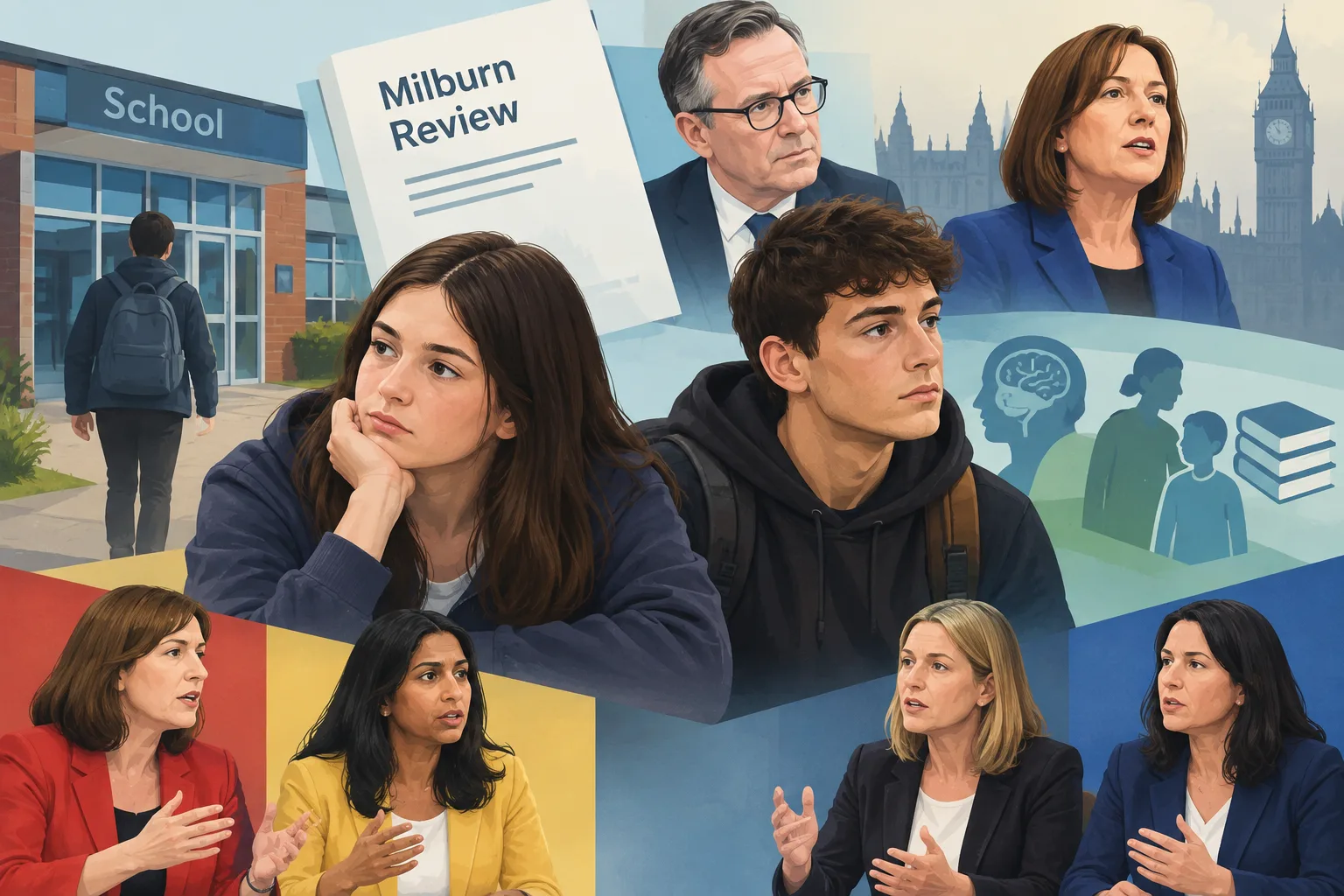
Eva, 13, had not attended school for 15 months before September, after struggling with the move to secondary school. Mali, 18, stopped attending three years ago, while in Year 10. Their experiences are part of a wider debate over the causes of absence, including the role of schools, families, mental health support and pandemic-era rules.
Labour blamed the previous Conservative governments’ education reforms, saying they had served high-achieving pupils while leaving some others behind. The Liberal Democrats also criticised the Conservatives, with education spokesperson Munira Wilson saying they had failed to support young people after lockdown.
The Conservatives rejected that criticism. Shadow education secretary Laura Trott said schools were working to reduce absence and that children with special educational needs or difficulties leaving home needed specialist support. Suella Braverman, Reform UK’s education spokesperson, argued that school culture, teaching and parental engagement could make a difference.
The competing claims leave the central policy question unresolved: how much responsibility lies with schools, families, government policy or access to mental health and specialist support. Ministers’ expected response to the Milburn review, and Powell’s forthcoming announcement, will indicate what action the government plans to take.
Sign in to give this article a thumbs up or down.
About this discussion and AI questions
Private test discussion. Comments are readers’ views and are not yet automatically fact-checked. Editing is available for 60 seconds after posting.
Sign in with a confirmed reader account and choose a username to read comments and participate.
Sorting applies to top-level comments; replies remain oldest first. New comments and likes can change the order. Refresh for the current ranking.
Loading comments…