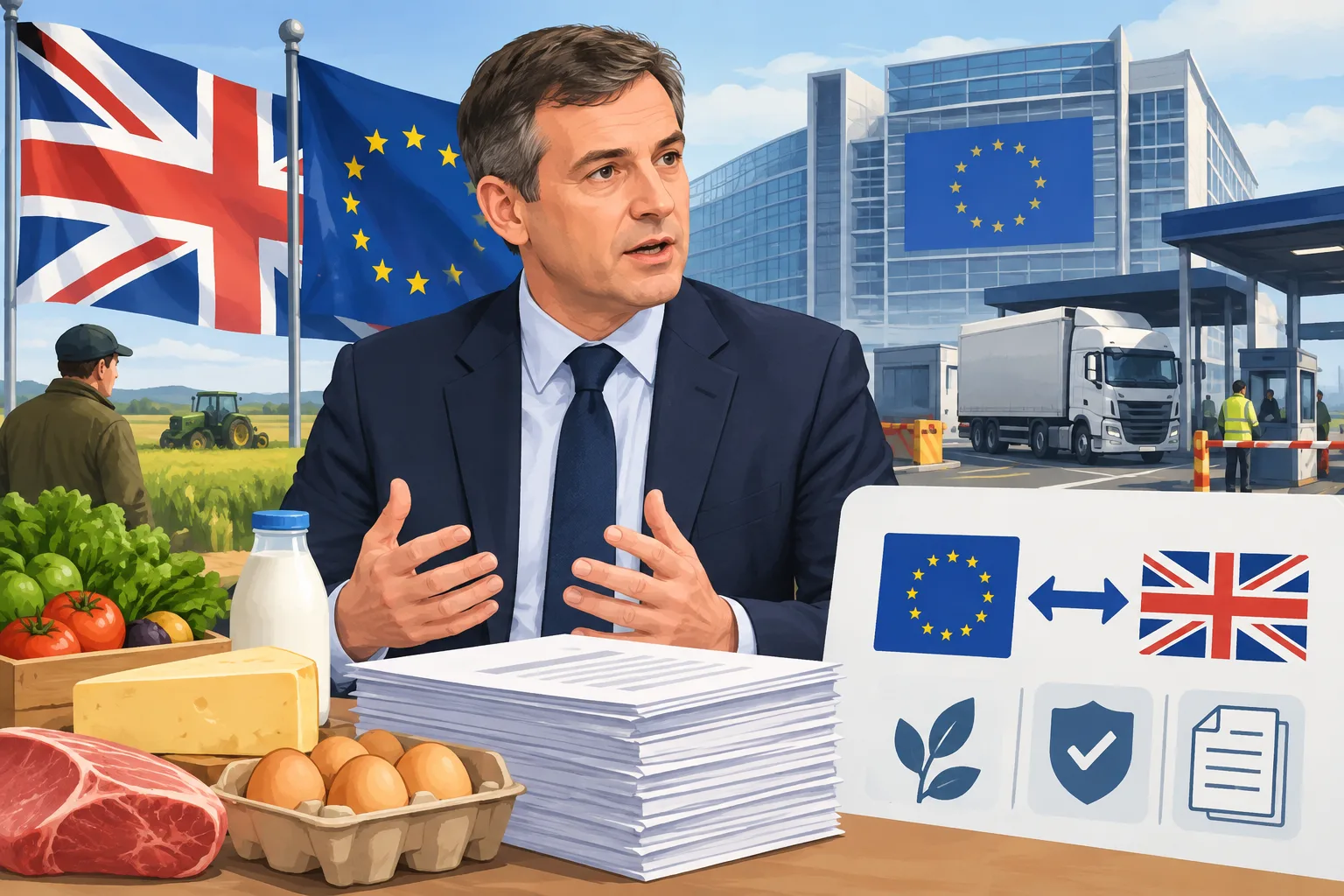
UK would have a voice but no vote on EU food rules under Brexit reset
The proposed UK-EU food reset would cut trade paperwork and checks but leave Britain with no vote on the rules it would follow. EU relations minister Hamish Falconer says the UK would have a voice in shaping them; farmers are waiting to see the detail and any exceptions.
Review information is loading.
The UK would have a say but no vote in shaping European Union food rules under the proposed Brexit reset, EU relations minister Hamish Falconer has told the BBC. The deal is intended to reduce paperwork and border checks on food trade, but its terms would bring Britain closer to EU standards without giving it a formal role in deciding them.
Prime Minister Andy Burnham hopes to agree the wider package at a summit on Friday. Falconer said Britain would take part in a process to shape the rules, and argued that lower costs for food importers could eventually mean cheaper products for shoppers. He said there would be no upfront payments, but that the agreement could include an exit clause if a future UK government reversed the closer alignment.
Falconer said it was reasonable to consider what would happen in that scenario. The BBC reported that the clause reflects EU concerns about the cost of rebuilding food-safety inspection facilities at the border if the arrangements were reversed. Those facilities, introduced after Brexit, would be dismantled under the reset.
The food proposals form part of a wider agreement that also covers emissions trading and a youth mobility scheme. The government estimates the whole package would add 0.4% to UK gross domestic product; Falconer put the food reset’s potential contribution at an additional £5bn.
He said paperwork can make exports costly and uncertain: some Marks & Spencer trucks require more than 300 pages of documents, while errors on forms can lead to rejected shipments. Falconer said the changes could also remove some checks on goods moving from Great Britain to Northern Ireland and end separate “Not for EU” labels.
Farmers have welcomed the prospect of fewer inspections, but National Farmers’ Union president Tom Bradshaw called the deal “a moment of opportunity and risk”. He said food exports to the EU had fallen by more than a third since 2019 and urged a pragmatic approach to new rules, identifying pesticides and gene-edited crops as areas where he hoped for compromise.
The agreement would require the UK to align with EU food standards, leaving questions about the detail and any exceptions unresolved. Both the Conservatives and Reform have said they would undo the planned reset if they came to power; the Conservatives have warned that it would leave Britain with no input on how rules are made or power to reject them.
Sign in to give this article a thumbs up or down.
About this discussion and AI questions
Private test discussion. Comments are readers’ views and are not yet automatically fact-checked. Editing is available for 60 seconds after posting.
Sign in with a confirmed reader account and choose a username to read comments and participate.
Sorting applies to top-level comments; replies remain oldest first. New comments and likes can change the order. Refresh for the current ranking.
Loading comments…