UN committee approves 13 resolutions, with split vote on AI governance
The UN General Assembly’s Second Committee approved 13 resolutions, including a contested text on AI governance that passed 79-57, with 47 abstentions. A separate trade resolution passed by a wide margin despite US objections over the forum for discussing trade policy.
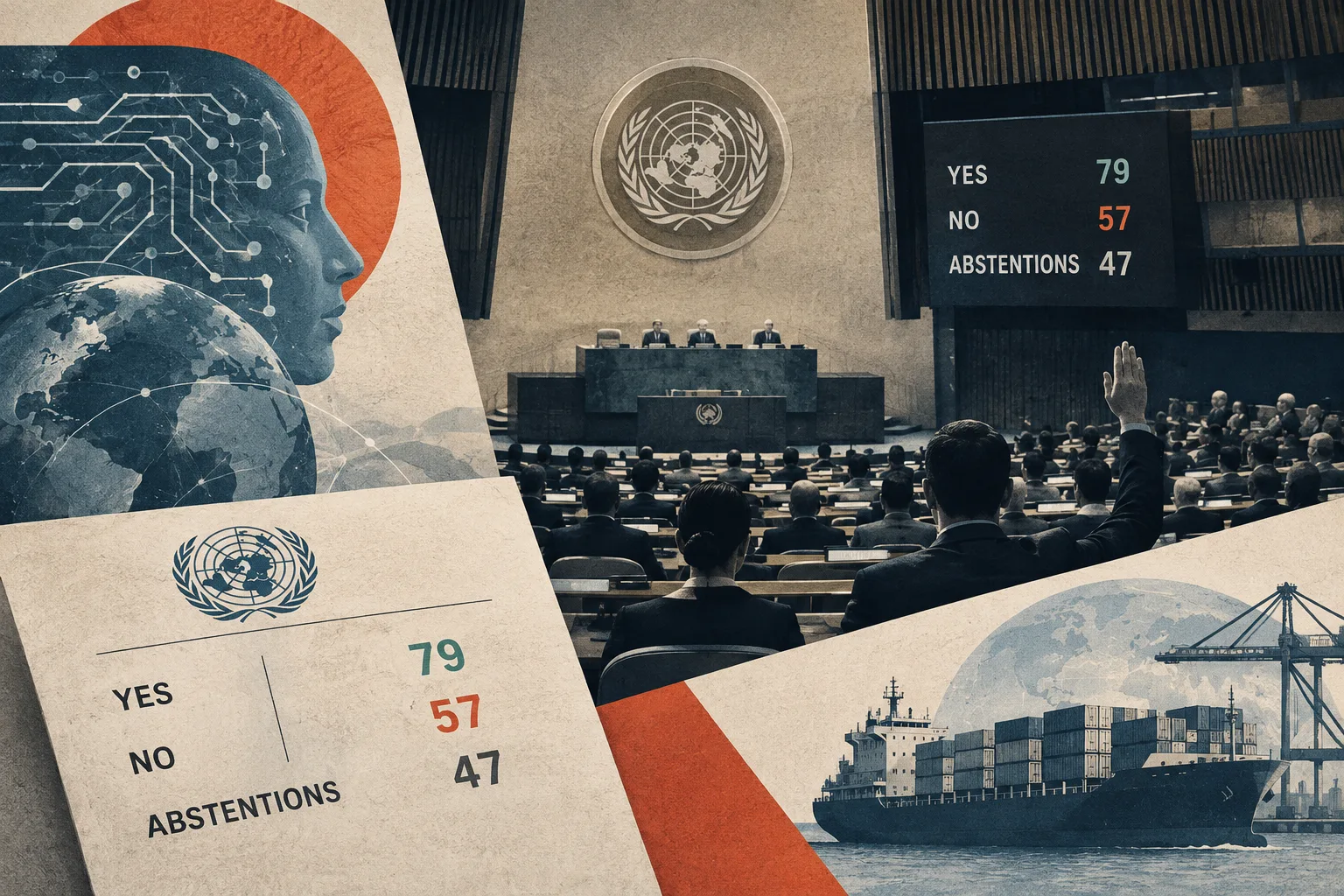
The UN General Assembly’s Second Committee approved 13 resolutions on 24 November, but its most divisive vote concerned how the UN should shape international discussion of artificial intelligence.
The draft on AI governance passed by 79 votes to 57, with 47 abstentions. It would affirm the UN’s role in bringing countries together to discuss AI in non-military fields and development. The committee’s action does not itself establish a new global regulatory system.
The vote exposed disagreements over both the text and the process. The United States said it and other countries had sought to preserve the mandates of the co-chairs of the Global Dialogue on AI, arguing the draft favoured particular technologies and approaches. The United Kingdom said its objection was not to discussing AI, but that the text lacked consensus: “If it did, we would not be voting on it.”
Russia, which introduced the draft, rejected accusations that it would create parallel processes. Cuba and China stressed AI’s potential contribution to development, while Algeria and Iran voiced support for inclusive governance with the UN at its centre. Canada, speaking for Australia and New Zealand, said their objections were mainly procedural, although they recognised improvements to the text. The European Union said the draft departed from a previous commitment and risked pre-empting substantive discussions under the Global Digital Compact.
The committee also approved a resolution on international trade and development, by 134 votes to three, with 47 abstentions. The United States argued that the General Assembly was not the appropriate forum for discussions involving the World Trade Organization. The resolution calls for a rules-based multilateral trading system and action against protectionism; it also highlights developing countries’ integration into global markets.
Before that vote, delegates rejected an amendment by 50 votes to 110, with five abstentions. Ireland said the amendment contained “unbalanced and controversial” language targeting the European Union’s carbon border adjustment mechanism. India, while supporting the main resolution, said the distinction between trade-distorting agricultural subsidies and public food-security stockholding programmes remained unresolved.
The other resolutions covered issues including sand and dust storms, illicit financial flows, climate protection and rural poverty. Twelve of the 13 texts were approved by recorded votes; one passed without a vote. The UN account is meeting coverage, not an official record.
Sign in to give this article a thumbs up or down.
From the discussion
Private test discussion. Comments are readers’ views and are not yet automatically fact-checked. Editing is available for 60 seconds after posting.
Sign in with a confirmed reader account and choose a username to read comments and participate.
Sorting applies to top-level comments; replies remain oldest first. New comments and likes can change the order. Refresh for the current ranking.
Loading comments…